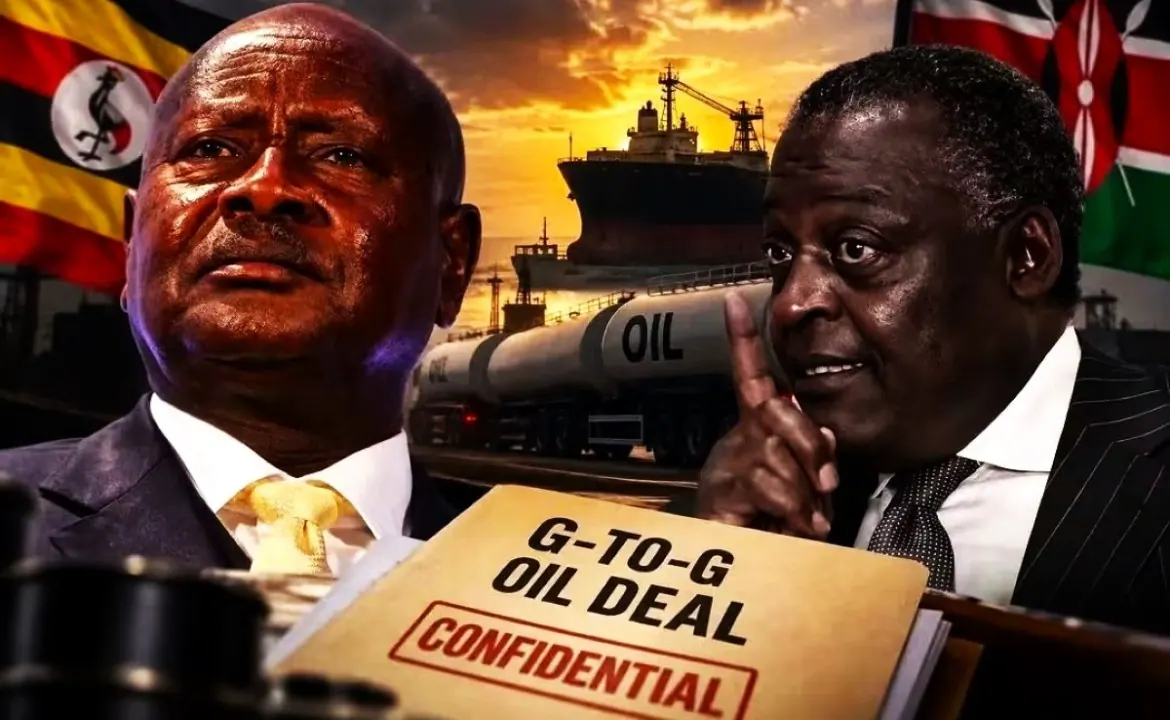
A controversy has erupted in East Africa over a fuel scandal involving Uganda and Kenya. Ugandan President Yoweri Museveni recently claimed that Kenya's fuel deal was being exploited by middlemen, resulting in significant losses for Uganda. According to Museveni, a former Kenyan politician, Cyrus Jirongo, had informed him of the alleged scam in 2019. However, this claim has been disputed by Kenya's government, which argues that the fuel deal in question did not exist at that time.
Cyrus Jirongo, a former Member of Parliament for Lugari and Cabinet minister during the Daniel arap Moi era, passed away on December 13, 2025, in a road accident. Museveni's decision to invoke Jirongo's name in the fuel scandal has raised questions about the accuracy of his claims. Critics argue that Museveni is either confabulating or constructing a smokescreen to protect powerful interests while settling political scores. The controversy has sparked a diplomatic row between Uganda and Kenya, with Kenya's government defending its fuel deal as transparent and above board.
The fuel deal in question was conceived and signed by the Ruto administration in 2023 to combat a crippling dollar shortage that had left fuel stations dry and the economy gasping. Under the deal, Kenya partnered with international oil majors, including Aramco, ADNOC, and ENOC. Kenya's Energy Cabinet Secretary, Opiyo Wandayi, has insisted that the deal was designed to alleviate dollar scarcity and secure fuel supplies on 180-day credit terms. Wandayi argued that the local companies involved were counterparties selected by the international oil majors, not government appointees.
Museveni's claims have had significant implications for Uganda's fuel imports. According to Museveni, Uganda's partnership with Vitol, a global energy company, has resulted in significant savings for Uganda. Diesel premiums allegedly plummeted from US$118 to US$83 per metric tonne, while petrol dropped from US$97.5 to US$61.5. Aviation fuel also decreased from US$114.25 to US$79.25. However, Kenya's Energy Ministry has published a different premium trajectory, insisting that its deal was fundamentally about dollar liquidity rather than headline premiums alone.
The controversy has sparked calls for greater transparency in the fuel supply chain. The Motorists Association of Kenya has demanded a forensic audit, calling for full disclosure of all intermediaries, commissions, contracts, and pricing formulas. The association's statement was scathing, questioning why middlemen were sitting between governments and petroleum suppliers if governments were supposedly buying directly from governments. The issue has raised concerns about the cost of living in Kenya and the need for greater accountability in the fuel sector.
In response to Museveni's claims, Kenya's government has sought to distance itself from the controversy. Wandayi's ministry issued a statement insisting that Kenya's fuel deal was clean and that Museveni's claims were unfounded. The statement also praised President William Ruto for prevailing over actors in Kenya who were trying to resist the fuel deal. The diplomatic row has highlighted the complex relationships between East African countries and the challenges of regional cooperation on issues such as fuel imports.
The controversy has also raised questions about Museveni's motives and the timing of his claims. Museveni made his remarks during the groundbreaking ceremony for a 320-million-litre petroleum storage terminal in Mpigi District, a project intimately tied to Uganda's new arrangement with Vitol. Critics argue that Museveni's claims were designed to smooth over a diplomatic row that he himself had inadvertently ignited. The controversy has highlighted the need for greater transparency and cooperation between East African countries on issues such as fuel imports and regional trade.
Key points
- Uganda's President Yoweri Museveni has sparked a diplomatic row with Kenya by claiming that Kenya's fuel deal was riddled with middlemen.
- Kenya's government has defended its fuel deal as transparent and above board, while Museveni's claims have raised questions about the accuracy of his information.
- The controversy has highlighted the need for greater transparency and cooperation between East African countries on issues such as fuel imports and regional trade.