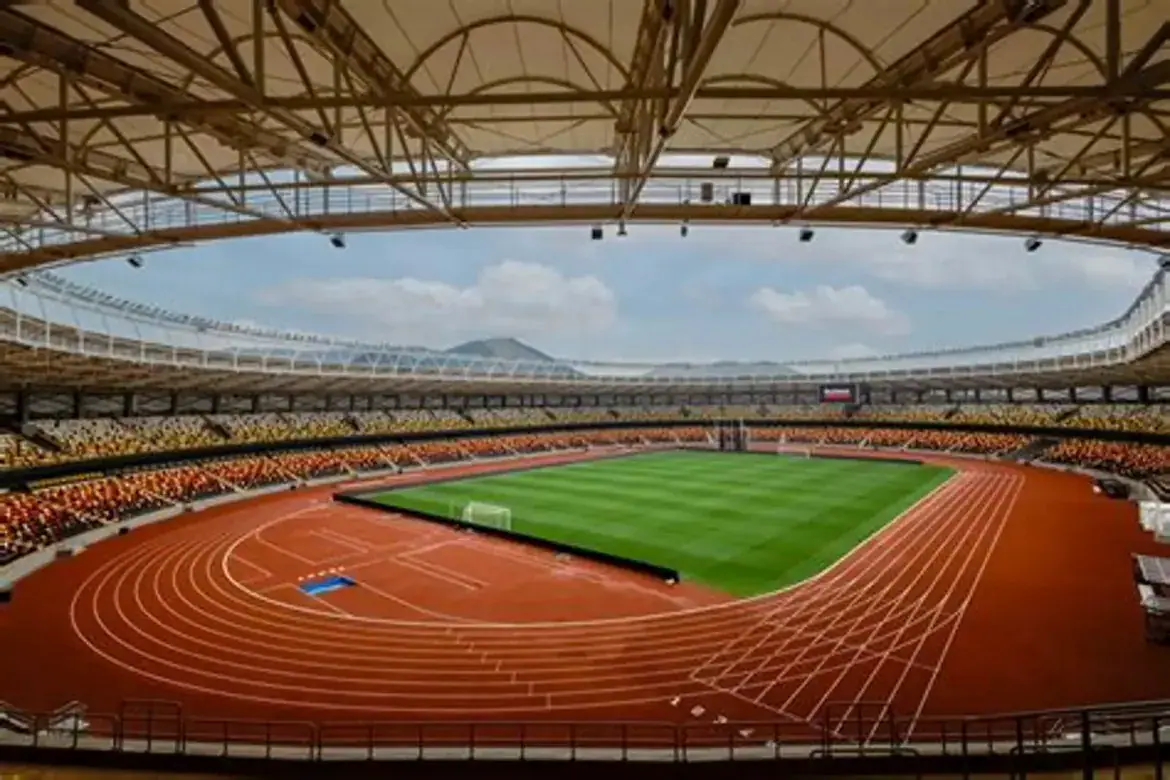
Uganda is undertaking a massive investment in three new stadiums in preparation for the 2027 African Cup of Nations (AFCON 2027), which the country will co-host with Kenya and Tanzania. The Mandela National Stadium at Namboole is being expanded to 45,000 seats, while a new 20,000-seat stadium is under construction in Hoima, and another 20,000-seat stadium is being built in Lira. The total public investment in these projects exceeds $300 million.
The AFCON 2027 tournament is scheduled to take place from June 21 to July 17, 2027. After the tournament, Uganda will have a total of 85,000 seats of stadium capacity, but there is currently no published revenue model or master plan for the land surrounding any of the three venues. This has raised concerns about the long-term viability of these investments, with some experts warning that they could become a public liability.
Paulo J. Cruz, the Chief Executive Officer of African Collaborations Group (ACG), has argued that Uganda has a window of eight months before AFCON to put a commercial plan in place. Cruz, who has 28 years of experience in originating infrastructure projects across Africa, the Middle East, and Europe, believes that the solution is not to stop building stadiums but to embed them in integrated sport and entertainment districts that can generate diversified revenue every day of the year.
ACG originates such districts in partnership with African governments, investing at the pre-development stage to create the conditions for institutional and private investors to finance projects that are bankable, investable, and financially sustainable. The government’s budget is not touched. Uganda's own policy documents, including the Uganda Vision 2040 and the Fourth National Development Plan (NDP IV), call for the development of sport as a business and identify the young population as an opportunity for growth.
The Public Private Partnership Act 2015 allows unsolicited proposals from private investors, and a precedent already exists. In 2014, President Museveni endorsed a private lease for Nakivubo Stadium in Kampala, stating the principle that private capital, not public budgets, should develop sport facilities. The commercial district that emerged around Nakivubo, now known as Ham’s Nakivubo Stadium, is cited locally as a model for sport-led urban development.
Without a post-tournament commercial strategy, the stadiums will likely revert to hosting Uganda Premier League matches, which have average attendances of 3,000 to 5,000, in a 45,000-seat venue, plus occasional international fixtures. This would result in the stadiums operating at under 10% capacity. Research has shown that standalone stadiums rarely generate economic benefits sufficient to justify public investment, and integrated districts with diversified revenue sources are a more viable alternative model.
The question now is whether Uganda can put a commercial plan in place before the first ball is kicked in AFCON 2027. If not, the country may be left with a costly legacy of underutilized stadiums.
Key points
- The Ugandan government has invested over $300 million in three new stadiums for AFCON 2027.
- Experts warn that without a commercial operating plan, the stadiums may become a public liability after the tournament.
- A possible solution is to embed the stadiums in integrated sport and entertainment districts that can generate diversified revenue every day of the year.