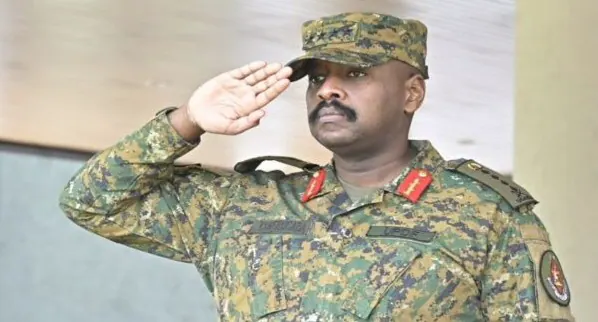
Uganda's defence public information office has rejected allegations that General Muhoozi Kainerugaba tortured exiled writer Kakwenza Rukirabashaija, calling the story fabricated and politically driven. The allegations were made in an opinion piece published in The New York Times on October 8. The military's denial comes amid claims that Rukirabashaija was repeatedly detained and subjected to torture over two years.
According to The New York Times article, Rukirabashaija claimed he was tortured, resulting in a fractured ankle, kidney damage, and back scars. The article also alleged that General Muhoozi visited Rukirabashaija twice while he was in custody, humiliating him on one occasion and later offering a bribe to keep the abuse silent. These allegations have been strongly denied by the Ugandan military.
Colonel Chris Magezi, acting director of defence public information, issued a statement on Saturday describing the New York Times story as a fabricated campaign by western media against General Muhoozi for imperialistic reasons. Magezi asserted that General Muhoozi has never met Kakwenza Rukirabashaija. The military's denial suggests that the allegations aim to undermine General Muhoozi's prospects of succeeding his father, President Museveni.
The New York Times article was written by Megan K. Stack and reported on alleged abuses against critics of President Museveni's government. The article is part of a series of reports on human rights abuses in Uganda. The Ugandan military's denial highlights the ongoing tensions between the government and human rights groups.
Colonel Magezi emphasized that serious human-rights accusations require rigorous verification. He warned that the claims rely on anecdotal, politically motivated sources and that Uganda's future will be decided by its own citizens. The military's statement suggests that they will not tolerate external interference in Uganda's internal affairs.
General Muhoozi Kainerugaba is the army chief and son of President Yoweri Museveni. He has been mentioned as a potential successor to his father. The allegations against him have sparked a heated debate about human rights and succession in Uganda. The military's denial is likely to fuel further controversy.
The incident highlights the complex relationship between Uganda's military, government, and human rights groups. The allegations against General Muhoozi have sparked concerns about human rights abuses in Uganda. The military's denial has also raised questions about the role of western media in reporting on human rights issues in Africa.
Key points
- The Ugandan military has denied allegations of torture against General Muhoozi Kainerugaba.
- The allegations were made in a New York Times opinion piece by Megan K. Stack.
- The military's denial suggests that the allegations are fabricated and politically driven.