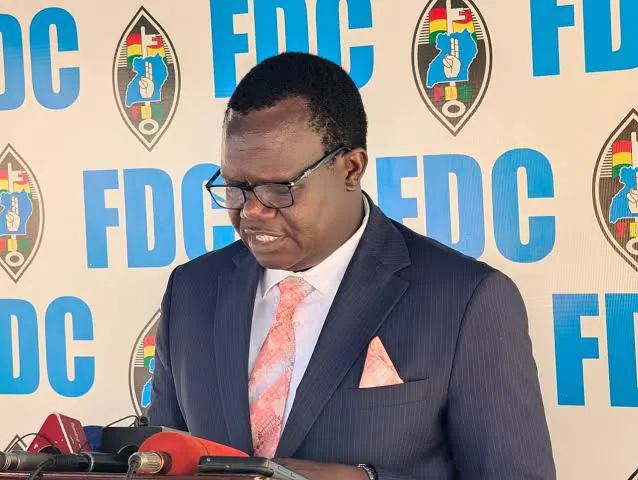
The Forum for Democratic Change (FDC) in Uganda has expressed concerns over a proposed government policy to centralise teacher training in a few national institutions. According to the party, this move could exacerbate the country's existing teacher shortage and limit access to training for aspiring teachers. The FDC's stance comes as part of a wider government reform of teacher education that has already seen training consolidated under the Uganda National Institute for Teacher Education (UNITE).
The Ministry of Education and Sports has announced plans to have universities relinquish teacher-training responsibilities to UNITE, citing inconsistencies in teacher preparation approaches used by different universities. However, the FDC argues that the reforms risk worsening the teacher shortage, particularly after the phasing out of several Primary Teachers Colleges. The party claims that the Ministry has prepared a policy for Cabinet consideration that would create a few gazetted National Teacher Training Institutions while phasing out 33 Primary Teachers Colleges and five National Teachers Colleges.
The proposed policy would also bar public and private universities, including Makerere, Kyambogo, Muni, Gulu, and Busitema, from training teachers. FDC Deputy Secretary for Publicity, Publication and Documentation Mulindwa Walid Lubega stated that the party rejects the proposed centralisation, arguing that it would reduce the number of teachers being trained at a time when Uganda already faces a shortage. He cited that the country has over 15 million learners and only about 300,000 teachers.
Walid further highlighted that the pupil-to-teacher ratio in many Universal Primary Education schools is already between 1:58 and 1:60, compared to the recommended 1:45. He warned that closing dozens of colleges would further widen the gap. Additionally, Walid criticised the proposed centralisation, saying it would undermine access to teacher training, particularly for students from poor families who may struggle with long distances and higher costs.
The FDC also expressed concerns that phasing out universities that have invested heavily in teacher education would amount to a waste of existing institutional capacity. Walid mentioned that Kyambogo University and Makerere University have invested significantly in infrastructure for teacher education, and phasing them out would destroy institutional memory. He also stated that the party supports the Competence-Based Curriculum but disagrees with using it as a justification for centralising teacher training.
Instead, the FDC suggests that the government should retool tutors in CBC pedagogy and align teacher training curricula with the competence-based approach. Walid called for the government to abandon plans to phase out Primary Teachers Colleges, National Teachers Colleges, and university-based teacher training. He also urged the government to develop and enforce a uniform national curriculum aligned with CBC while retaining existing teacher training institutions.
The FDC is also calling for continuous professional development for the over 300,000 teachers already in service and increased investment in teacher training facilities, laboratories, ICT, and practical learning facilities. Furthermore, Walid emphasised the need for wider consultations involving teachers, universities, colleges, parents, students, and local governments before the policy is adopted. The party wants the government to reconsider the proposal, arguing that teacher training requires diversity, access, and innovation rather than centralisation.
Key points
- The FDC party rejects the proposed centralisation of teacher training in Uganda, citing concerns over worsening teacher shortages and limited access to training.
- The proposed policy would phase out 33 Primary Teachers Colleges and five National Teachers Colleges, and bar universities from training teachers.
- The FDC suggests an alternative approach of retooling tutors in CBC pedagogy and aligning teacher training curricula with the competence-based approach.