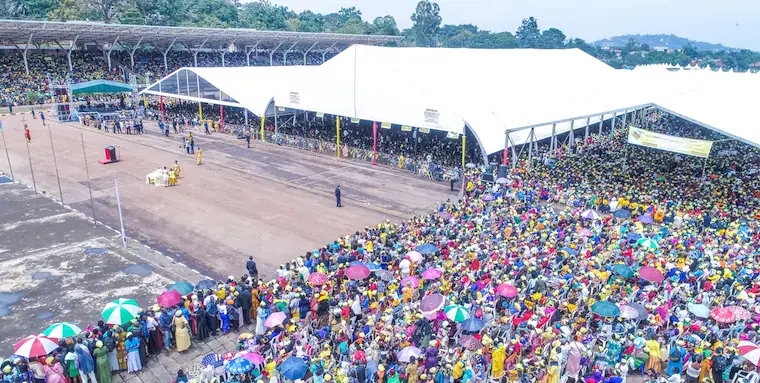
A recent 50th anniversary celebration in Kampala was disrupted by heavy rain, with attendees and vendors scrambling for shelter. The event's organizers had not installed tents, citing the venue owner's refusal to allow them to remove pavers for safety. This incident highlights the challenges faced by event organizers in Uganda, where rain is a frequent occurrence and venues are often inadequate. The lack of suitable venues is a significant obstacle to the growth of the country's events sector.
The events sector is a crucial part of Uganda's ambitious tenfold growth strategy, which aims to develop the country's economy from a GDP of $50 billion to $500 billion by 2040. The sector, known as MICE (meetings, incentives, conferences, and exhibitions), has been identified as one of the pillars of this strategy. However, the current state of venues in Kampala is a major hindrance to achieving this goal. Apart from the Kololo Independence Grounds, there are few centrally located venues that can accommodate large events.
Uganda's history of hosting international events is limited, with the 1975 Organization of the African Union (OAU) conference being a notable exception. The international conference center, now known as Serena, was built for this occasion and still hosts some events. However, it is a small venue, and the country lacks a large, modern conference facility that can host big events. The 19th Summit of the Non-Aligned Movement (NAM) in 2009 led to the construction of a somewhat larger conference hall at Speke Resort in Munyonyo, but its location is not ideal.
To develop a world-class events sector, Uganda needs to invest in modern, accessible, and affordable venues. The government could consider building a large conference facility in Kampala or partnering with the private sector to achieve this goal. International hotel chains operating in Kampala, such as those already setting up or operating in the city, could benefit from a conference center that can host large events and help keep their rooms occupied.
The lack of reliable weather forecasting technology also poses a challenge to event organizers in Uganda. The author of this article tested Meta AI's weather forecasting capabilities and found that it could not provide a forecast for an event in January. According to Meta AI, it can only predict the weather 10 to 14 days before a given date. This limitation makes it difficult for event organizers to plan and prepare for outdoor events.
One possible approach to mitigating the risk of rain is to use historical climate data to inform event planning. The author recalls reading about Barack Obama's 2008 campaign manager using this approach to determine whether to hold an outdoor event. By analyzing weather patterns over the past 100 years, they were able to make an informed decision about the likelihood of rain. Uganda's meteorology department may be able to provide similar data to help event organizers plan.
The development of a large events center could have a significant impact on Uganda's economy and create new opportunities for gig workers and other professionals. The sports facility in Lugogo, which was previously earmarked for development, could be a potential location for such a center. Alternatively, the government and private sector could explore other options, such as buying land and building condominiums or partnering with international hotel chains to create a modern conference facility.
Key points
- Uganda's events sector is hindered by inadequate venues and unpredictable weather.
- The sector is crucial to the country's tenfold growth strategy, aiming to increase GDP from $50 billion to $500 billion by 2040.
- A large, modern conference facility in Kampala could help drive growth in the events sector and create new opportunities for professionals.