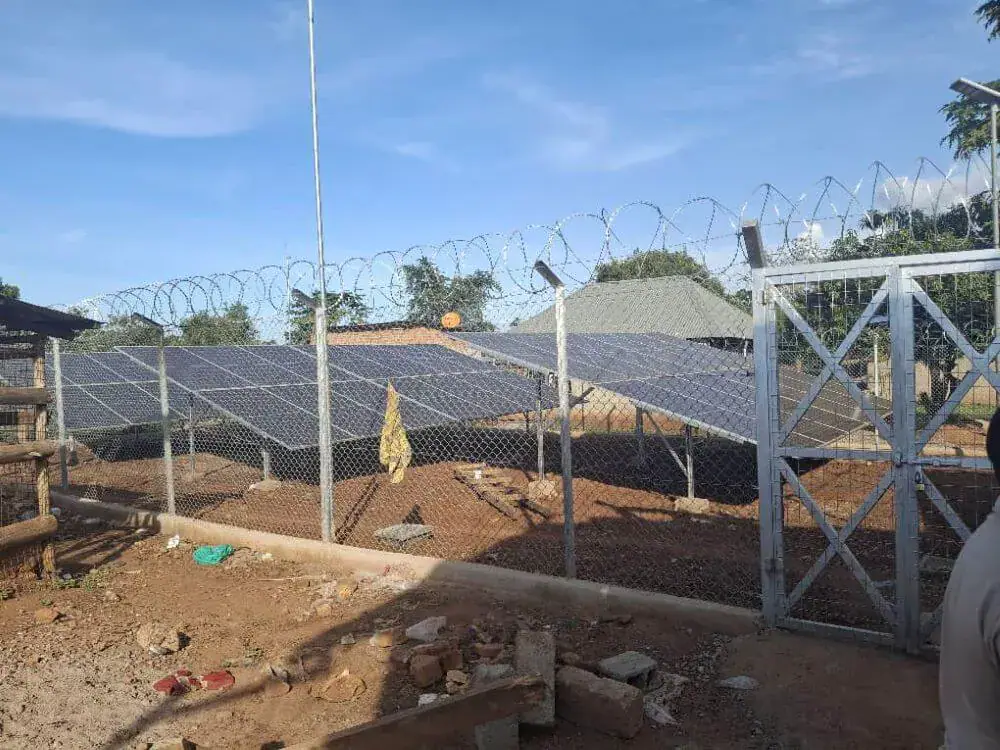
The Ministry of Energy and Mineral Development in Uganda has called on stakeholders in the agri-solar sector to redefine how they measure success. Commissioner for Renewable Energy Dr. Brian E. Isabirye emphasized that the current approach, which focuses on installed capacity, kilometres of grid connected, and equipment distributed, does not reflect the real needs on the ground. Instead, he suggested that success should be measured by the impact on farmers' livelihoods and rural communities.
Dr. Isabirye was speaking at the 2026 Dream Partners Conference in Kampala, where he outlined a new frontier for agri-solar. He envisioned agricultural zones where solar energy powers irrigation, cold storage, processing, electric mobility, and rural enterprises. This approach, he believes, can help create jobs, improve incomes, and establish industries. Dr. Isabirye also called for agrivoltaic systems, where the same land is used for both food production and electricity generation.
The Commissioner emphasized that electricity should be seen as a means to an end, rather than an end in itself. He argued that a farmer does not need a solar pump simply to own it, but to reduce losses, access water for production, earn an income, and access premium markets. Similarly, a cooperative does not need a solar-powered cold room merely to preserve produce, but to reduce losses, secure better prices, and grow profitable businesses.
Heifer International Country Director William Matovu also spoke at the conference, highlighting the importance of renewable energy in ending hunger and poverty while caring for the Earth. He noted that in its 44 years of operation in Uganda, Heifer has found renewable energy to be a key leverage and enabler for farmers and farmer organisations. Matovu cited examples of how solar energy can strengthen food security, climate-resilient livelihoods, and rural economic growth.
Matovu pointed out that solar solutions can enable farmers to withstand extreme climate events and increase resilience. He also highlighted Heifer's successful solar milk chilling project, which has led to lower energy costs and an end to milk spoilage. Additionally, Heifer has worked with partners to establish demonstration centres for solar applications and promote productive solar use in agricultural planning and budgeting.
Heifer has collaborated with various partners, including Joint Energy and Environment Projects (JEEP), Kabaka Foundation, and Bethany Land Institute, to promote solar energy in Uganda. The organisation has also worked with Enterprise Uganda to train over 1,000 women and youth to exploit business opportunities in agriculture. Matovu emphasized that a vibrant rural agriculture sector will drive rural economic growth and improve livelihoods.
The Ministry of Energy and Mineral Development's call to focus on prosperity rather than just installed capacity is a significant shift in approach. As the agri-solar sector continues to evolve, stakeholders will need to work together to create a more holistic and sustainable approach to energy development in Uganda. This will require a coordinated effort from government agencies, private sector companies, and civil society organisations to ensure that solar energy is used to drive economic growth and improve livelihoods.
Key points
- The Ministry of Energy and Mineral Development wants stakeholders to focus on measuring prosperity created for farmers and rural communities, rather than just counting installed solar panels.
- Heifer International has found renewable energy to be a key leverage and enabler for farmers and farmer organisations in Uganda.
- Solar energy can strengthen food security, climate-resilient livelihoods, and rural economic growth in Uganda.