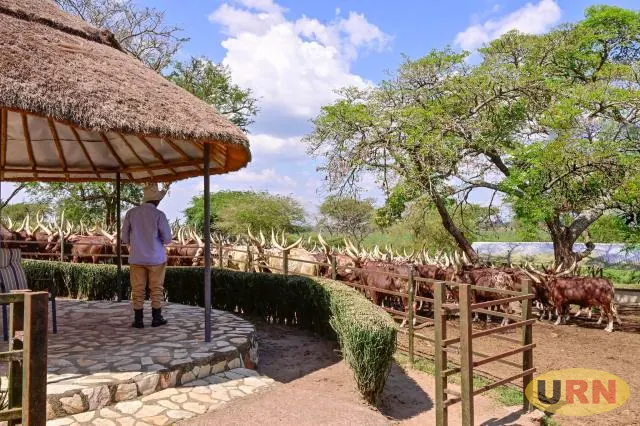
The Ugandan government has initiated a cattle restocking program in the Acholi, Lango, and Teso subregions, which lost livestock during civil wars in the 1990s and 2000s. The program, conceived by President Yoweri Museveni during the 2025/6 presidential and parliamentary elections, aims to provide five cows per household to restore wealth and improve livelihoods. This move follows widespread dissatisfaction and corruption concerns over the initial compensation scheme launched in March 2022.
The initial compensation scheme was marred by corruption and inflated legal claims, stalling the process for years. Lawyers representing cattle claimants were accused of pursuing their own interests rather than those of the claimants. President Museveni argued that the government cannot compensate individuals for war-related livestock losses, likening it to natural disasters. Instead, he designed a restocking program using a model of five cows per household to benefit every household, regardless of whether they had lost cattle or not.
The program provides seed capital for the procurement of five cattle, comprising two bulls and three heifers. The bulls aim to increase agricultural production through draught power, while the heifers promote animal multiplication and nutrition. In the 2025/2026 financial year, the government allocated Shs80 billion for the program, with an additional Shs100 billion earmarked for the upcoming financial year to cover approximately 16,000 beneficiary households.
According to the Office of the Prime Minister, 80% of the allocated funds have been disbursed to beneficiaries. A survey by the Uganda Media Centre in the three subregions confirmed this, with districts like Omoro receiving Shs 2,554,086,950 to support 520 beneficiaries. On average, every district received Shs 2.5 billion, benefiting 400-500 families per district. The model used to identify beneficiaries targeted the most vulnerable members, including the elderly, returnees, former rebels, widows, and people with disabilities.
The beneficiary selection process involved community engagement, with Parish Development Committees and Gombolola Internal Security Officers (GISOs) validating the list. The District Restocking Team reviewed minutes of community engagements and endorsed names for upward submission to the Office of the Prime Minister for payment. While there have been incidents of irregularities, with some individuals attempting to benefit illegally, these cases have been minimal, with an average of 10 cases per district.
Despite challenges, such as the need for proper education on animal husbandry and treatment costs, the program shows promise. Beneficiaries face restrictions on purchasing cows outside their region, but this has helped to revitalize the cattle corridor in northern Uganda. The program's impact is expected to be significant, improving the livelihoods of farmers and increasing their resilience.
The cattle restocking program is a significant step towards restoring northern Uganda's lost glory as a cattle corridor. With continued implementation and minimal challenges, the program has the potential to bring lasting change to the region. Key categories prioritized for this first phase were the elderly, returnees, former rebels, widows, unemployed youth, female-headed households, and people with disabilities.
Key points
- The Ugandan government has allocated Shs80 billion for the cattle restocking program in the Acholi, Lango, and Teso subregions.
- The program provides five cows per household to restore wealth lost during civil wars.
- The beneficiary selection process targeted the most vulnerable members of the community.