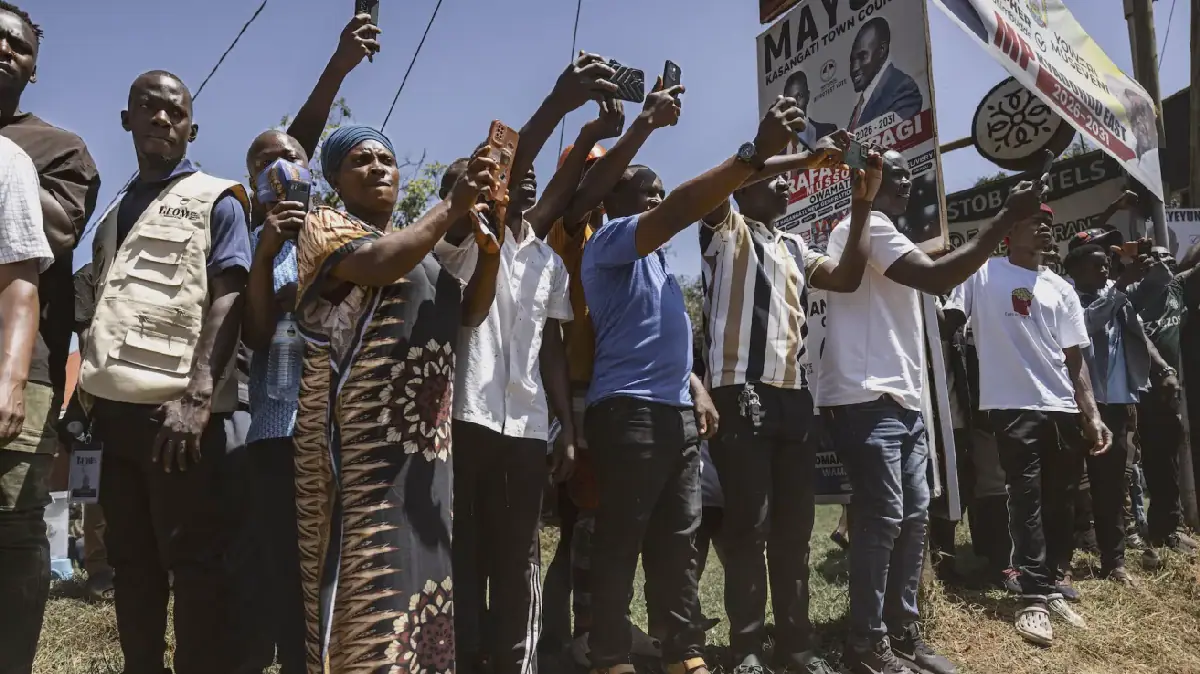
A recent study on Uganda's January 2026 election has shed light on the evolving online influence landscape in Africa. The study, commissioned by the Konrad-Adenauer-Stiftung, used data, open-source investigations, and field research to analyze the tactics used to shape public perceptions during the election. It found that the election was essentially a two-sided 'digital duel' between the ruling National Resistance Movement (NRM) and the opposition National Unity Platform (NUP).
The study found that both NRM and NUP used inauthentic 'buzzer' accounts to amplify their narratives. These human-operated fake profiles, also known as 'sock puppets,' were often paid to promote a particular viewpoint. The use of buzzers allowed the parties to covertly promote their messages without disclosing their activities or payments. This tactic was also observed in South Africa's 2024 general election.
State-aligned influencers played a significant role in shaping online narratives during the election. They captured a popular YouTube channel to boost the NRM's online presence and reposition it as a party for youth. The influencers used hashtags such as #ProtectingTheGains, one of the ruling party's most prominent online slogans. They also streamed pro-government rallies and reformatted footage into election explainers.
The study found that some content, including artificial intelligence-generated deepfakes and videos taken out of context, was amplified by a network of social media influencers. This network, which comprised at least nine nodes, streamed and repackaged material in what was branded 'The Longest Online Rally.' A separate campaign, Jazz with Jajja, invited ordinary Ugandans to put questions to President Yoweri Museveni, packing its audience with paid influencers posing as ordinary citizens.
The election also saw limited but persistent foreign influence activity, notably from Russia-aligned and Make America Great Again (MAGA)-aligned accounts. These actors appeared to use the election to 'launder' content on unrelated conflicts, such as the US-Iran, Israel-Palestine, and Russia-Ukraine conflicts. Some of these actors or their proxies hijacked election hashtags and used AI-generated imagery to push neo-colonial narratives and anti-Western sentiment.
The study's findings have significant implications for election monitors and policymakers. The use of covert online influence campaigns and AI-generated content contravenes the United Nations Global Principles for Information Integrity. The study's authors argue that deeper engagement with tech platforms is needed to understand how they may be exploited for political gain.
The Ugandan election was marked by a range of hybrid tactics, including attacks on legacy media and internet shutdowns. A cyberattack on a national media platform days before polling followed a long-running government campaign to limit media coverage of election rallies and parliamentary proceedings. The study's findings highlight the need for greater transparency and accountability in online political influence campaigns.
Key points
- The use of AI-generated content and inauthentic 'buzzer' accounts was a significant feature of the 2026 Ugandan election.
- State-aligned influencers played a major role in shaping online narratives during the election.
- Foreign influence activity, although limited, was also detected during the election.