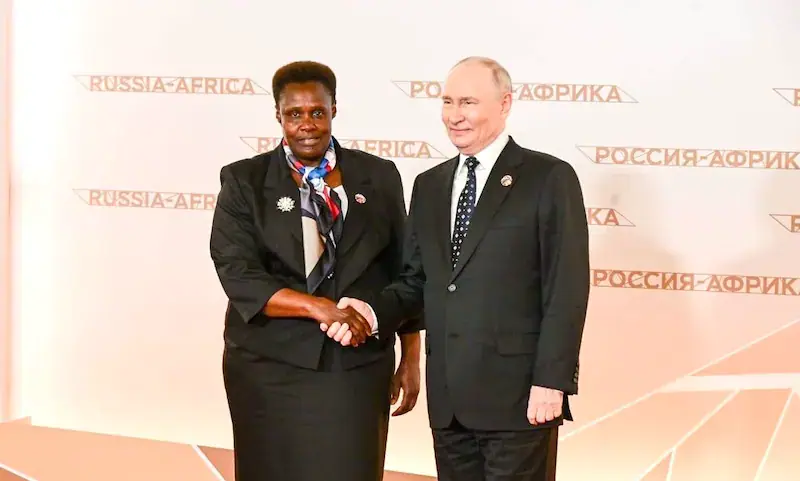
Uganda and Russia have signed an agreement to exempt holders of diplomatic and service passports from visa requirements, deepening ties between the two countries. The agreement was signed by Uganda's Foreign Affairs minister, Kyeyune Allan Kasolo, and Russia's Deputy Foreign Affairs minister, Georgy Borisenko, on the sidelines of the third Russia-Africa Summit in Moscow. This move aims to ease official travel between Uganda and Russia.
The visa exemption agreement is expected to take effect 30 days after both countries complete the required domestic procedures and exchange diplomatic notifications. According to Kasolo, the two countries exchanged perspectives on strengthening diplomatic engagement and exploring avenues for enhanced cooperation in areas of mutual interest. Uganda remains committed to fostering constructive partnerships that advance shared priorities and deliver meaningful benefits to the people of both countries.
Beyond the visa agreement, Uganda used the summit to push for increased Russian investment in priority sectors, including agro-industrialisation, mineral and energy development, infrastructure, and manufacturing. Kasolo called on Russia to increase investment in these sectors, arguing that stronger economic cooperation could unlock opportunities for both countries. This call for investment is part of Uganda's efforts to boost its economy and tap into Russia's vast resources.
The discussions also highlighted opportunities to expand agricultural trade, particularly by increasing the presence of Ugandan coffee and other agricultural products in the Russian market. Uganda is seeking to increase exports of coffee, fish products, textiles, nuts, and other agricultural commodities to Russia. This move could potentially boost Uganda's agricultural sector and increase its exports.
President Yoweri Museveni, through Vice-President Jessica Alupo, urged Russian President Vladimir Putin to open the Russian market to Ugandan and other African products. The two sides further discussed ways of improving trade and investment opportunities for businesses, with emphasis on giving private-sector players clearer information about available opportunities. This could lead to increased economic cooperation and investment between the two countries.
Information and communication technology was another area identified for potential cooperation, with the two countries exploring opportunities to deepen collaboration in technology and innovation. Uganda's geographical position also offers it an advantage as an investment destination, providing businesses with access to regional and continental markets through the East African Community and the African Continental Free Trade Area.
For Uganda, the Moscow summit provided an opportunity to pursue greater market access, attract investment, and strengthen diplomatic relations with Russia. However, the real measure of its success will be whether the commitments made translate into increased exports, new investments, and tangible economic opportunities for Ugandans. The success of this partnership will depend on the implementation of the agreements and the actual economic benefits that Uganda can derive from it.
Key points
- Uganda, Russia sign visa exemption deal for diplomatic, service passport holders
- Uganda seeks increased Russian investment in agro-industrialisation, mineral and energy development
- The two countries explore opportunities to deepen collaboration in technology and innovation
Reporting sources
- Uganda, Russia sign visa exemption deal as ties deepen · The Observer