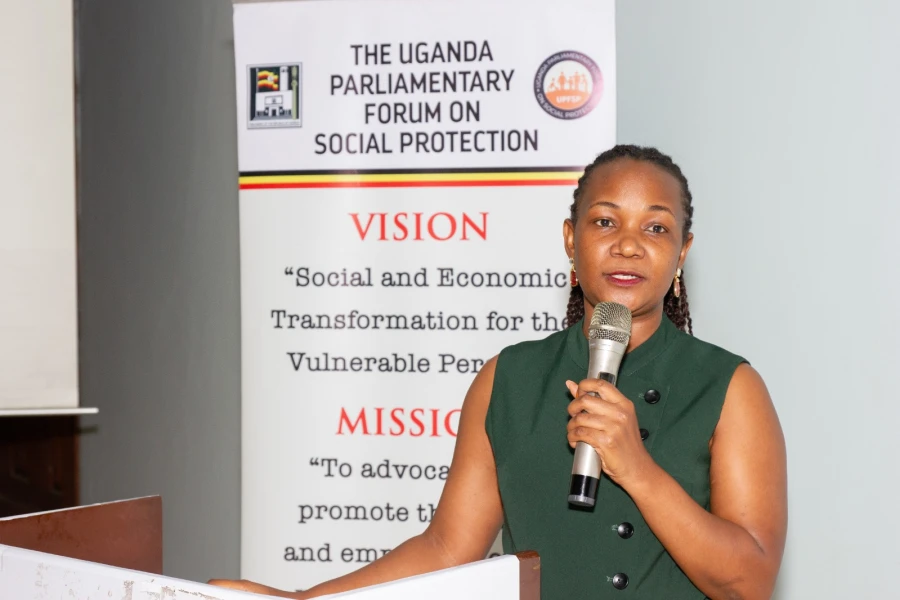
The Uganda Parliamentary Forum on Social Protection (UPFSP) has called on the government to prioritize funding for older persons in the 2027/2028 financial year budget. This call was made on October 1, 2026, as Uganda commemorated the International Day for Older Persons under the theme, "Ageing with Dignity: Strengthening Care and Support Systems for Older Persons." The forum, through its chairperson, Hon. Emmanuel Ongiertho, emphasized that older persons are important custodians of the country's history, wisdom, and cultural values but face growing economic and healthcare challenges.
The UPFSP noted that traditional family support systems are weakening, medical costs are rising, and economic shocks have increased the vulnerability of older persons. Therefore, comprehensive social protection interventions are necessary. The forum urged the government to translate its commitments into tangible interventions through adequate budgetary allocations, improved healthcare services, and stronger social protection programmes. This includes implementing reforms to the Senior Citizens Grant (SAGE) programme and fast-tracking the National Health Insurance Scheme Bill.
One of the forum's key demands is the immediate implementation of the Cabinet-approved reforms to the Social Assistance Grants for Empowerment (SAGE) programme. The proposed reforms involve reducing the eligibility age from 80 to 65 years and increasing the monthly grant from Shs25,000 to Shs35,000. Although Cabinet has approved the changes, the Ministry of Finance, Planning and Economic Development has not provided the necessary funding to facilitate their implementation. Parliament reported on September 30, 2026, that the government requires an additional Shs252 billion to extend SAGE to older persons aged 65 and above.
Gloria Nakajubi, representing the UPFSP, emphasized the need for the government to prioritize the proposed reforms in the 2027/2028 financial year budget. She acknowledged the contribution of the Senior Citizens Grant towards improving the livelihoods of older persons and noted that its benefits extend beyond individual recipients to their households. Nakajubi urged the government to ensure that necessary resources are provided to implement the revised eligibility threshold and increased monthly payments.
The UPFSP also called on Parliament and the Ministry of Health to fast-track the National Health Insurance Scheme (NHIS) Bill. The proposed legislation aims to improve access to affordable and quality healthcare for older persons and the wider population. Many older Ugandans lack health insurance, leaving them vulnerable to high medical expenses, particularly for age-related conditions. A national health insurance scheme based on cross-subsidization would help address financial barriers to healthcare.
The forum further called for deliberate investment in specialized healthcare services to address the unique medical needs of older persons. This includes training healthcare workers in geriatric care, equipping health facilities with suitable infrastructure, deploying geriatric specialists, and integrating specialized services into lower-level health facilities. Nakajubi emphasized the need to train health workers to manage conditions associated with ageing and make geriatric care services available across the country's healthcare system.
The UPFSP urged the government to increase social protection funding in the forthcoming financial year. Existing programmes need to be strengthened, and new initiatives implemented to address the growing needs of older persons. The forum's calls are aimed at enhancing the dignity and well-being of older persons in Uganda.
Key points
- The UPFSP urges the government to prioritize funding for older persons in the 2027/2028 budget.
- The forum calls for the implementation of SAGE reforms, including reducing the eligibility age to 65 years and increasing the monthly grant.
- The UPFSP also advocates for the fast-tracking of the National Health Insurance Scheme Bill to improve access to affordable healthcare for older persons.