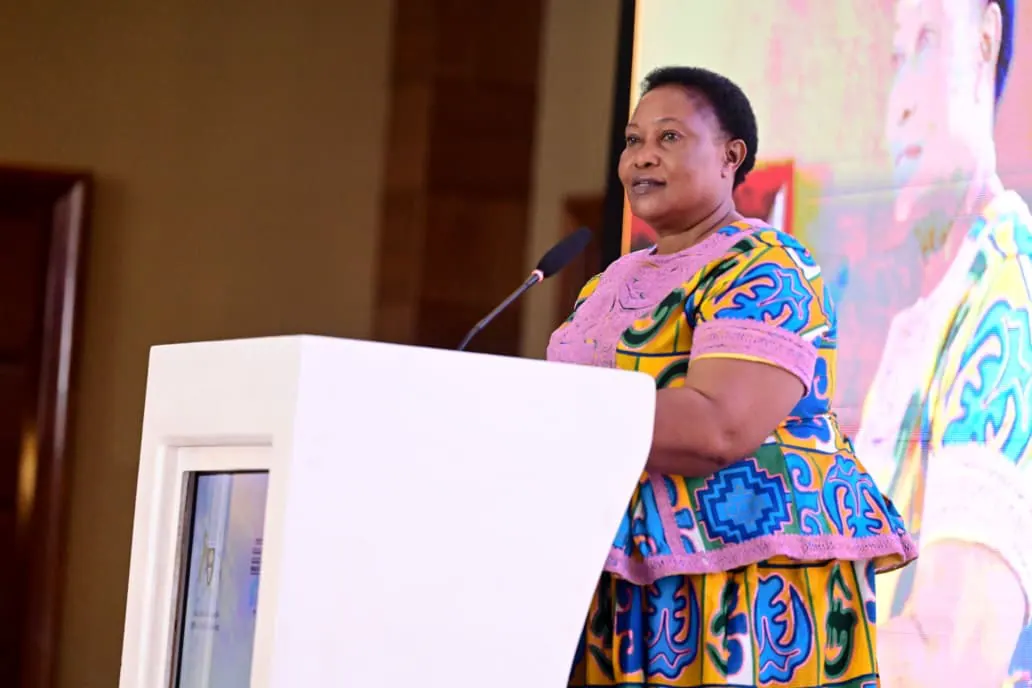
Uganda's Minister for the Presidency, Hon. Babirye Milly Babalanda, has called for a major overhaul of the country's development financing architecture to support its ambitious goal of growing the economy from approximately US$50 billion to US$500 billion by 2040. This goal is part of the Tenfold Growth Strategy, which aims to drive sustained double-digit growth and transformation of the productive sectors. The strategy places particular emphasis on four anchor sectors: agro-industrialisation, tourism development, mineral development, and science, technology and innovation.
Minister Babalanda commended President Yoweri Kaguta Museveni for his strategic leadership and clear direction in advancing Uganda's socio-economic transformation. She noted that the Tenfold Growth Strategy requires a fundamental expansion in productive capacity, investment, value addition, exports and employment, and a financing architecture capable of mobilising and deploying capital at a significantly greater scale. The Minister stressed that Uganda's financing architecture must connect the country's national development ambitions with the capital required to deliver them.
The Fourth National Development Plan (NDP IV) estimates that implementation over the five-year period will require approximately UGX 593.6 trillion, with 69.6 percent expected from the public sector and 30.4 percent from the private sector. Minister Babalanda said Government will continue strengthening domestic revenue mobilisation and directing resources towards national priorities. However, she acknowledged that Uganda cannot finance its transformation through the national budget alone and must broaden its financing base.
Minister Babalanda called for the exploration of opportunities in pension and insurance funds, climate and green finance, blended finance, Islamic finance and other long-term financing mechanisms to bring diverse sources of capital into a coherent national financing framework. She also emphasised the need to increase national savings to 40 percent of GDP by 2040, as envisaged under the Tenfold Growth Strategy. The Minister posed four critical questions for the dialogue, including how to convert growing domestic savings into productive, long-term investment.
The Minister stressed that the Tenfold Growth Strategy cannot be delivered by Government alone and that the private sector must be positioned as a central investment and financing partner in Uganda's transformation. She noted that some investments will have to be financed directly by Government, others by the private sector, while some will require joint financing through Public-Private Partnerships, blended finance and risk-sharing arrangements.
Minister Babalanda said Uganda values the contributions of development partners and international financial institutions, but noted that such partnerships must evolve in line with the country's changing development ambitions. She added that concessional resources will remain important for essential public investments but should be deployed more strategically to de-risk investments and leverage larger flows of private and institutional capital.
The high-level dialogue brought together Members of Parliament, government officials, private sector leaders, and development partners to discuss Uganda's development financing architecture. Minister Babalanda tasked the dialogue with providing clarity on three fundamental issues: the financing architecture Uganda requires to implement the Tenfold Growth Strategy, the policy, regulatory and institutional reforms needed to mobilise domestic, private, institutional and international capital at scale, and the immediate reforms and actions that Government and its development partners must undertake to accelerate implementation.
Key points
- Uganda aims to grow its economy tenfold to US$500 billion by 2040.
- The country's financing architecture must be re-engineered to support this ambitious goal.
- The private sector must be positioned as a central investment and financing partner in Uganda's transformation.