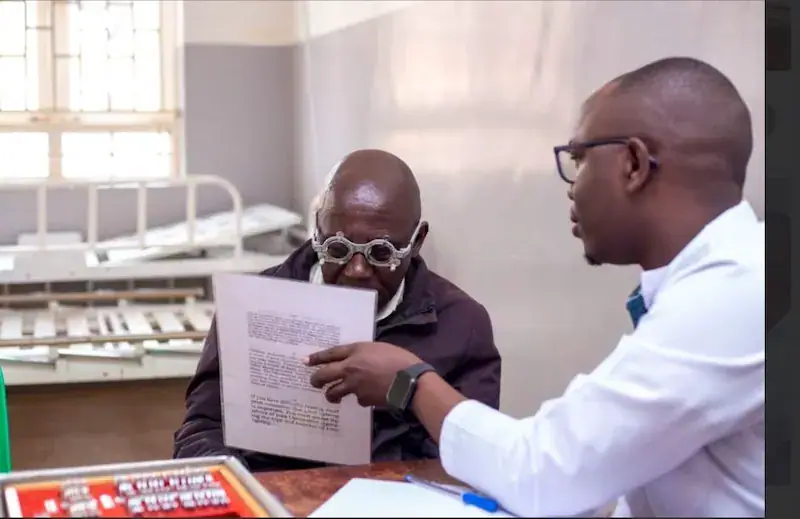
The Ugandan government has announced plans to expand eye-health services to over 5 million people by 2031, with a reported $5 million investment aimed at reducing avoidable blindness and improving access to treatment. This initiative was unveiled at the inaugural Global Summit for Eye Health, hosted by Antigua and Barbuda and co-hosted by Bangladesh, Guyana, Ireland, and Nigeria, in collaboration with the World Health Organisation (WHO). The summit brought together governments, development organisations, civil society, and private-sector partners to accelerate progress towards universal eye-health coverage.
According to Peter Holland, CEO of the International Agency for the Prevention of Blindness (IAPB), Uganda's commitment reflects growing recognition that investing in eye health delivers benefits beyond the health sector. An investment of $5.74 million between 2026 and 2030 could generate approximately $48.2 million in economic benefits, representing a projected return of about $8.40 in economic benefits for every dollar invested. This analysis suggests that improved access to eye care could generate more than $44 million in productivity gains by 2030 and avert 141 cases of depression associated with vision impairment.
Uganda's plan is built around three major targets to be achieved by 2031. The first target is to integrate essential eye-care services into 72 per cent of general hospitals and Health Centre IV facilities, supported by stronger referral systems. This would bring eye-health services closer to patients who might otherwise need to travel long distances for diagnosis or treatment. The second target focuses on cataracts, aiming to increase the national cataract surgical rate from 250 to 800 operations per million people annually.
The third target is to increase effective refractive error coverage by 40 per cent while establishing a sustainable national system for affordable glasses. Refractive errors occur when the eye cannot focus light properly, causing blurred vision, and many can be corrected using prescription glasses. For schoolchildren, appropriate glasses can improve their ability to read and participate in lessons, while for working adults, clearer vision can support productivity and independence.
The programme will also strengthen Uganda's eye-health workforce and expand community-based and school-based vision screening, with particular emphasis on reaching under-served populations, including children, women, older people, people with disabilities, refugees, and remote communities. Investments in tele-ophthalmology, research partnerships, coordination among sectors, and improved monitoring systems are also expected to support implementation of Uganda's National Eye Health Strategic Plan.
Alongside the government's plans, VisionSpring Uganda is working with local partners to expand access to affordable glasses, particularly among underserved communities. VisionSpring Uganda's country lead, Julius Mujuni, said correcting poor vision can have immediate consequences for people's livelihoods, and the organization aims to correct the vision of 750,000 more people in Uganda with eyeglasses by 2030.
The initiative aims to improve access to primary eye care, reduce avoidable blindness caused by cataracts, strengthen the distribution of eye-health workers, and establish more sustainable financing for services. By achieving these targets, the programme can significantly improve the quality of life for millions of Ugandans, particularly those living in remote communities who face barriers to accessing eye care services.
Key points
- The Ugandan government has committed $5 million to expand eye-health services to over 5 million people by 2031.
- The initiative aims to generate $48.2 million in economic benefits and improve access to primary eye care.
- VisionSpring Uganda targets 750,000 people with affordable glasses by 2030.
Reporting sources
- Can gov’ts $5m transform Uganda’s eye care? · The Observer