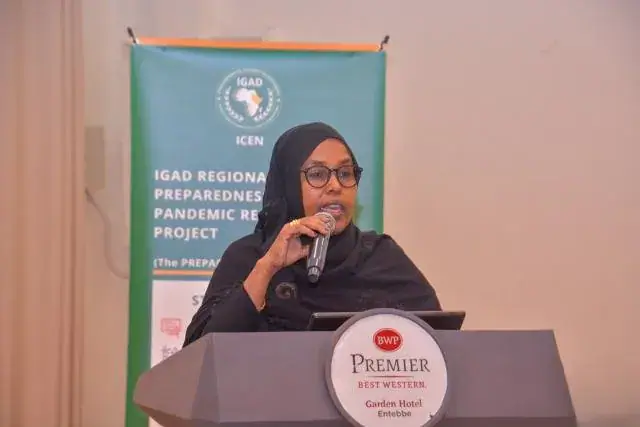
The Ugandan government is creating a new national Ebola Virus Disease preparedness and response work plan due to the renewed transmission of the Bundibugyo Ebola virus in the region. This initiative, supported by the Intergovernmental Authority on Development, aims to enhance Uganda's ability to detect, prevent, and respond to future outbreaks. This move follows the successful containment of Uganda's 2026 Ebola outbreak.
Consultations on the proposed work plan have been underway for three days under IGAD's Regional Pandemic Preparedness and Response Initiative. Local and regional experts identified critical gaps and priority interventions in disease surveillance, laboratory systems, health workforce capacity, and cross-border coordination. These areas are crucial for effective outbreak response and preparedness.
The proposed work plan will align with the regional preparedness framework and be guided by the One Health approach, recognizing the interconnectedness of human, animal, and environmental health. This approach ensures a comprehensive strategy for addressing health threats. The initiative also involves contributions from the World Health Organization Uganda and the International Federation of Red Cross and Red Crescent Societies.
IGAD PREPARE Lead Ambassador Dr. Fatuma Adan commended Uganda for containing the recent Ebola outbreak but cautioned that being declared Ebola-free does not eliminate the risk of future infections. She emphasized the need for sustained investment in preparedness to strengthen the country's ability to detect emerging health threats and mount timely and effective responses.
The World Health Organization declared the end of Uganda's outbreak on August 27, following the completion of the mandatory 42-day monitoring period without any new cases of transmission. During the outbreak, Uganda recorded 20 confirmed cases, including two deaths. Fifteen cases were linked to infections imported from the Democratic Republic of Congo, while five were locally acquired among contacts and health workers.
The development of the new work plan is expected to provide a framework for addressing identified preparedness gaps, strengthening regional collaboration, and ensuring Uganda remains better equipped to respond to future Ebola threats. This will involve implementing measures to enhance disease surveillance, laboratory systems, and health workforce capacity, as well as improving cross-border coordination.
The meeting that officiated the consultations was led by the Director General of Health Services, Dr. Charles Olaro. The new plan aims to provide sustained investment in preparedness and strengthen Uganda's ability to detect emerging health threats. Key points include:
Key points
- The plan will be aligned with the regional preparedness framework and guided by the One Health approach.
- Uganda recorded 20 confirmed Ebola cases during the 2026 outbreak, including two deaths.
- The plan aims to address identified preparedness gaps and strengthen regional collaboration.
Reporting sources
- Uganda Develops New Ebola Preparedness Plan Amid Regional Threat of Bundibugyo Virus · Radio Sapientia 94.4 FM