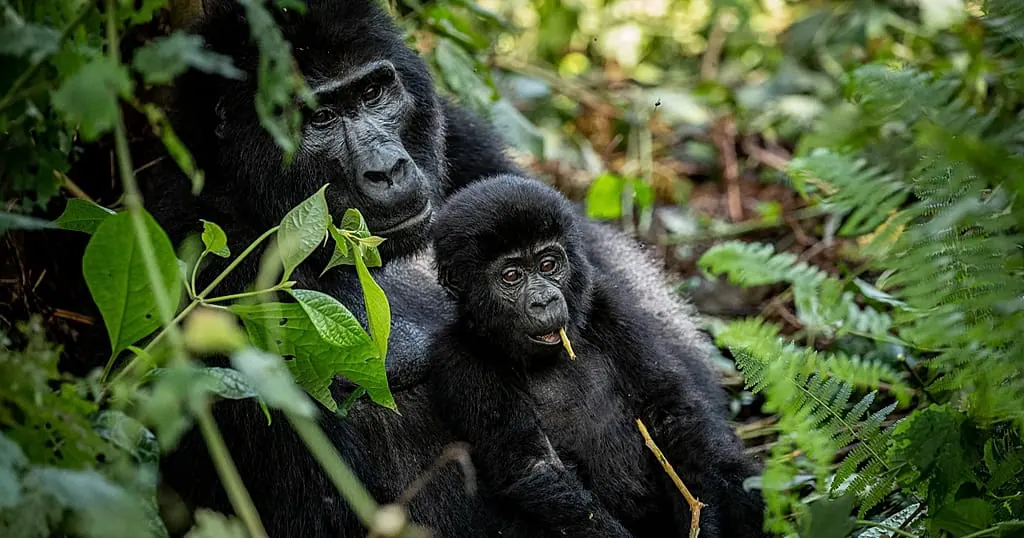
In southwestern Uganda, the Bwindi Impenetrable National Park is home to approximately 450 mountain gorillas, nearly half of the world's remaining population of these endangered great apes. The park, a UNESCO World Heritage site, has seen an increase in gorilla numbers in recent years. Tourism has become vital to conservation efforts, with visitor funds supporting local communities and creating incentives to protect the animals. Many habituated gorilla groups in the park have grown comfortable with human presence.
Despite conservation efforts, deforestation around the park's edges remains a problem, causing biodiversity loss and debate over access to forest resources. Habitat encroachment and poaching are declining as wildlife authorities collaborate with nearby communities. The Uganda Wildlife Authority (UWA) is working to improve relations with local communities and reduce tree loss for medicinal purposes, firewood, and raw materials. The UWA aims to provide tree seedlings to communities to reduce pressure on the forest.
Joseph Muhindo, an assistant tourism and hospitality officer for the UWA, explains that providing tree seedlings to communities can help curb encroachment activities. The UWA offers various tree species with medicinal value to communities, allowing them to harvest within their areas without harming the gorilla habitat. This approach helps protect the endangered species and supports the local community's needs.
Christina Katushabe, founder of the local community-based organization Change a Life, is working on a project that donates valuable tree species to communities living outside the park. This initiative aims to reduce pressure on the forest and improve biodiversity in the Bwindi National Park and surrounding forest range. By adding a small part of an indigenous forest, Katushabe believes it is possible to enhance habitat and food sources for wildlife and mountain gorillas.
Katushabe's project also involves teaching local communities, particularly the Batwa people, about the importance of tree planting and environmental conservation. The project has inspired interest in protecting mountain gorillas due to the economic benefits of tourism. Local women make products from natural resources and sell them to visitors, creating an additional incentive for conservation.
The tree-planting campaign has now extended to schools, with Katushabe teaching young people about environmental conservation and providing them with practical knowledge that can be passed on to future generations. Students, such as 20-year-old Davis from Ruhija Seed Secondary School, understand the importance of protecting the forest and its inhabitants. By planting trees, they hope to prevent further forest degradation and ensure the gorillas' well-being.
The outlook for mountain gorillas has been positive since 2018, when a survey showed that the population exceeded 1,000. This marks a significant recovery for a species that faced extinction in the last century. The International Union for Conservation of Nature currently cites the mountain gorilla as endangered, an improvement from its earlier designation as critically endangered. About half of the gorillas live in Uganda, and World Gorilla Day is celebrated annually on September 24 to raise awareness for gorilla conservation.
Key points
- Local communities in Uganda are working with conservation authorities to plant trees and protect mountain gorillas and their habitats.
- The project aims to reduce pressure on the forest, improve biodiversity, and provide economic benefits to local communities through tourism.
- The mountain gorilla population has shown a positive trend, exceeding 1,000 individuals in 2018, and is currently listed as endangered by the International Union for Conservation of Nature.