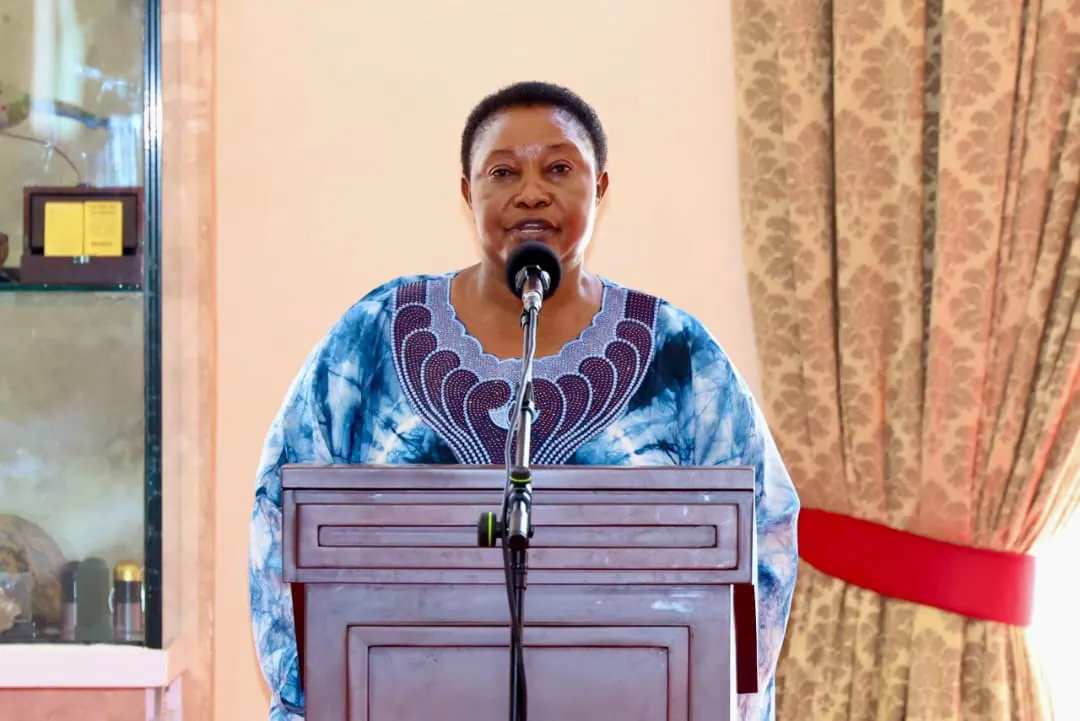
Uganda celebrated its 64th Independence Anniversary on October 9, with Minister for the Presidency, Hon. Babirye Milly Babalanda, calling on Ugandans to prioritize economic independence, strengthen national sovereignty, and fight corruption. In her address at State House Entebbe, Babalanda emphasized the need for Uganda to go beyond political freedom and focus on economic transformation, self-reliance, and poverty eradication. The celebrations were officiated by President Gen. (Rtd) Yoweri Kaguta Museveni.
Babalanda paid tribute to Uganda's independence heroes, including Omukama Kabalega of Bunyoro and Kabaka Mwanga of Buganda, who resisted colonial domination and laid the foundation for the country's political liberation. She also recognized early nationalist movements, such as the Uganda National Congress, established in 1952, and formations like Bataka Ba Buganda, which played a crucial role in advancing political mobilization and the quest for independence.
The Minister highlighted the significance of the lowering of the Union Jack on October 9, 1962, marking a defining moment in Uganda's history. However, she stressed that achieving political independence was only the beginning of a broader national liberation process. Babalanda credited President Museveni with advancing the second phase of Uganda's liberation: the pursuit of economic and strategic independence, which began when the National Resistance Movement (NRM) assumed power in 1986.
According to Babalanda, President Museveni's efforts have focused on rebuilding the economy and making independence meaningful to ordinary Ugandans. She emphasized the President's argument that political sovereignty cannot be fully realized without economic independence, particularly when a country depends heavily on imported manufactured goods while exporting predominantly unprocessed commodities. The Minister referred to the 3Cs and 3Ts framework, which represents Uganda's historical economic structure.
Babalanda urged Ugandans to shift from dependence on raw-material exports towards industrialization, domestic manufacturing, value addition, and expanded production. She pointed to products such as sugar, soap, steel, cement, pharmaceuticals, and processed foods as examples of goods that can be manufactured locally, creating opportunities for employment, investment, and economic growth. The Minister described this as economic liberation, enabling Uganda to retain more value from its natural resources and reduce dependence on imported goods.
The Minister also highlighted national security as a critical component of Uganda's independence, crediting the government with rebuilding the country's security institutions following years of instability. She commended efforts to strengthen professionalism, accountability, and operational efficiency within security institutions, including initiatives under the current Chief of Defence Forces, Gen. Muhoozi Kainerugaba. Babalanda emphasized that national sovereignty must be protected against all forms of external dependence.
In her address, Babalanda expressed gratitude to President Museveni for entrusting her with responsibilities in the Presidency and retaining her in government. She described the opportunity to serve as a privilege and acknowledged the President's mentorship and confidence in her leadership. Babalanda concluded by emphasizing the importance of building institutions that serve the public efficiently and honestly, increasing domestic production, and creating employment opportunities for young people.
Key points
- Minister Babalanda calls for economic transformation and anti-corruption efforts to consolidate Uganda's independence gains.
- President Museveni credited with advancing Uganda's second phase of liberation: economic and strategic independence.
- Uganda's independence heroes, including Omukama Kabalega and Kabaka Mwanga, honored for their role in resisting colonial domination.