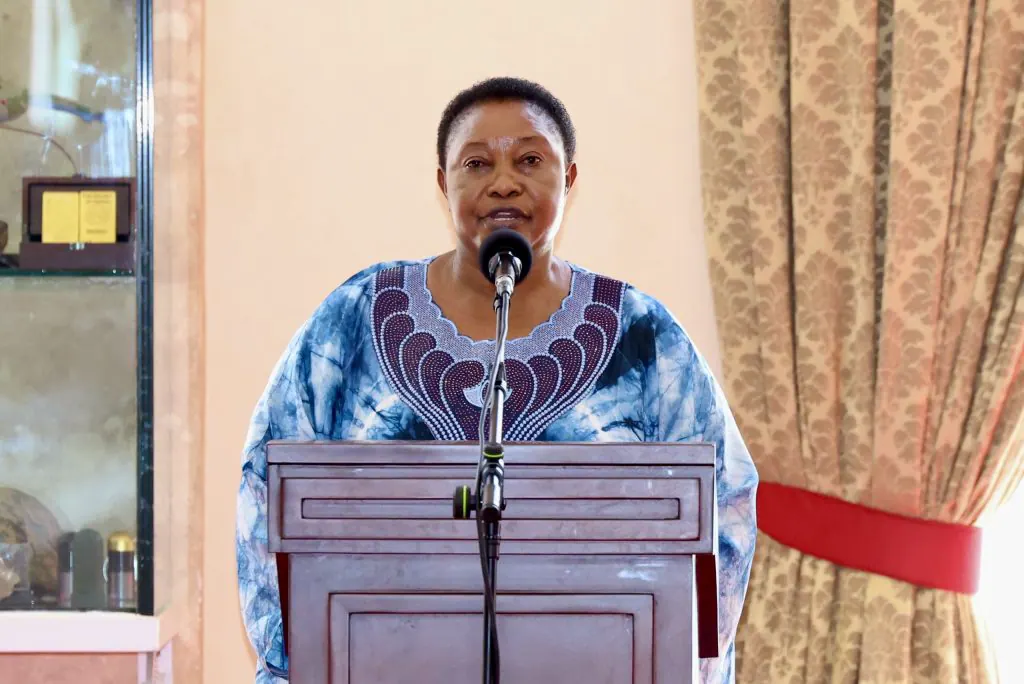
On October 9, 2026, Uganda celebrated its 64th Independence Anniversary, with Minister for the Presidency, Hon. Babirye Milly Babalanda, delivering a poignant address officiated by President Gen. (Rtd) Yoweri Kaguta Museveni at State House Entebbe. The theme of this year's celebration, “Embracing Our Sovereignty with Hope and Visionary Leadership,” underscored the nation's journey towards not only political freedom but also economic transformation and self-reliance. Babalanda emphasized that Uganda's independence must transcend political liberation to include economic empowerment, national security, and poverty eradication.
In her address, Babalanda paid tribute to Uganda's independence heroes, including Omukama Kabalega of Bunyoro and Kabaka Mwanga of Buganda, who symbolized the struggle for sovereignty. She also recognized early nationalist pioneers like Ignatius Musazi, Semakula Mulumba, Maindi, Miti, and James Kivu, who contributed significantly to the country's quest for political and economic liberation. Formations such as Bataka Ba Buganda and the Uganda National Congress, established in 1952, were highlighted for their roles in advancing political mobilization and economic liberation.
Babalanda noted that while Uganda achieved political independence on October 9, 1962, the journey to true national liberation is ongoing. She credited President Yoweri Kaguta Museveni with spearheading the second phase of Uganda's liberation: the pursuit of economic and strategic independence. When the National Resistance Movement (NRM) took power in 1986, Uganda was recovering from political instability, economic decline, and weakened institutions. The government aimed not only to restore political order but also to rebuild the economy.
The Minister emphasized President Museveni's argument that political sovereignty is inextricably linked with economic independence. She pointed to the need for Uganda to shift from exporting raw materials to industrialization, domestic manufacturing, and value addition. Products like sugar, soap, steel, cement, pharmaceuticals, and processed foods can be manufactured locally, creating employment, investment, and economic growth opportunities. This approach, she argued, is a form of economic liberation that would enable Uganda to retain more value from its natural resources.
National security is also a critical component of Uganda's independence. Babalanda credited the government with rebuilding the country's security institutions, transforming the Uganda People’s Defence Forces (UPDF) into a professional national army. This transformation has strengthened Uganda's capacity to defend its territorial integrity and contribute to regional and international peace and security. Efforts to enhance professionalism, accountability, and operational efficiency within security institutions were also commended.
Babalanda stressed that national sovereignty must be protected against external dependence, including political, economic, intellectual, and cultural influences. She called for sustained investment in productive sectors, encouraged Ugandans to support local industries, and emphasized the importance of wealth creation and entrepreneurship. The Minister also highlighted the need for institutions that serve the public efficiently and honestly.
In her personal reflection, Babalanda expressed gratitude to President Museveni for entrusting her with responsibilities in the Presidency. She praised the President's willingness to identify leadership potential among Ugandans from diverse backgrounds, noting that a person's origins should not determine their ability to contribute to national development. Babalanda concluded by thanking the President for the opportunity to serve and for his mentorship.
Key points
- Minister Babalanda calls for economic independence and a stronger anti-corruption drive.
- Uganda's independence journey must include economic transformation and self-reliance.
- President Museveni credited with advancing Uganda's second phase of liberation through economic and strategic independence.