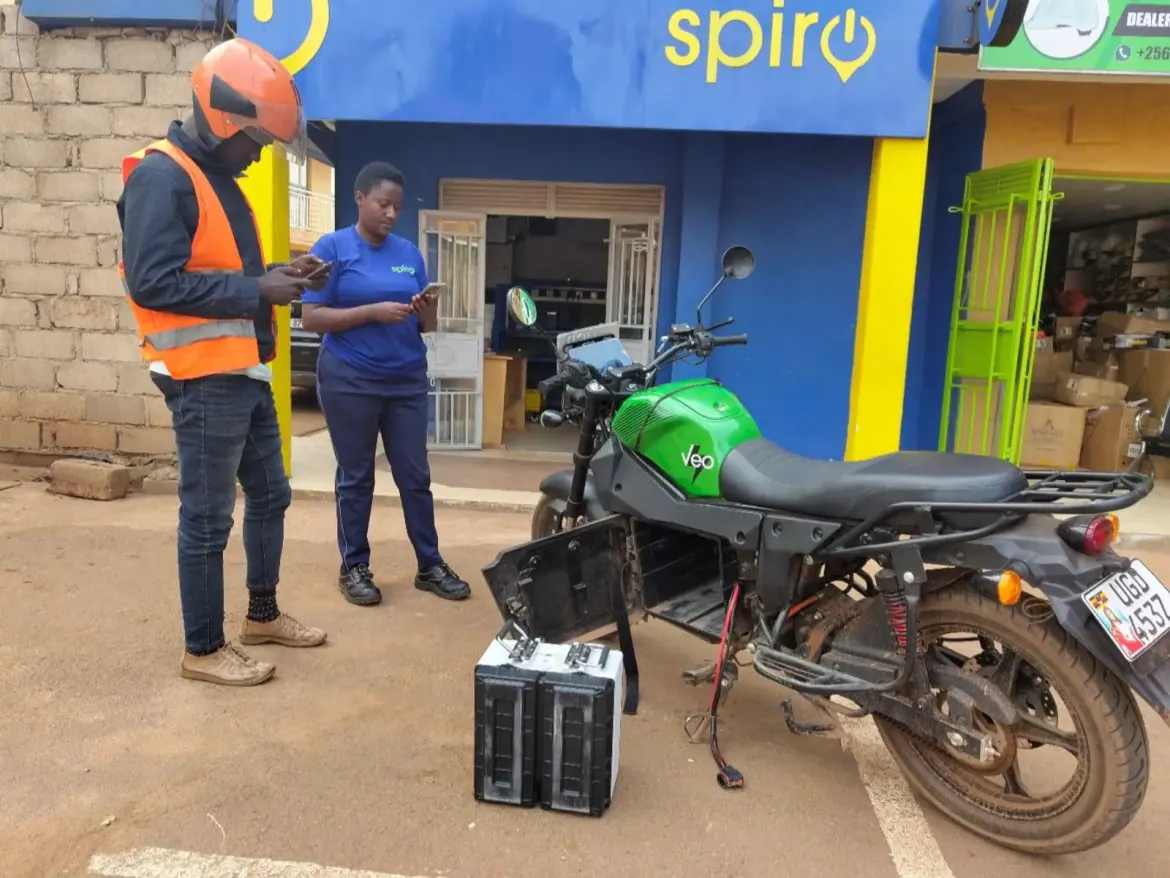
Uganda's electric mobility sector is experiencing rapid growth, driven by the expansion of battery-swapping networks. The number of swapping stations has more than doubled, from approximately 150 in mid-2024 to over 350 by late 2025. This growth is largely attributed to private operators such as Zembo, Gogo, and Spiro, who have developed innovative solutions to support electric motorcycle adoption. Electric motorcycles, also known as e-boda-bodas, have become increasingly popular in Uganda, accounting for a significant portion of the country's registered vehicle fleet.
A recent World Bank study, conducted in collaboration with Uganda's Ministry of Energy and Mineral Development, highlights the potential for electric mobility to transform the country's transportation sector. The study notes that electric motorcycles could save riders approximately UGX 1 million (US$255) per year compared to petrol motorcycles. With over 400,000 motorcycles in Greater Kampala alone, the potential for electric mobility to make a significant impact is substantial. However, the study also identifies several barriers to scaling electric mobility, including high upfront costs and limited access to affordable credit.
To address these challenges, the World Bank study proposes a range of solutions, including smart charging, grid investment, affordable finance, clear regulation, and coordinated urban planning. The study estimates that Uganda's fleet could reach between 800,000 and 4 million electric vehicles by 2040, with two-wheelers dominant throughout. Private operators are driving early growth, but the public sector's role is crucial in clearing barriers around grid connections, land access, permitting, and finance. A national Distribution Master Plan incorporating electric vehicle demand would guide investment decisions and ensure that the grid is equipped to handle the increased demand.
One of the key findings of the study is that the charging pattern of electric vehicles matters more than the total demand. By 2030, electric vehicles in Greater Kampala could consume between approximately 290 and 1,100 gigawatt-hours per year. However, the real challenge is not how much electricity is needed, but when and where it is drawn. The study's modeling shows that smart charging can dramatically smooth peak demand, reducing the strain on the grid and minimizing the need for costly reinforcement. Battery swapping stations are a practical place to start, as they are concentrated and commercially managed.
The study also highlights the importance of coordinated urban planning in supporting the growth of electric mobility. Charging infrastructure should be located where riders and fleets already operate, including boda-boda stages, markets, taxi parks, and health facilities. Building codes can prepare new developments by requiring adequate electrical capacity and conduit from the start. The study proposes 18 interconnected actions across three time horizons, covering governance, strategy implementation, and power system readiness.
To support the growth of electric mobility, Uganda has adopted a National E-Mobility Strategy and introduced fiscal incentives. However, companies consulted for the study reported persistent uncertainty about eligibility criteria, accreditation requirements, customs treatment, and how long incentives will last. Clearer rules and regulations are essential to unlocking investment and supporting the growth of the sector. The study emphasizes the need for coordination across energy, transport, and urban institutions, with utilities, regulators, and private operators working in alignment rather than in silos.
As Uganda continues to accelerate its electric mobility transition, the focus will be on implementing the recommendations of the World Bank study. With a clear roadmap in place, the country is well-positioned to overcome the financing barriers and unlock the full potential of electric mobility. The riders have started, and Uganda must move with them to ensure that the benefits of electric mobility are realized.
Key points
- Uganda's electric vehicle fleet could reach between 800,000 and 4 million by 2040.
- Smart charging can reduce the modeled annual cost of additional energy losses from approximately US$21 million to US$10 million.
- Clear rules and regulations are essential to unlocking investment and supporting the growth of the electric mobility sector.