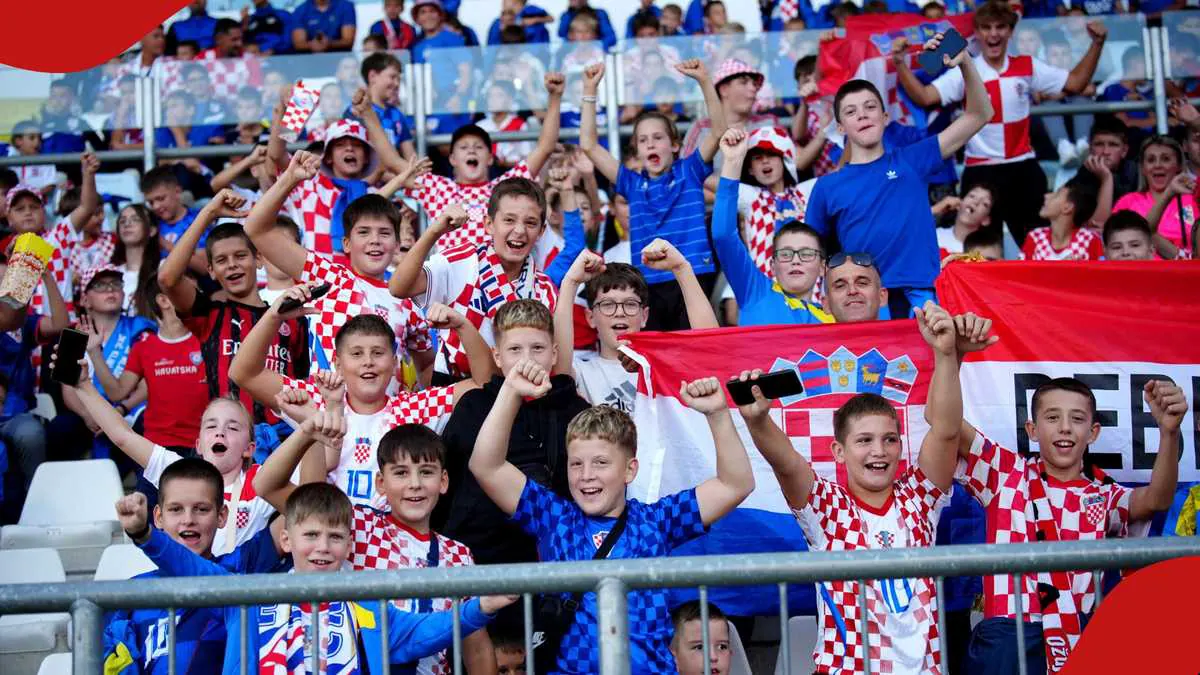
Croatia's match against England was played with spectators in attendance, despite a UEFA stadium ban imposed due to crowd disturbances in a Nations League fixture. The ban required Croatia to play their next home match behind closed doors, but UEFA regulations contain specific exemptions that allowed certain groups to attend. Several thousand schoolchildren and a small group of England supporters were spotted inside the stadium during the match.
UEFA's regulations do not require the stadium to be empty, but rather prohibit tickets from being sold to the general public and bar regular spectators from attending. This allowed certain approved groups to be present, including children from local schools and football academies, who can be brought in under controlled conditions. For the Croatia vs England fixture, several thousand Croatian schoolchildren were granted access and were among the most visible faces in the stands.
A limited England contingent also made it inside the stadium, with the Football Association confirming it had worked directly with UEFA to secure 100 complimentary tickets for members of the England Supporters Travel Club. This allowed a small group of travelling fans to witness the game in person. The arrangement was effectively an exemption rather than a lifting of the ban, with Croatia still serving their UEFA sanction.
Despite the presence of these spectators, Croatia's behind-closed-doors punishment technically remained in full effect. No tickets were sold through normal channels, and the wider public was excluded from the ground entirely. The permitted groups added enough atmosphere to make the fixture look quite different from a standard empty-stadium game.
The unusual setup explains the apparent contradiction between what viewers saw on screen and the official disciplinary status of the match. Images from the match left many viewers puzzled, with supporters clearly visible in the stands despite Croatia serving a UEFA stadium ban. The governing body's regulations were followed, with specific groups allowed to attend under controlled conditions.
Croatia's captain, Luka Modric, had previously spoken out about the team's performance, following a 7-0 defeat by England. He warned that Croatia must recover its pride and character after what he called a catastrophic night. Modric's comments highlighted the team's need to stay united and bounce back from the loss.
The incident highlights the complexities of UEFA's regulations and the exemptions that can be made for certain groups. The presence of schoolchildren and England supporters at the match added to the atmosphere, but also raised questions about the effectiveness of the behind-closed-doors ban. The governing body will likely continue to enforce its regulations, while also considering exemptions for specific groups.
Key points
- UEFA's behind-closed-doors ban for Croatia did not prevent schoolchildren and England supporters from attending the match against England.
- The ban allowed certain approved groups to be present, including children from local schools and football academies.
- The arrangement was effectively an exemption rather than a lifting of the ban, with Croatia still serving their UEFA sanction.