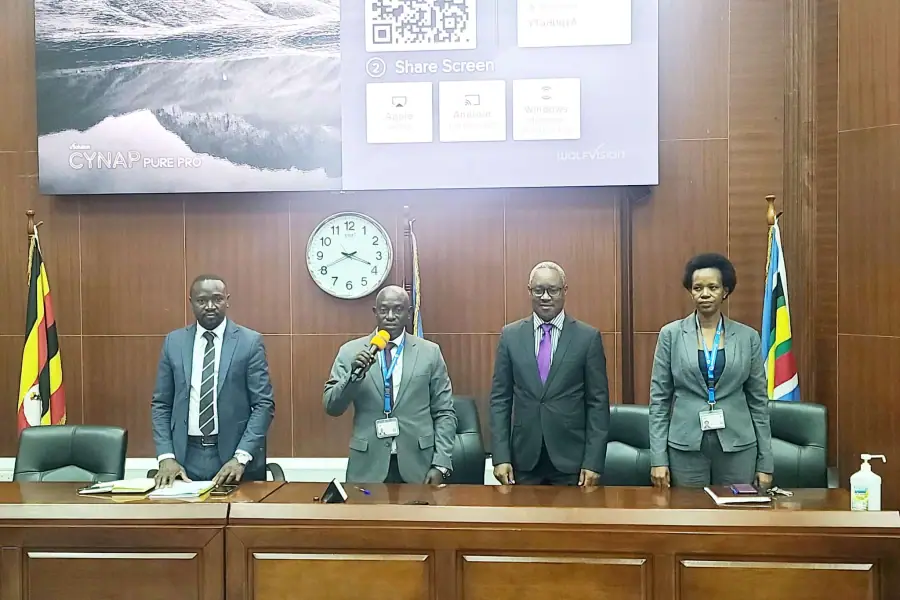
The Uganda Bureau of Statistics (UBOS) has raised concerns over the high risk of waterborne diseases in Uganda due to contaminated drinking water. According to the 2022 Uganda Demographic and Health Survey, 89 per cent of households are at risk, with rural households recording an even higher proportion of 93 per cent. This has prompted UBOS to call for stronger use of statistics to improve water safety, sanitation services, and climate-resilient development.
UBOS Deputy Executive Director, Dr. Vincent Fred Ssenono, emphasized the need for reliable statistics to identify communities at risk and guide government investment in climate-resilient development. He noted that access to a water source does not guarantee safe drinking water, and contamination is a significant challenge requiring targeted interventions. The concerns were raised during a media briefing ahead of the African Statistics Day celebrations scheduled for November 18, 2026.
The theme of this year's African Statistics Day is "Institutionalising Water and Sanitation Statistics for Sustainable and Climate-Resilient Development in Africa." UBOS officials say reliable data can help government and local authorities identify communities without dependable water and sanitation services, determine where investments are most urgently needed, and assess whether public interventions are benefiting the intended populations.
To address these challenges, UBOS has collaborated with local governments to develop a local government application that enables districts to access information about different water sources within their jurisdictions. Through georeferencing, water sources have been digitally mapped to enable authorities to identify their locations and improve planning, monitoring, and service delivery.
As part of the commemorative program, UBOS will launch the Fourth Plan for National Statistical Development, alongside the UBOS Service Delivery Standards for 2025–2026 and the National Statistical Development Plan covering 2026/2027 to 2029/2030. A seminar for statistics professionals will focus on strengthening the role of statistical practitioners in generating information required for policy formulation and national development.
The African Statistics Day celebrations will also feature a students' symposium and sports gala aimed at engaging young people pursuing statistical studies. The symposium is intended to expose students to the practical importance of statistics, particularly how the information they generate and analyze informs government policies, planning, and resource allocation.
The observance comes at a time when African countries are increasingly challenged to strengthen climate resilience, improve access to essential services, and ensure that development decisions are guided by accurate and timely data. For Uganda, the water contamination findings underline the importance of looking beyond the availability of water sources to examine the quality, safety, and reliability of water reaching households.
Key points
- 89% of Ugandan households are at risk of waterborne diseases due to contaminated drinking water.
- UBOS is calling for stronger use of statistics to improve water safety, sanitation services, and climate-resilient development.
- The African Statistics Day celebrations will focus on institutionalizing water and sanitation statistics for sustainable and climate-resilient development in Africa.
Reporting sources
- UBOS Raises Alarm Over Contaminated... · nilechronicles.com