The Universal Basic Education Commission (UBEC) in Nigeria has announced a significant shift in its approach to basic education development. The commission has unveiled a new digital monitoring system and adopted a "whole school approach" as part of its 10-year Universal Basic Education Roadmap, 2026-2035. This new direction aims to ensure that education projects address the complete needs of schools across Nigeria, ending the practice of isolated projects that fail to tackle wider challenges confronting schools.
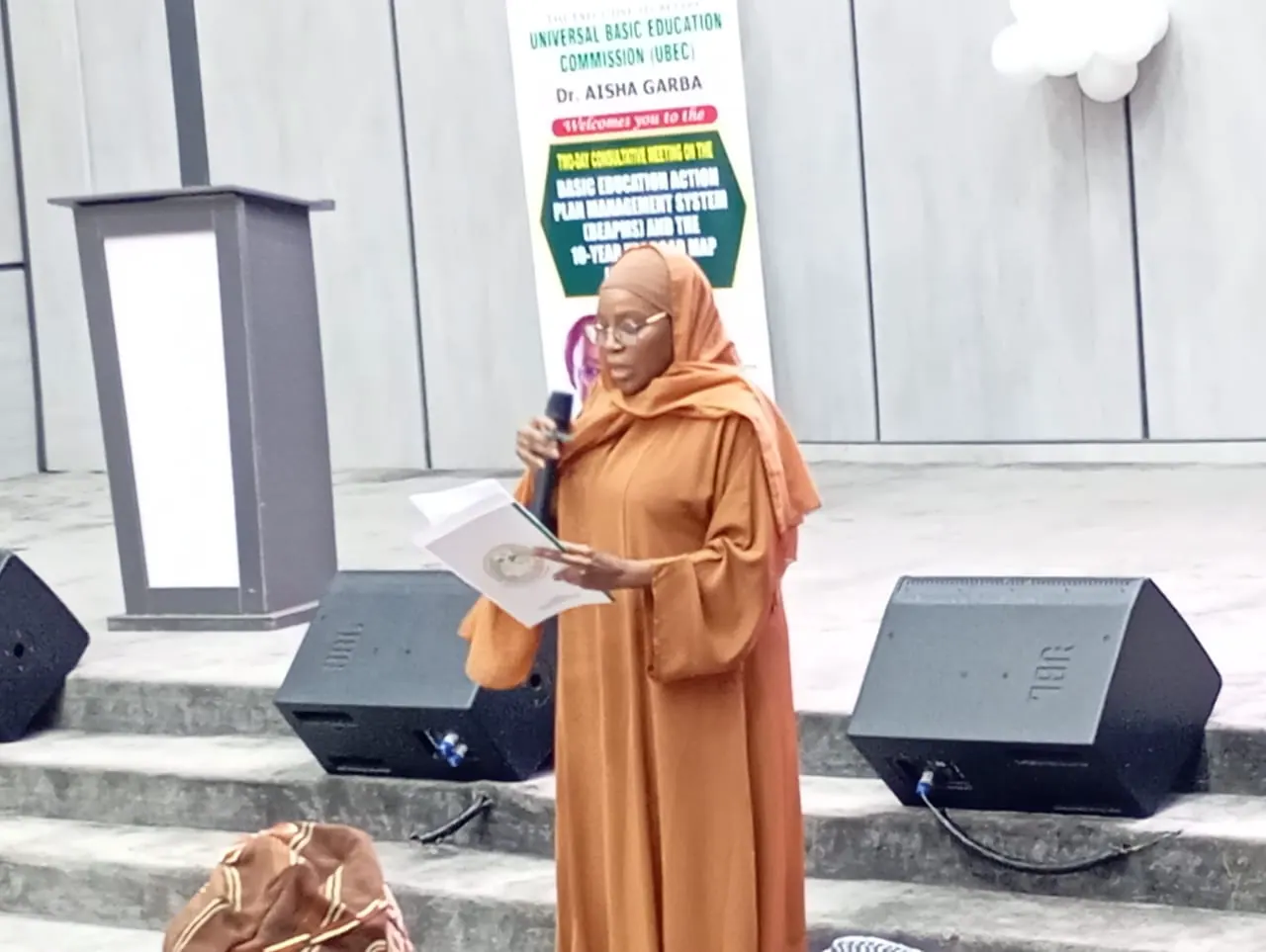
The UBEC Executive Secretary, Dr. Aisha Garba, disclosed this new approach during a two-day consultative workshop with chairmen of the 36 State Universal Basic Education Boards (SUBEBs) and UBEC directors in Abuja. According to Garba, the new framework requires states to identify and address all major gaps in a school before submitting intervention plans for UBEC approval. This approach ensures that schools receive complete support rather than scattered projects implemented without proper planning.
The digital platform, known as the Basic Education Action Plan Management System (BEAPMS), was developed to improve project planning, transparency, accountability, and monitoring of basic education interventions nationwide. With BEAPMS, communities will be able to participate directly in monitoring UBEC-funded projects by accessing information on interventions, funding, and project quality. Details of funds accessed by each state, as well as ongoing projects, will be published on UBEC's website to promote accountability.
Under the whole-school model, schools will no longer receive fragmented interventions such as classrooms or furniture alone without considering other critical facilities required for effective learning. The new system ensures that where schools require facilities such as perimeter fencing, toilets, or other basic amenities, such needs will be captured in the intervention plan. Additional classrooms will be provided alongside adequate sanitation facilities based on enrolment projections.
The UBEC Executive Secretary also announced changes to the matching grant formula to allow states to utilise commission funds based on their specific education priorities. The previous arrangement focused mainly on the construction of new structures, leaving some states unable to access funds because their immediate challenges had shifted towards rehabilitation, maintenance, and upgrading of existing schools. The new formula allows each state to look at their own needs and address them accordingly.
The revised funding structure will also support areas such as learning materials and recruitment of additional teachers where states experience increased student enrolment. According to Garba, the commission's mandate has expanded beyond physical infrastructure, with broader interventions now being introduced to improve the overall delivery of basic education services. The digital platform had been under development for over a month, with SUBEB chairmen already integrated into the system ahead of the October rollout.
Speaking at the workshop, Dean of SUBEB Chairmen, Prof. Shehu Adaramaja, said the engagement was necessary to create a shared vision for basic education delivery over the next decade. Adaramaja noted that stakeholders would focus on strategies to improve access, enhance quality, and strengthen education systems under the new management framework. The workshop was designed as a practical exercise, with directors of research and statistics expected to contribute to the development of state action plans that would guide implementation.
Key points
- UBEC adopts a comprehensive school development model to address the needs of schools nationwide.
- The new digital monitoring system aims to improve project planning, transparency, accountability, and monitoring of basic education interventions.
- The revised matching grant formula allows states to utilise commission funds based on their specific education priorities.