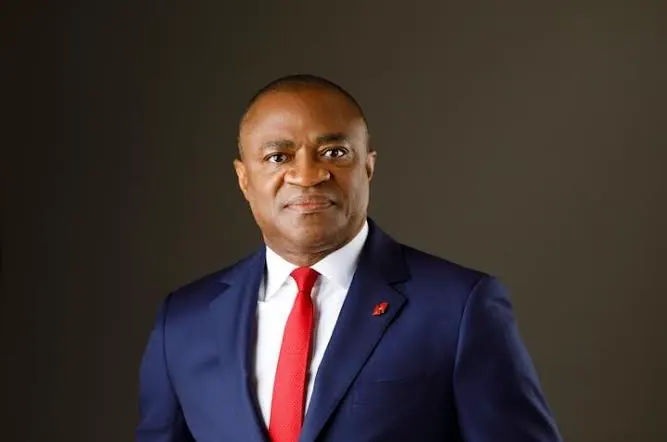
Oliver Alawuba, Group Managing Director and Chief Executive Officer of United Bank for Africa (UBA) Plc, has called for a greater focus on turning Africa's vast opportunities into investable projects. He made this statement at the Forward Africa Leaders Symposium in New York, held during the United Nations General Assembly engagements. The symposium provided a platform for Alawuba to participate in a fireside chat themed "From Mandate to Impact." During the discussion, he emphasized the need to translate Africa's development ambitions into tangible outcomes.
According to Alawuba, Africa's opportunities deserve rigorous preparation and serious capital. He noted that projects must be commercially sustainable and supported by institutions capable of delivering on their commitments. The UBA boss also highlighted the importance of dependable revenues, credible institutions, and accountable delivery to unlock sustainable capital for the continent. These statements underscore the critical role that financial institutions can play in supporting Africa's development efforts.
Drawing from UBA's experience across the continent, Alawuba cited several projects that demonstrate the bank's role in connecting African enterprise with capital, expertise, and financial infrastructure. For example, in Chad, UBA financed a $6.56 million telecommunications modernization project initiated in 2021, which was completed in 2025 and the loan fully repaid. This project showcases how a clearly defined development need can move from financing to completion and repayment when the right structure and accountability are in place.
Alawuba also highlighted UBA's role in financing activities across various markets, including Burkina Faso, the Democratic Republic of Congo, Ghana, Tanzania, and Liberia. These activities range from direct lending and syndicated financing to guarantees, contractor facilities, and banking services supporting project operations. The bank's experience in these markets reinforces the importance of African financial institutions being close enough to understand local markets while maintaining international connections required to mobilize capital and support cross-border investment.
In addition to physical infrastructure, Alawuba emphasized the role of digital finance in expanding opportunities across African markets. He pointed to Leo, UBA's digital banking platform, which now serves more than six million users across 20 African countries and processes over 16 million transactions annually. The platform supports multiple languages, including English, French, Portuguese, and Swahili, demonstrating how digital services can help bridge language and market barriers.
UBA's commitment to supporting African development is further evidenced in a $45 million loan facility to Oak Asset SPV for road construction in Kenya. The bank's relationships extend beyond project financing to government collections and contractor facilities, creating banking support around the broader delivery chain. This project demonstrates UBA's ability to provide comprehensive financial solutions that support the development of critical infrastructure.
As one of Africa's largest financial institutions, UBA serves over 45 million customers globally, operating in 20 African countries, as well as the United Kingdom, the United States, France, and the United Arab Emirates. The bank provides retail, commercial, and institutional banking services while championing financial inclusion, innovation, and sustainable development across its markets. Alawuba concluded by urging stakeholders to focus on preparing and de-risking a selected pipeline of viable projects and prioritizing the completion of viable investments already underway.
Key points
- UBA's Group Managing Director calls for focus on turning Africa's opportunities into investable projects
- The bank has financed several projects across the continent, including a $6.56 million telecommunications modernization project in Chad and a $45 million loan facility for road construction in Kenya
- UBA's digital banking platform, Leo, serves over six million users across 20 African countries and processes over 16 million transactions annually