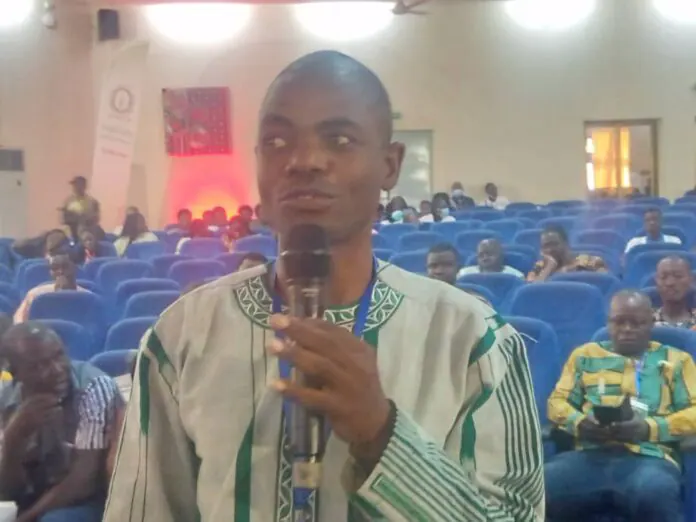
The 15th edition of the Universités africaines de la communication de Ouagadougou (UACO) recently convened, with a focus on the Sahélien model of communication for sovereignty and resilience in the face of communication warfare. On October 8, 2026, Sitapha Bihoun, a social worker, presented a paper highlighting the crucial role of the Bataillons d’intervention rapide de communication (BIR-C) in Burkina Faso's communication landscape. Bihoun emphasized that the BIR-C serves as a bulwark against disinformation and malicious manipulation, supporting the country's Revolutionary People's Party (RPP).
According to Bihoun, the BIR-C has launched various communication initiatives to educate citizens about the realities, challenges, and achievements of the RPP. These efforts have enhanced community accountability, promoted healthy online behaviors, and increased visibility for government institutions. Furthermore, the BIR-C has prioritized fact-checking, enabling citizens to make informed decisions. By doing so, the BIR-C has become a vital component of Burkina Faso's communication strategy, fostering a culture of transparency and trust.
However, Bihoun also acknowledged the challenges facing the BIR-C, including the integration of artificial intelligence in communication, which has intensified competition among content creators on social media platforms. Additionally, the application of strict sanctions against online misconduct remains a pressing concern. To overcome these hurdles, Bihoun recommended that the BIR-C adopt best practices, develop tailored training programs, and invest in suitable technological infrastructure.
The BIR-C's success in promoting national sovereignty and resilience has not gone unnoticed. By placing leaders of the RPP, government institutions, and Burkinabè citizens at the forefront of their interventions, the BIR-C has set a precedent for effective communication on social media, centered on social cohesion, sovereignty, and resilience. This approach has resonated with the global youth, offering a valuable lesson in navigating the complexities of online communication.
As the UACO 2026 conference continues, participants are engaging in discussions on the future of communication in Africa, with a focus on innovative strategies for countering disinformation and promoting national development. The BIR-C model has sparked interest among attendees, who see its potential for replication in other contexts. By sharing best practices and expertise, African nations can strengthen their communication systems, enhancing their capacity to respond to emerging challenges.
In his presentation, Bihoun emphasized the importance of collaboration and coordination among stakeholders in the communication sector. He called for the development of adaptable training programs, the provision of suitable equipment and infrastructure, and the establishment of effective working relationships among BIR-C members. By working together, Burkina Faso can build a robust communication system that supports national goals and promotes social cohesion.
As the conference concludes, participants are expected to adopt a set of recommendations aimed at strengthening communication systems across Africa. The BIR-C model is likely to feature prominently in these discussions, offering a valuable example of effective communication in the face of adversity. By embracing innovative approaches and best practices, African nations can enhance their communication capacity, promoting national development and sovereignty in an increasingly complex global landscape.
Key points
- The BIR-C model has been recognized for its effectiveness in countering disinformation and promoting national sovereignty in Burkina Faso.