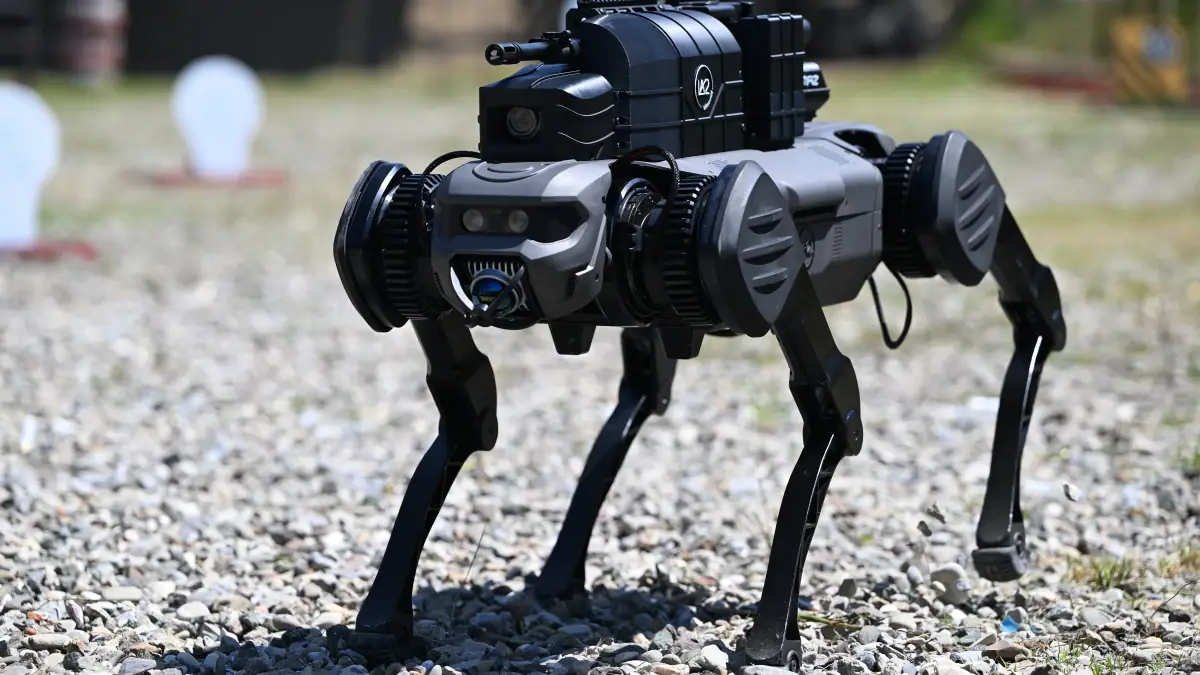
The United Nations is hosting talks in Geneva to discuss possible regulations on lethal autonomous weapons, also known as 'killer robots.' The conference, which takes place every five years, has brought together representatives from over 120 countries to address concerns over the rapid advancement of warfare technology. Some experts warn that the world is just months away from having weapons that can choose targets and make the decision to kill autonomously.
Humanitarian organizations, including the International Committee of the Red Cross, have expressed concerns that the decision to kill must stay in human hands. They argue that existing rules of war, such as the Geneva Conventions, may not be fully respected by autonomous weapons. The Red Cross is worried that autonomous weapons may not be able to distinguish between a soldier who is still fighting, one who is wounded, and one who wants to surrender.
The use of AI-assisted weapons has already been reported in Ukraine and Gaza, where they have been used to take out targets under remote human control. However, human rights groups warn that the technology behind AI-assisted weapons is becoming increasingly cheap and easy to use, raising concerns about proliferation and potential misuse by terrorist groups or law enforcement agencies in repressive regimes.
At least 50 countries, including Ireland, Italy, Brazil, Mexico, France, and Germany, are calling for a strict timetable to agree on binding rules governing autonomous weapons. However, countries that are already developing and using semi-autonomous weapons, such as the United States, Russia, and Israel, have indicated they will oppose legally binding rules.
The U.S. has proposed a five-year timetable to draft non-binding guidelines instead, sparking concerns among supporters of stricter regulations. The U.S. has traditionally been a late adopter of international treaties, having failed to ratify the Ottawa Convention on landmines, although it has since stopped deploying them and reduced its stockpiles.
U.N. negotiations on limiting specific weapons are typically conducted by consensus, which has proven elusive in the past. A compromise may be reached, involving a longer or open-ended negotiating period to come up with rules that individual states can adopt as binding or non-binding.
Campaigners have expressed concerns that a longer negotiating period may be less than ideal, likening it to kicking a dangerous can down the road. U.N. Secretary-General Antonio Guterres has warned that allowing fully autonomous weapons to kill would be 'crossing a moral red line.' The outcome of the talks remains uncertain, with many countries taking concerns over AI weapons seriously.
Key points
- The U.N. talks aim to establish rules for lethal autonomous weapons amid concerns over AI proliferation.
- Humanitarian organizations and human rights groups are pushing for binding regulations.
- Countries are divided on the issue, with some opposing legally binding rules.