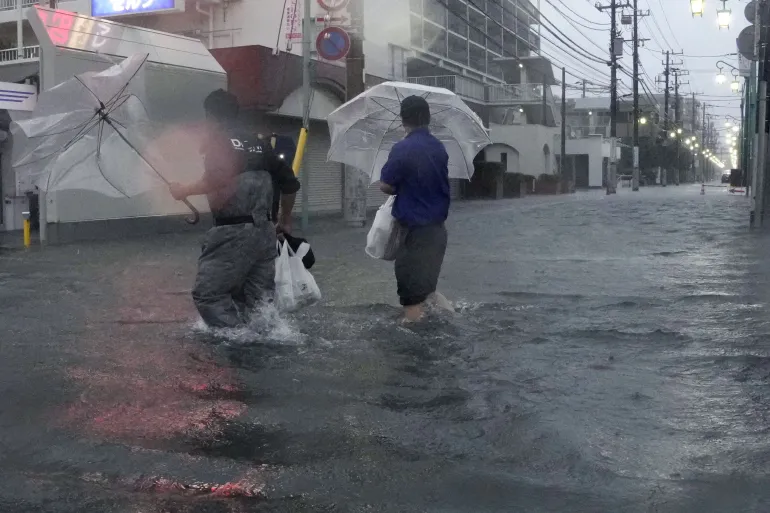
Typhoon Dujuan made landfall in Japan on September 21, 2026, bringing with it destructive winds and landslides that have resulted in the deaths of two people and left four others missing. The Japan Meteorological Agency had issued a warning of an "imminent threat to life" as the storm approached, prompting nearly two million residents to evacuate their homes. The storm has disrupted transport, cut electricity supplies, and forced the cancellation of major events.
The typhoon has caused widespread damage and disruption across Japan, with over 50,000 people left without electricity and hundreds of flights cancelled. The storm's sustained winds of 130km/h and gusts of up to 194 km/h have damaged power supplies and infrastructure, leaving many without access to basic necessities. Authorities have urged residents to stay informed about weather updates and follow evacuation instructions.
The storm has struck during a five-day holiday period, forcing the cancellation of several planned activities, including concerts at the Rock in Japan music festival and the Tokyo Game Show. The typhoon has also disrupted air and rail travel, with hundreds of flights grounded and train services suspended. Officials have continued to urge residents to pay close attention to weather reports, particularly in areas facing the risk of further landslides and heavy rainfall.
Two people have died as a result of the storm, with one fatality occurring in Yokosuka City, Kanagawa prefecture, where a woman in her 60s was swept away by a landslide and later found dead. Another fatal incident occurred in Sodegaura City in Chiba prefecture, where a man in his 50s became trapped while working to remove debris following a landslide. Police are investigating the incident.
Prime Minister Sanae Takaichi has expressed her condolences to those who lost their lives and has assured that the government is responding with utmost preparedness. Despite the disaster, Takaichi is expected to proceed with her planned visit to the United States, where she will address the UN General Assembly and meet with US President Donald Trump.
The typhoon is part of a wider series of storms affecting the Pacific, with warmer ocean conditions associated with the "super El Niño" helping to provide energy for storm development. Research suggests that storms which do develop could become more intense as temperatures rise, with warmer ocean waters providing more energy for storms. Japan has been described as becoming more exposed to damaging storms.
As the storm continues to move north along Japan's Pacific coast, officials are urging residents to remain vigilant and take necessary precautions. The full extent of the damage caused by the storm is not expected to be known until later, and authorities are working to respond to the disaster and provide aid to those affected.
Key points
- Two people have died and four are missing as a result of Typhoon Dujuan in Japan.
- Nearly two million residents have been told to evacuate their homes due to the storm.
- The typhoon has caused widespread disruption, including power outages, flight cancellations, and transport disruptions.