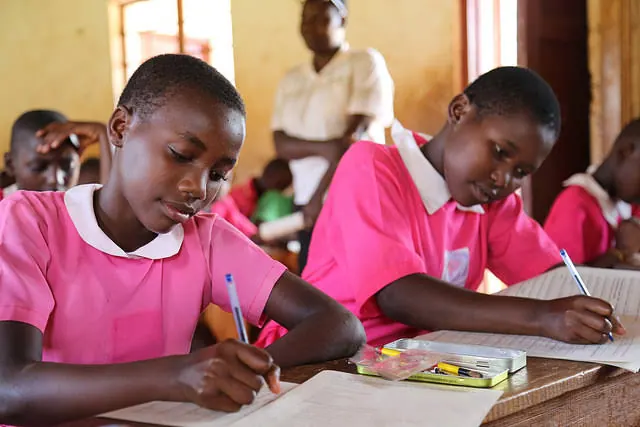
Education experts in Uganda have raised concerns over a proposal to reduce the country's academic calendar for primary and secondary schools from three terms to two. The Forum for Democratic Change (FDC) has argued that the current three-term system places a heavy financial burden on parents and guardians. They claim that parents are required to meet school fees and other requirements three times a year, which can be a significant strain.
However, Hajji Nasser Kiwanuka, Deputy Secretary General of the Uganda Muslim Education Association (UMEA), warns that the financial implications of a two-term calendar should also be assessed from the perspective of schools. He argues that extending each term from the current three months to about four months could prove difficult for schools that are already struggling to finance their operations. Many schools in Uganda face financial challenges and may not have adequate resources to sustain learners for a longer period.
According to Kiwanuka, some schools already struggle to keep operating until the end of the current three-month term because the funds collected from parents are often exhausted before the term ends. This could mean that schools would either have to find additional resources to sustain learners for the longer term or increase school fees to cover the additional costs. The additional month would come with increased costs for food, scholastic materials, and other requirements needed to keep learners in school.
Kiwanuka also questions whether the proposed four-month terms would provide a genuine financial solution if the cost of maintaining a child in school simply has to be recalculated to cover the additional period. He notes that the amount of requirements a child needs for three months has to be extrapolated to cater for the extra month that the child also stayed in school. This could lead to increased costs for parents and guardians, which may not be a significant reduction in the financial burden.
While proponents of the two-term calendar have focused largely on reducing the frequency with which parents pay school fees and provide school requirements, Kiwanuka says the proposal should be subjected to a broader financial assessment covering both households and schools. He emphasizes that a decision to move from three terms to two should be based on a clear assessment of the educational and financial implications rather than simply reducing the number of times parents make payments.
Kiwanuka also notes that the longer terms may not necessarily disrupt learning for many learners, particularly those in upper primary and secondary schools, given that many children already spend part of their holidays engaged in private coaching. He believes that children can adapt to the longer terms without significant disruptions to their learning. However, he cautions that a thorough assessment of the implications is necessary before making a decision.
The Uganda Muslim Education Association (UMEA) is urging caution and a more comprehensive evaluation of the proposal. Kiwanuka says that unless there is another scientific basis for the four-month terms, the mathematics of it does not make a lot of sense. The association is calling for a careful consideration of the potential effects on both parents and schools before implementing any changes to the academic calendar.
Key points
- The proposed two-term school calendar could shift the financial burden from parents to schools.
- Schools may struggle to finance their operations for a longer period.
- A broader financial assessment covering both households and schools is necessary before making a decision.