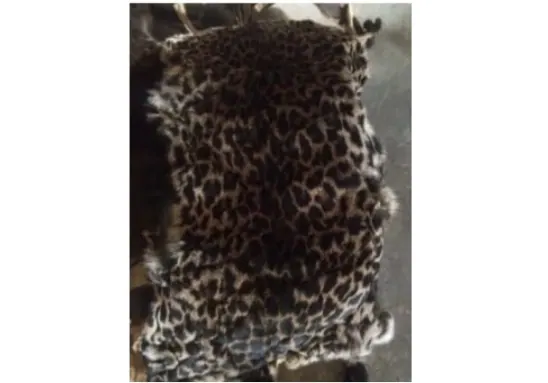
On September 23, Congolese authorities arrested two suspected wildlife traffickers in Kisangani, the capital of Tshopo province in northeastern Democratic Republic of the Congo. The operation, led by the Kisangani Public Prosecutor's Office with support from the Congolese National Police and the Congolese Institute for Conservation of Nature (ICCN), resulted in the seizure of an okapi skin with its hooves and a leopard skin.
According to Gentil Kisangani Milingani, provincial director of the ICCN, the operation demonstrates the government's determination to dismantle protected species trafficking networks. The okapi, a unique species found only in the DRC, and the leopard, which plays a crucial role in maintaining ecosystem balance, are both protected species. The suspects will face justice, and investigations are ongoing to identify all accomplices and masterminds.
The operation was based on intelligence provided by the NGO Conserv Congo. Preliminary investigation findings suggest that the trafficking network is led by a police officer who is also a pastor of a revival church, in collaboration with several poachers operating in the Bas-Uele province. Authorities are working to establish individual responsibilities and identify potential accomplices.
Kisangani remains a significant transit zone for wildlife product trafficking. Many traffickers use the city as a transit point before sending their products to national and international markets, including Kinshasa, Beni, Bunia, Kampala, and Nairobi. The ICCN and other authorities are working to combat these trafficking networks.
The DRC's wildlife, including the okapi and leopard, is facing significant threats from trafficking and habitat loss. The ICCN and other conservation organizations are working to protect these species and their habitats. However, corruption, complicity, and the abuse of official functions often facilitate protected species trafficking, undermining conservation efforts and the rule of law.
The two suspected traffickers have been referred to the Peace Tribunal in Kabondo commune, while investigations continue to identify all accomplices and potential masterminds. The Congolese government has reiterated its commitment to protecting the country's unique wildlife and natural heritage.
The arrest of the two suspected traffickers and the seizure of the okapi and leopard skins demonstrate the government's efforts to combat wildlife trafficking in the DRC. The ICCN and other authorities will continue to work together to protect the country's protected species and bring perpetrators to justice.
Key points
- The operation resulted in the arrest of two suspected wildlife traffickers and the seizure of an okapi skin with hooves and a leopard skin.
- The okapi and leopard are protected species in the DRC, with the okapi being a unique species found only in the country.
- Investigations are ongoing to identify all accomplices and masterminds behind the trafficking network.