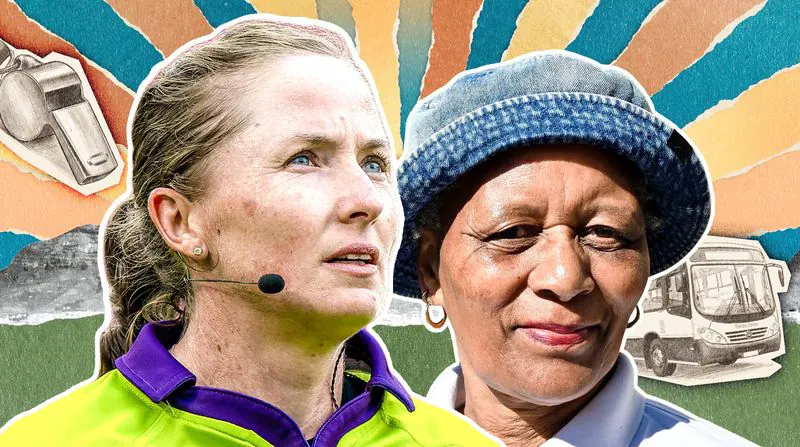
South African rugby referee Aimee Barrett-Theron was diagnosed with breast cancer just days before her 39th birthday in June 2026. Barrett-Theron, who is healthy and fit with no family history of breast cancer, initially did not panic after discovering a lump in her breast. Her diagnosis is stage two, with cancer stages one through to four describing how far the disease has spread in the body. Barrett-Theron's treatment plan is quite aggressive, involving chemotherapy at the Life Vincent Pallotti Hospital in Pinelands.
Barrett-Theron is taking her treatment systematically, intent on "getting back on the field" soon. She is a biokineticist specialising in sports performance and rehabilitation and has access to private healthcare through her employer, SA Rugby. Her chemotherapy plan involves a six-hour intravenous infusion every three weeks. Despite experiencing "chemo fog" and side effects, Barrett-Theron remains positive, using her profile to inspire women in similar situations.
Barrett-Theron's journey has stirred an outpouring of kindness after she went public with her diagnosis on Instagram. She has posted about stepping back from rugby to focus on her health, and her response to messages from supporters has been emotional. Barrett-Theron explained her diagnosis to her three-year-old daughter Harper through age-appropriate conversations, and the child has been supportive, referring to her mother's hair loss as "mummy's silly hair".
Breast cancer is the most diagnosed cancer in women in South Africa, accounting for roughly one in four cases. According to the World Health Organisation's Global status report on cancer 2026, there were 2.4 million new cases of breast cancer worldwide in 2024. The International Agency for Research on Cancer estimates that more than 13,000 women in South Africa newly develop breast cancer every year, while the disease claims about 5,000 lives.
In contrast to Barrett-Theron's experience, Joyce Witbooi helps women navigate Cape Town's public health system as a cancer warrior. While details about Witbooi's personal journey are not provided, her work highlights the challenges faced by many women in South Africa's public sector, where backlogs often impede access to timely life-saving interventions. Witbooi's efforts aim to support women through the complexities of the public health system.
The disparities in cancer diagnosis and treatment in South Africa are significant, with access to private healthcare often determining the quality and timeliness of care. Barrett-Theron's experience with private healthcare has been vastly different from what many women face in the public sector. Efforts to address these disparities and improve access to cancer screening, diagnosis, and treatment are crucial to reducing the cancer burden in South Africa.
The Daily Maverick and Spotlight special series on cancer in South Africa aims to unpack cancer data, access to treatment, and screening, as well as understand the cancer burden in the country. Through stories like Barrett-Theron's and Witbooi's, the series highlights the complexities and challenges of cancer diagnosis and treatment in South Africa, sparking conversations about the need for improved healthcare access and support for those affected by cancer.
Key points
- - Breast cancer is the most diagnosed cancer in women in South Africa, accounting for roughly one in four cases. - More than 13,000 women in South Africa newly develop breast cancer every year, while the disease claims about 5,000 lives. - Access to private healthcare often determines the quality and timeliness of cancer care in South Africa, highlighting significant disparities in diagnosis and treatment.