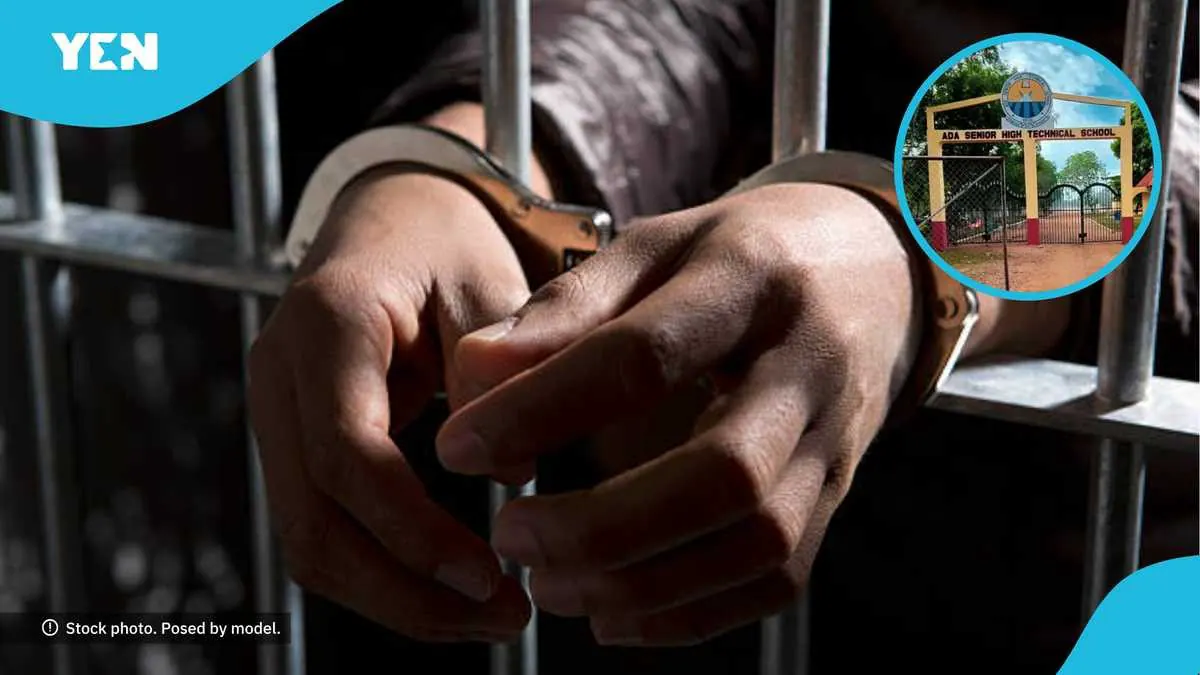
In a significant case that has drawn attention to school violence in Ghana, two students from Ada Senior High Technical School (SHTS) were convicted by the Ada West District Court on September 28, 2026. Oscar Amemasor, 20, and Emmanuel Senunya, 18, were found guilty of assault and abetment of assault. The convictions were handed down on the same day the pair collected their West African Senior Certificate Examination (WASSCE) results, a crucial milestone for their anticipated university admissions.
The incident that led to their conviction dates back to May 2026, when a video went viral on social media showing a student wielding a cutlass and threatening classmates on the school campus. The footage prompted swift action from the Tema Regional Police Command, which dispatched a night patrol team to the school on May 22, 2026, leading to the arrest of four students identified in the clip. The arrests were made with the cooperation of school authorities, highlighting the severity with which the incident was treated.
Initially, Amemasor and Senunya pleaded not guilty to the charges but later changed their pleas. This change in plea led the court to convict them based on their own admissions. Despite the potential for a custodial sentence, the court ordered both students to sign a 12-month bond to be of good behaviour. This decision was made with the students' futures in mind, according to their lawyer, Enock Teye Sewornu.
The lawyer for the convicted students, Enock Teye Sewornu, expressed relief that the verdict did not result in a custodial sentence, which could have derailed the students' academic and professional aspirations. With the bond in place, Amemasor and Senunya are required to maintain good behaviour for 12 months as they move forward with their university plans. The timing of the verdict, coinciding with the release of their WASSCE results, added a layer of complexity to their situation.
The Ada SHTS case is part of a broader concern about violence in schools. The Tema Regional Police Command, in a statement signed by ASP Dede Dzakpasu, urged students to resolve disagreements through established school structures rather than through violence or intimidation. The command also called on parents and school authorities to strengthen supervision, discipline, and guidance to protect order on campuses.
This incident is not an isolated case of school violence in Ghana. In February 2026, six students of Aggrey Memorial Senior High School in the Central Region were arrested over an alleged attack on a final-year student of Adisadel College near Cape Coast. Such incidents underscore the challenges schools face in maintaining a safe and secure environment for students.
As Amemasor and Senunya move forward with their academic pursuits, the outcome of their cases serves as a reminder of the real-world consequences tied to viral videos of school violence. The impact of such incidents can extend beyond the immediate aftermath, affecting students' futures, including their prospects for university admission. The sources do not specify which institutions the students hope to attend or the long-term implications of their convictions on their academic and professional paths.
Key points
- The Ada West District Court convicted two Ada SHTS students for a viral cutlass video and sentenced them to a 12-month good behaviour bond.
- The convictions were handed down on the same day the students collected their WASSCE results, a crucial milestone for their anticipated university admissions.
- The incident highlights broader concerns about school violence in Ghana and the need for stronger supervision and discipline in educational institutions.