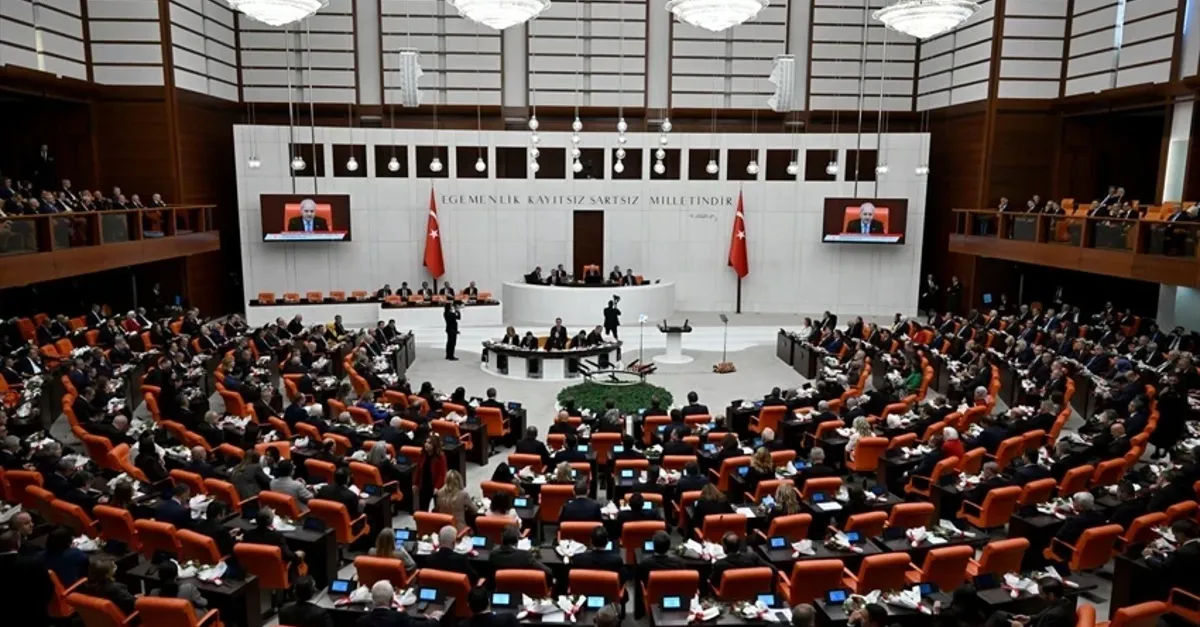
The Turkish Parliament has resumed its work after a 51-day recess, marking the beginning of its fifth legislative year in the 28th parliamentary term. The opening session included formal ceremonies at the monument of Mustafa Kemal Atatürk, the founder of the Turkish Republic, followed by a special session. The parliament's agenda includes a mix of constitutional and judicial reforms, the "Turkey Without Terror" initiative, economic issues, and investment fund crises, alongside various legislative projects.
President Recep Tayyip Erdoğan addressed the parliament, calling for respectful discussions and solutions, emphasizing the importance of maintaining the parliament's status. He discussed his government's performance in various areas, including economy, democracy, foreign policy, education, health, and infrastructure. Erdoğan highlighted the need to overcome political polarization, stating that the priority for political parties should be Turkey and that politics should be conducted based on national interests.
The "Turkey Without Terror" initiative was a prominent topic at the start of the new legislative year. Parliament Speaker Numan Kurtulmuş announced the formation of a monitoring committee to follow developments related to this initiative, with participation from parties represented in the parliament. In July 2025, the Kurdistan Workers' Party (PKK) began formally laying down its arms, marking a historic shift that ended over four decades of armed conflict with Turkey.
The issue of a new constitution has returned to the top of the parliament's agenda. Kurtulmuş previously stated that the current parliament has a broad political representation that allows for the discussion of preparing a new constitution, as well as reviewing the law on political parties, election law, and the parliament's internal rules. The upcoming legislative agenda includes the 13th judicial package, along with several legislative projects and regulations in economic, legal, and social areas.
The crisis of investment funds and financial markets received significant attention during the opening of the legislative year. Kurtulmuş called for an investigation into allegations of irregularities and unlawful gains, and for those responsible to be held accountable. Erdoğan stated that authorities are working to address the problem within the rules of the capital market, considering investors' rights, and that the government aims to resolve it quickly.
The issue has also led to resignations within Erdoğan's party. Fatma Betül Sayan Kaya, deputy chair of the Justice and Development Party and former minister for family and social policies, announced her resignation from all her party positions amid allegations related to stock exchange and investment fund transactions involving her and her husband.
The Turkish government faces several challenges as it navigates its legislative agenda. The "Turkey Without Terror" initiative, constitutional reforms, and addressing the investment fund crisis are key areas of focus. The government's ability to manage these issues effectively will be crucial in determining the success of its legislative agenda and its impact on the country's political and economic landscape.
Key points
- The Turkish Parliament's agenda includes constitutional and judicial reforms, the "Turkey Without Terror" initiative, and addressing economic issues and investment fund crises.