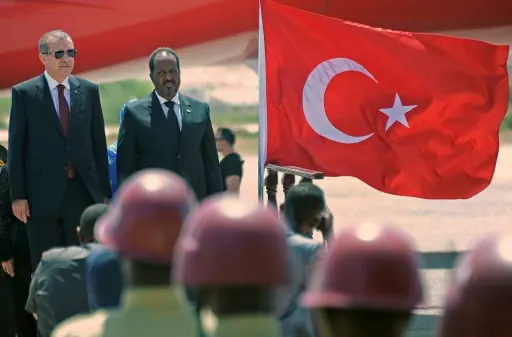
Turkey has significantly increased its presence in Somalia, establishing its largest overseas military base and investing heavily in the country's infrastructure, including a spaceport on the Somali coast dedicated to launches and satellite technologies. The Turkish military has also trained Somali troops and provided aid during droughts, floods, and famines. While many Somalis appreciate Turkey's efforts, opposition parties have expressed concerns that Turkish military support is being used against them and their militias.
On September 3, an airstrike in the southern town of Doolow killed opposition leader General Mahad Abdirahman, sparking rare anti-Turkey protests in the region. Protesters burned the Turkish flag and desecrated images of Turkish President Recep Tayyip Erdogan, with some calling for a declaration of war against Turkey. District commissioner Omar Abdullahi told a crowd of protesters that Turkey was "a new colonial power that is occupying Somalia and is killing Somali people."
The Somali government has denied allegations that Turkey is taking sides, with parliament speaker Abdulkadir Mohamed Nur describing the partnership as one of mutual benefit. Somali MP Amina Mohamed Mursal also expressed gratitude for Turkey's support, saying that the Turks "are our brothers and sisters... They came to our aid during difficult times." However, some ordinary Somalis remain wary of Turkey's growing influence.
Turkish construction work in Somalia continues, with the first phase of the spaceport at Warsheikh expected to be completed soon. A senior Turkish official working on the Somalia file said that Turkey had worked in "perfect cooperation" with successive Somali leaders, adding that Turkish support was intended for the Somali people, not for any specific political line. A Western diplomat based in Mogadishu also noted that Turkey was a "highly sophisticated actor" that would support whoever best secured its interests.
The Somali government has accused the opposition of using "disinformation" to malign the relationship with Turkey. However, some Somalis, such as Mogadishu resident Dahir Ahmed, believe that Turkey can no longer be seen as a neutral partner. "Its backing of the federal government's leadership is deepening political divisions and fuelling our resentment," Ahmed said. Businessman Shueyb Yare also noted that many people now openly criticise Turkey, a marked change from the widespread support it enjoyed when it first became involved in Somalia.
On September 29, Turkish F-16s fired missiles around Baidoa, a city in southern Somalia, as they helped federal troops fight off an attack by forces loyal to an ousted governor. The incident highlighted the risks of Turkey's involvement in Somalia's internal conflicts. While Turkey's investment in Somalia has been significant, its growing influence has sparked concerns among opposition parties and some Somalis.
As Turkey continues to invest in Somalia, its relationship with the country is likely to remain a subject of debate. While some Somalis appreciate Turkey's efforts, others are wary of its growing influence and the risks of being drawn into the country's internal conflicts. The situation is further complicated by Somalia's deep political crisis, which has been exacerbated by President Hassan Sheikh Mohamud's unpopular reforms.
Key points
- Turkey's growing influence in Somalia has sparked concerns among opposition parties and some Somalis.
- The Somali government has denied allegations that Turkey is taking sides in the country's internal conflicts.
- Turkey's investment in Somalia has been significant, including the establishment of a military base and a spaceport.