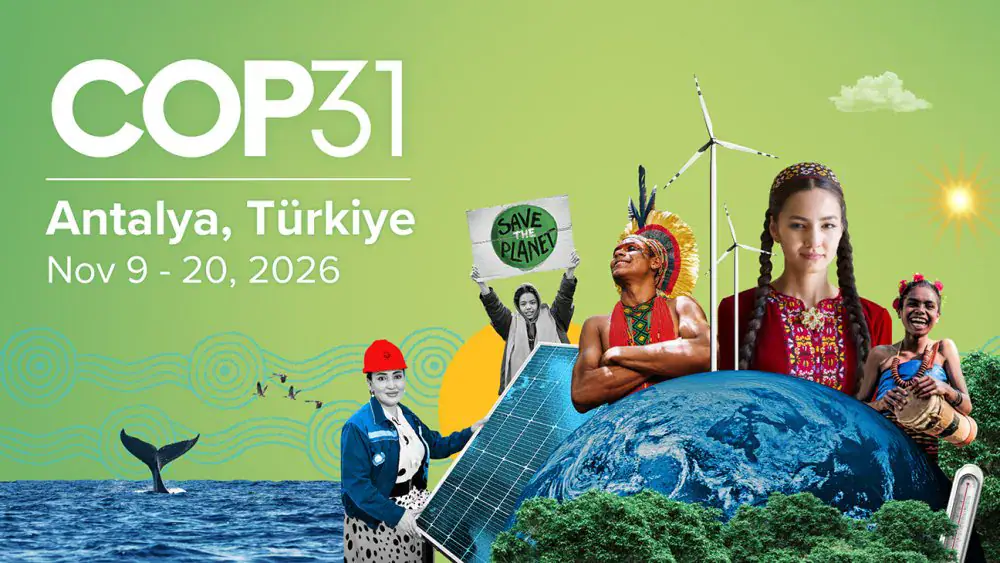
The 31st Conference of the Parties on climate change, COP31, kicked off in Antalya, Turkey, on November 9, 2026, and will run until the end of the month. The summit is co-organized with Australia, which is leading the negotiations. The event brings together countries to discuss pressing issues like climate financing, adaptation to climate impacts, reduction of greenhouse gas emissions, just transition, and zero-waste initiatives.
The main challenges at COP31 are the persistent issues of financing and implementation of international climate commitments. Despite the regular occurrence of climate summits, recommendations often struggle to translate into tangible actions on the ground. Over a decade after the 2015 COP21 in Paris, the implementation of its recommendations remains a topic of discussion at COP31.
A significant concern is whether participants can agree on points that will drive meaningful change in the fight against climate change, which still struggles to unite efforts. Major polluters, often developed countries, are hesitant to take responsibility and contribute financially. Meanwhile, the effects of climate change intensify, with extreme weather events like heatwaves, droughts, and violent winds posing a growing threat to the planet.
This COP31 aims to be different, focusing on critical areas such as electrification through renewable energy, reduction of greenhouse gas emissions, and implementation of the Paris Agreement. The conference must find ways to translate country commitments into concrete actions to maintain its credibility. A breach of trust exists between developed countries, which have not fulfilled their funding promises, and developing countries, which bear the brunt of climate change impacts.
Africa, as a continent with low pollution levels but high vulnerability to climate change, has reason to feel disillusioned. The promised finances were meant to help the continent enhance its adaptation capacity to visible climate impacts. The situation is complicated by the current context of wars and heightened geopolitical tensions, which may overshadow climate discussions.
The expectations from COP31 are high, with demands for carbon neutrality, debates on renewable energy, and an increasing call for climate justice. The summit's outcome will significantly affect populations caught between the crisis of rising energy prices and the anvil of natural disasters caused by climate change.
As the Antalya summit progresses, it remains to be seen whether it will produce impactful decisions. The conference must work towards translating country commitments into actions to maintain its credibility and encourage future participation.
Key points
- The conference aims to address critical issues like climate financing, adaptation to climate impacts, and reduction of greenhouse gas emissions.
- A significant challenge is the hesitance of major polluters to commit to financial and emission reduction targets.
- The outcome of COP31 will affect populations vulnerable to climate change and energy crises.