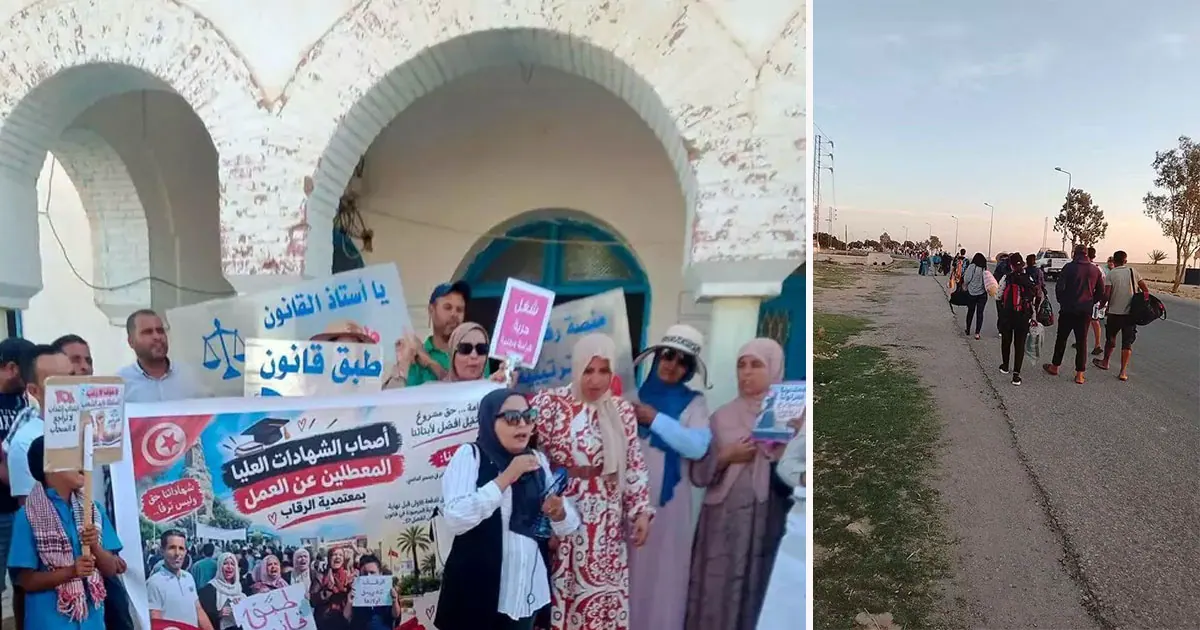
A group of hundreds of unemployed graduates in Tunisia has resumed a march to demand jobs and dignity. The march, dubbed the "March of Dignity," started on September 27, 2026, in Menzel Bouzaiane, in the Sidi Bouzid governorate, the birthplace of the 2010-2011 revolution. The protesters are walking to Carthage to demand implementation of Law No. 18 of 2025, which provides for exceptional recruitment in the public sector.
The march was temporarily halted on September 29 due to the deteriorating health of several participants and the inability of many to continue walking. Some protesters had to be treated for foot injuries at Jelma Regional Hospital. However, the organizers said the halt was not a renunciation of their demands but a necessary pause to ensure everyone's safety. The march resumed on September 30, with protesters continuing their journey to Tunis and then Carthage.
The protesters are demanding the implementation of Law No. 18 of 2025, which was promulgated in December 2025. The law provides for recruitment in batches and a national platform to classify candidates based on age, diploma seniority, and social situation. The organizers hope to present their demands directly to the presidency, with Wassim Jeddi, a regional official of the Union of Unemployed Graduates (UDC), saying the goal is to push for concrete implementation of the law's procedures.
The march has garnered support from some close to the unemployed graduates, with the UDC's official page saying some family members and friends are participating in the mobilization. The protesters are also demanding the release of Karim Teraâ, a figure in the unemployed graduates' movement who was recently arrested. The UDC has called for his release and the dropping of charges against him.
This latest development comes after the evacuation of a sit-in by unemployed graduates in Tunis in early September and weeks of protests in several regions demanding the effective implementation of the law. So far, no incidents or interventions by security forces have been reported along the march route. The UGTT's secretary-general, Slaheddine Selmi, met with a UDC delegation on September 28 to discuss the situation and upcoming mobilizations.
The march is a significant development in Tunisia, where unemployment remains a major challenge. The country's economy has struggled in recent years, with high unemployment rates, particularly among young people and graduates. The protesters hope their march will draw attention to their plight and push the government to take action to address their demands.
As the march continues, the situation remains uncertain. The protesters face a long journey to Carthage, and it is unclear how the government will respond to their demands. However, the protesters remain determined, with one organizer saying they will continue to push for their rights to work and dignity.
Key points
- The march is demanding implementation of Law No. 18 of 2025, which provides for exceptional recruitment in the public sector.
- The protesters are also demanding the release of Karim Teraâ, a figure in the unemployed graduates' movement who was recently arrested.
- The march has garnered support from some close to the unemployed graduates, with family members and friends participating in the mobilization.