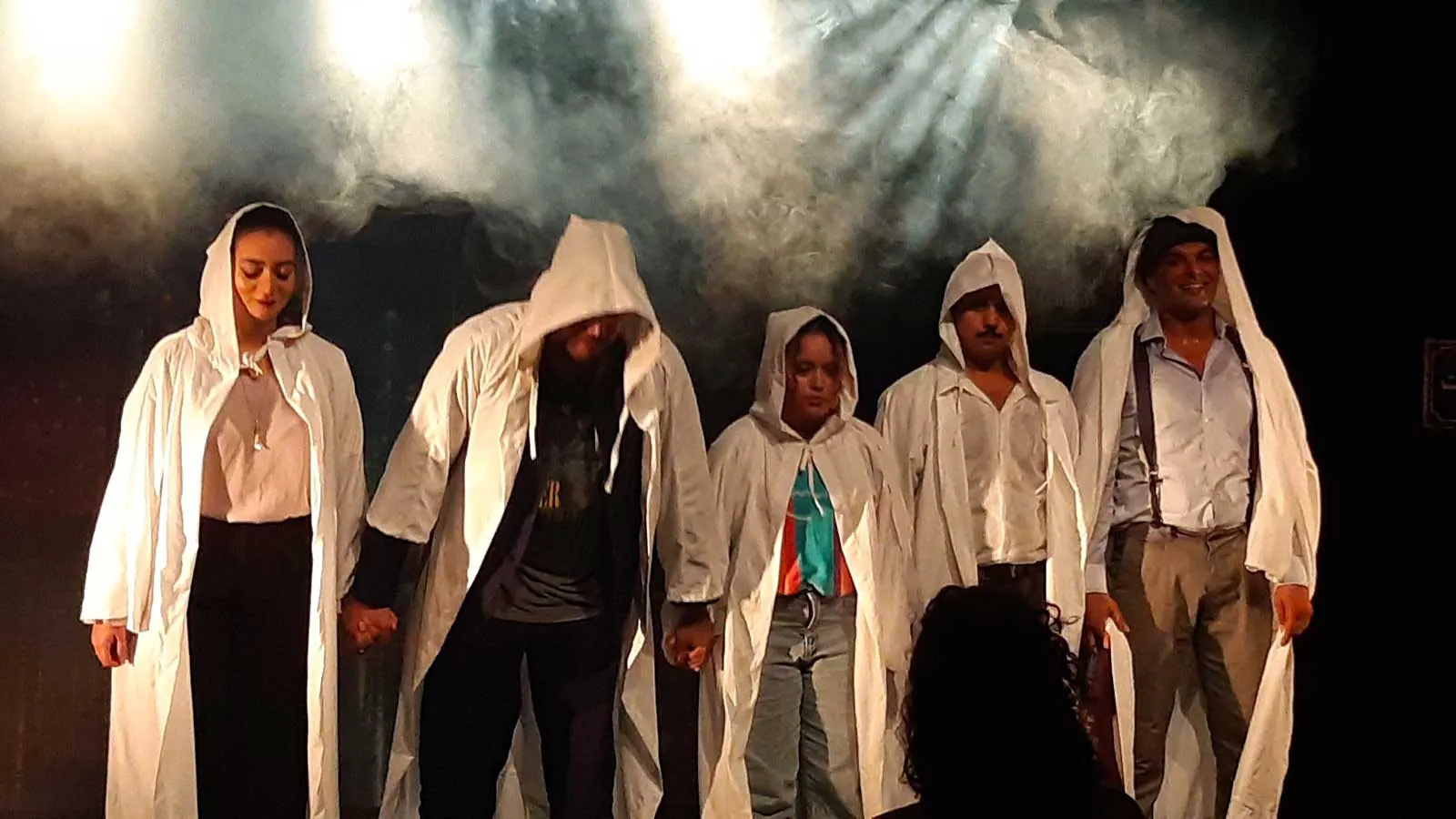
The Tunisian theatre scene has welcomed a new satirical play, "Mazelt Ndoq" (I Strike Again), which tackles the harsh realities of the working world. Written by Hassin Berahal and Youssef Frikha, the play is set in a factory where workers rise up against their employer's abuses. The talented cast, including Salma Masmoudi, Haifa Ajengui, Ahmed Dhahri, Youssef Frikha, and Hassin Berahal, brings to life a story of collective resistance and struggle for better working conditions.
The play's plot revolves around the workers' fight for dignity and jobs in the face of a tough employer and flawed management practices. Through humor, the play critiques the harsh realities of the working world and explores the themes of resistance and collective action. With a vibrant mise-en-scène by Mohamed Amine Ftouh, the play creates an energetic atmosphere that makes the story particularly impactful.
Despite some minor flaws in the performance of certain actors, the play's energy and message shine through. The authors and director have crafted a fierce and cruel narrative that sheds light on the world of work in a factory where workers rebel against their employer. A preview of the play was recently presented at El Teatro to a packed audience.
The play's scenography is characterized by simplicity, with a single set design featuring an image of a city at night covering the background of the stage. "Mazelt Ndoq" aims to be a popular, high-energy comedy that incorporates humor without being trivial. The play's cast delivers an inspired performance, maintaining a feverish tone throughout the show.
At its core, "Mazelt Ndoq" is a documentary-style theatre piece that highlights the courage and mechanisms of collective resistance. The play tells the story of workers who mobilize to demand real negotiations with their employer to improve their salaries and working conditions. By tackling managerial abuses and ferocious capitalism, the play provides a thought-provoking commentary on the working world.
The play's themes of social struggle and alienation are woven throughout the narrative, which features anti-hero characters fighting to save their jobs. Guided by their determination, desire for dignity at work, and hope for a better world, the characters drive the plot forward. The mise-en-scène masterfully orchestrates the actors' performances, creating a veritable ballet of voices and bodies.
Overall, "Mazelt Ndoq" offers a scathing critique of the working world and the mechanisms of capitalist logic that affect workers. By exploring the complexities of workplace struggles and collective resistance, the play provides a nuanced and impactful portrayal of the human experience.
Key points
- The play "Mazelt Ndoq" uses satire to critique workplace struggles and managerial abuses in Tunisia.
- The talented cast and vibrant mise-en-scène bring to life a story of collective resistance and struggle for better working conditions.
- The play explores themes of social struggle, alienation, and collective action in the face of ferocious capitalism.