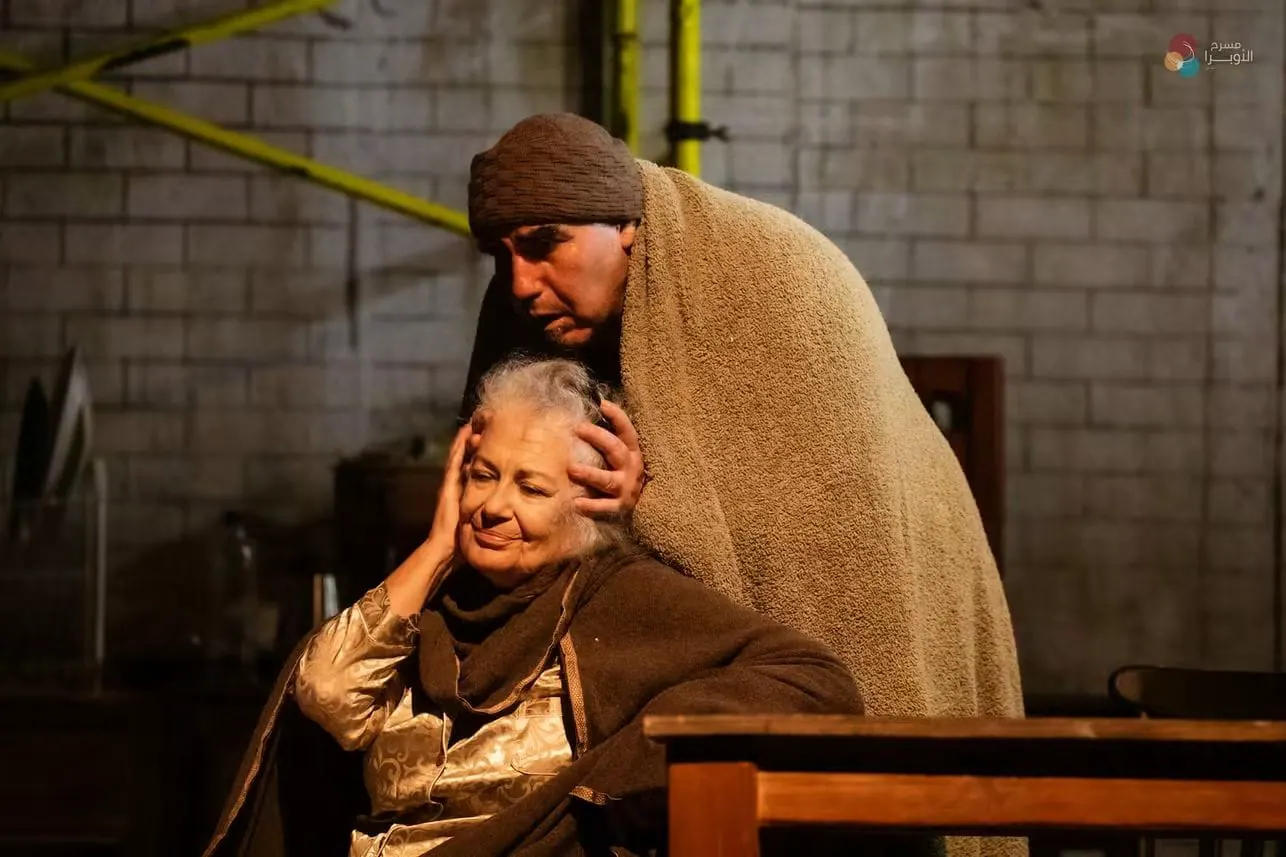
The play, written by Fadl Al-Jaabi and directed by Jaleela Bekar, premiered at the seventh edition of the "Exit to the Theater" festival in Tunis. The two-hour and twenty-minute production takes place in an old building under renovation, which serves as a character in its own right. The story follows a group of characters living in the building, each with their own struggles and conflicts. As tensions rise, the audience is drawn into a world of uncertainty and questioning.
The play's title, "Al-Hulm," is deliberately ambiguous, with the word "dream" suspended in quotation marks and accompanied by three dots. This visual representation sets the tone for the rest of the play, which explores the fragility of dreams and the blurred lines between reality and fantasy. The characters' conversations and interactions are woven together to create a sense of unease and tension, as they grapple with their own desires and disappointments.
The old building, with its crumbling walls and makeshift repairs, serves as a powerful symbol for the characters' inner lives. As the story unfolds, the audience sees the building's facade begin to crack and crumble, mirroring the characters' own emotional fragmentation. The set design is a character in its own right, influencing the characters' interactions and emotions.
The cast, comprising Jaleela Bekar, Jamal Madani, Mohamed Chabaan, Monir Khazri, and Meryem Ben Hamida, brings depth and nuance to the production. The actors' performances are marked by a sense of intensity and urgency, as they navigate the complex web of relationships and emotions. The characters' interactions are raw and often uncomfortable, forcing the audience to confront the harsh realities of life.
One of the play's key themes is the tension between comedy and tragedy. The production is billed as a "black comedy," and the humor is often dark and biting. However, the laughter is not meant to be cathartic or escapist; rather, it serves to highlight the absurdity and cruelty of the characters' circumstances. As one character remarks, "They've even ruined our dreams for us."
Throughout the play, Al-Jaabi and Bekar use a range of techniques to keep the audience engaged and uncertain. The pacing is deliberate and measured, building tension and unease as the story unfolds. The use of symbolism and metaphor adds depth and complexity to the narrative, inviting the audience to interpret the play in their own way.
Ultimately, "Al-Hulm" is a play that resists easy answers or resolutions. Instead, it presents a complex and nuanced exploration of the human condition, challenging the audience to confront their own doubts and fears. As the curtain falls, the audience is left to ponder the questions and uncertainties that the play has raised, and to reflect on the fragility and beauty of the human experience.
Key points
- The play "Al-Hulm" premiered at the seventh edition of the "Exit to the Theater" festival in Tunis.
- The production explores themes of reality, fantasy, and the fragility of dreams.
- The play's use of symbolism and metaphor adds depth and complexity to the narrative.