The president of the Tunisian Federation of Textiles and Clothing, Haithem Bouajila, has warned about certain practices related to importing goods for the local market. These practices involve declaring a lower financial value to authorities than the actual international market prices, in order to avoid paying tax obligations. This issue does not concern import operations themselves but rather the discrepancy between the real value of imported goods and their declared value.
Bouajila stated that for some products, the declared values are only a quarter or even a fifth of their actual value. He explained that totally export-oriented enterprises rely heavily on importing raw materials, which are then transformed in Tunisia and re-exported as high-added-value finished products. In contrast, companies producing for the local market face competition from imports with underdeclared values that do not reflect real prices.
The Tunisian Federation of Textiles and Clothing does not oppose imports or commercial exchanges but calls for guaranteeing the declaration of the real value of imported products and applying fiscal and commercial rules to all economic operators without exception. Bouajila emphasized that these practices harm not only state resources from taxes and customs duties but also the competitiveness of Tunisian industrial enterprises that have invested in equipment and technology.
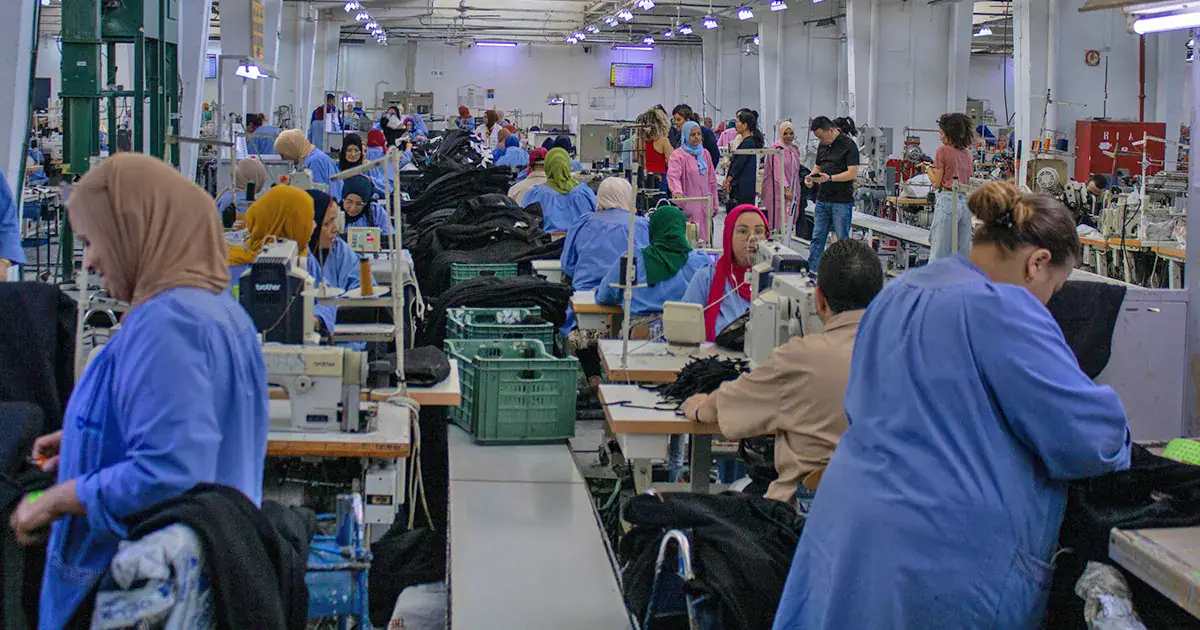
These enterprises have supported production costs and created jobs but now face competition that does not rely on equitable commercial conditions. Bouajila stressed that the problem lies in the gap between the real value of imported goods and their declared value, which affects the industry's ability to compete fairly. The federation represents a significant portion of the sector, with totally export-oriented enterprises accounting for 83-85% of the total textile and clothing sector in Tunisia.
According to industry surveys, this translates to between 1,300 and 1,550 enterprises employing 10 people or more. Many of these enterprises operate in partnership or with foreign capital, particularly from Europe. The unfair competition from underdeclared imports threatens the sustainability of these businesses and the jobs they provide.
Bouajila's statements highlight the challenges faced by Tunisian textile industrialists in maintaining a level playing field. The issue is not about restricting imports but ensuring that all operators comply with the same rules and regulations. The Tunisian Federation of Textiles and Clothing seeks to address this issue through dialogue and cooperation with relevant authorities.
The outcome of these efforts will likely have significant implications for the future of Tunisia's textile sector. Industrialists are calling for a fair and transparent system that allows them to compete on an equal footing with imported goods. The sector's growth and development depend on resolving this issue and ensuring that all stakeholders operate within the same regulatory framework.
Key points
- Industrialists warn of unfair competition from imports with underdeclared values.