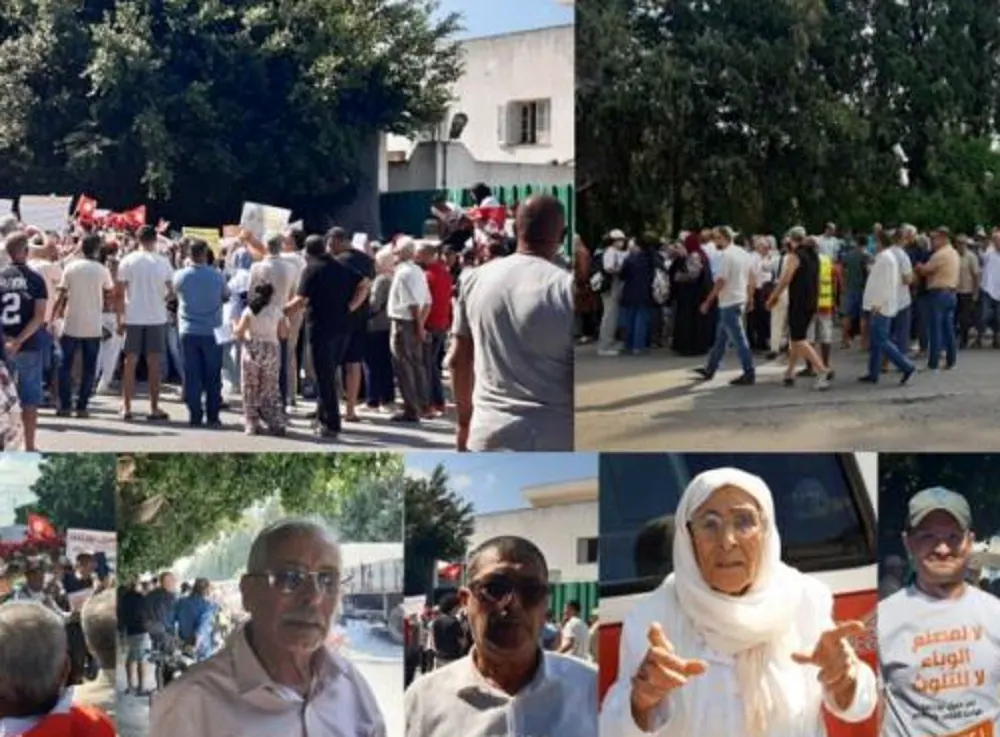
A wave of protests swept through Menzel Bouzelfa in the Nabeul governorate of Tunisia on Thursday, as residents took to the streets to voice their opposition to an insect farming factory. The demonstrators, who blocked the road to Takelsa, claimed the facility, which breeds black flies and other insects, threatens their health and the environment. The protesters demanded the immediate closure of the plant, which they say is located in a residential area, near a hospital and a school.
Jmaiel Hajri, a climatology professor and head of the water security department at the Tunisian Center for Global Security Studies, has been following the issue closely. He expressed surprise at the persistence of the factory, given the concerns raised by residents. Hajri noted that several studies have shown that the factory poses a real threat to the environment, particularly due to its use of household waste to feed the insect larvae, which causes unpleasant odors and gas emissions.
Imed El Bey, president of the Nabeul Regional Union of Agriculture and Fisheries, who is also a resident of Menzel Bouzelfa, shares the concerns of the protesters. He stated that the factory's location on public irrigation land, which is supposed to be used for agriculture, is a highly questionable choice. El Bey pointed out that the facility processes between 30 and 40 tons of waste daily, raising questions about the origin of the waste, its management, and the potential impact on the environment and citizens.
The protesters also expressed frustration at the lack of response from the authorities. Despite repeated requests, the regional agricultural development commission and the National Environment Protection Agency have not provided any information on the issue. El Bey called on the regional authorities to take the concerns of the residents seriously and to intervene to resolve the situation. He also suggested that the residents may seek legal action to shut down the factory.
Young residents, such as Skander Ben Fradj, are particularly vocal about their opposition to the factory. Ben Fradj described the project as "insalubrious" and "harmful to the environment and the water table." He also warned that it threatens the identity of Menzel Bouzelfa, which is known as the "green capital" and "orange capital." Wassila Ben Fredj, another resident, appealed for protection for Menzel Bouzelfa, citing the risks to the environment, health, and social well-being.
The protests in Menzel Bouzelfa reflect a broader concern about environmental risks and the impact of industrial projects on local communities. The residents' demands for the closure of the factory and for greater accountability from the authorities highlight the need for more effective environmental governance in Tunisia. As the situation continues to unfold, it remains to be seen how the authorities will respond to the concerns of the residents.
The controversy surrounding the insect farming factory in Menzel Bouzelfa has sparked a wider debate about the balance between economic development and environmental protection in Tunisia. While the government has been criticized for its handling of the issue, the protesters remain committed to their cause, seeking a safer and healthier environment for their community.
Key points
- The protesters demand the immediate closure of the insect farming factory, citing health and environmental risks.
- The factory's location in a residential area, near a hospital and school, has raised concerns among residents and experts.
- The authorities have not provided clear information on the issue, fueling frustration among the residents.