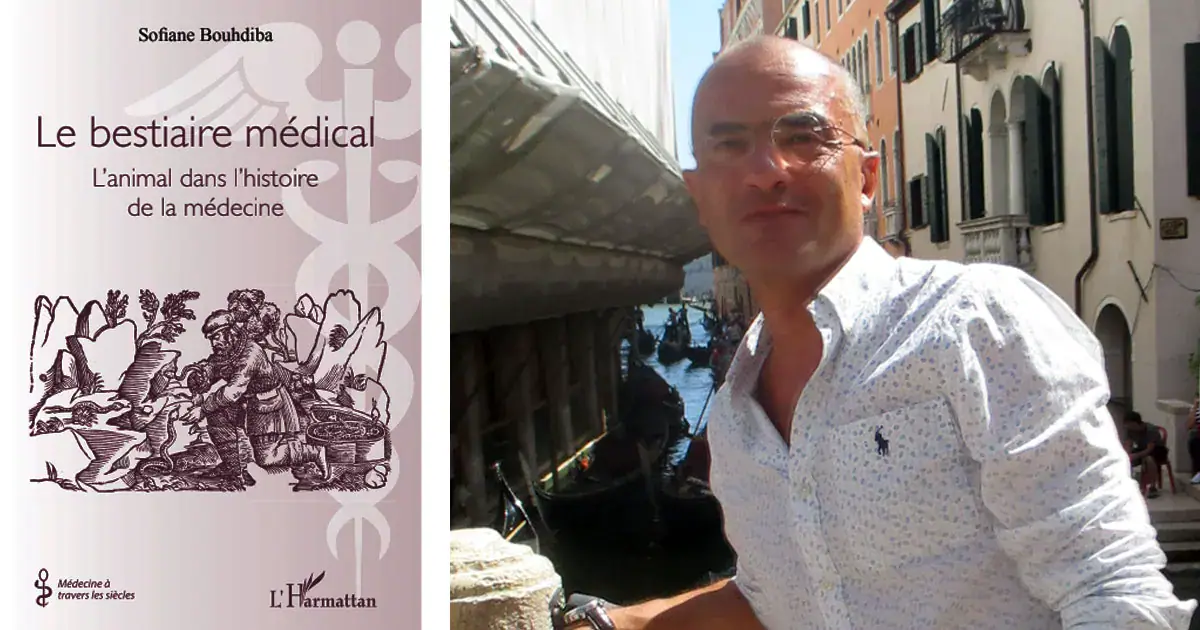
Tunisian professor Sofiane Bouhdiba has recently published a book titled "Le bestiaire médical. L’animal dans l’histoire de la médecine" which explores the role of animals in the history of medicine. The book, published by Editions L’Harmattan in Paris on October 29, 2026, examines the complex interactions between humans and animals in the development of medical knowledge. Bouhdiba, a professor of demography at the Faculty of Human and Social Sciences in Tunis, has written extensively on various topics related to population studies.
Bouhdiba's book delves into the history of medicine through the lens of animals, tracing the evolution of their use in medical experimentation and pharmacology. The author highlights how animals have become essential actors in the scientific journey of humanity. The book is the result of thorough research and draws on various disciplines, including the history of medicine, anthropology, and zoology. Bouhdiba's work aims to provide a deeper understanding of the relationship between humans, animals, and medicine.
The book is organized around four main axes, including the historical foundations of animal-based pharmacopoeia, the categories of animals used in medicine, and the therapeutic uses of invertebrates and insects. Bouhdiba also explores the animal as a therapeutic object, including dissections, vivisections, and animal experimentation. The book sheds light on the significant contribution of animals to the development of medicine.
Bouhdiba's approach is interdisciplinary, drawing on his expertise in demography, sociology, and the history of medicine. The author's previous works have focused on population studies, mortality, and the social sciences. His new book offers a unique perspective on the history of medicine, one that highlights the often-overlooked role of animals.
The book "Le bestiaire médical. L’animal dans l’histoire de la médecine" is a 288-page work that has been well-received by academics and researchers. Bouhdiba's work has been praised for its rigor and rich documentation. The author's exploration of the animal in the history of medicine offers new insights into the complex relationships between humans, animals, and medicine.
Sofiane Bouhdiba is the son of the late Abdelwahab Bouhdiba, a professor of sociology who taught at the Faculty of Human and Social Sciences in Tunis. The author has published over 30 books on various topics related to population studies and mortality. His new book is a significant contribution to the field of medical history and the study of human-animal relationships.
Bouhdiba's work challenges readers to rethink their understanding of the history of medicine and the role of animals in scientific discovery. The book offers a nuanced exploration of the complex interactions between humans and animals, highlighting the symbolic, cultural, and scientific significance of animals in medicine. By examining the history of animal-based medicine, Bouhdiba provides a unique perspective on the development of medical knowledge.
Key points
- Sofiane Bouhdiba's book explores the role of animals in the history of medicine.
- The book offers a nuanced understanding of human-animal relationships in medical development.
- Bouhdiba's work challenges readers to rethink their understanding of medical history.