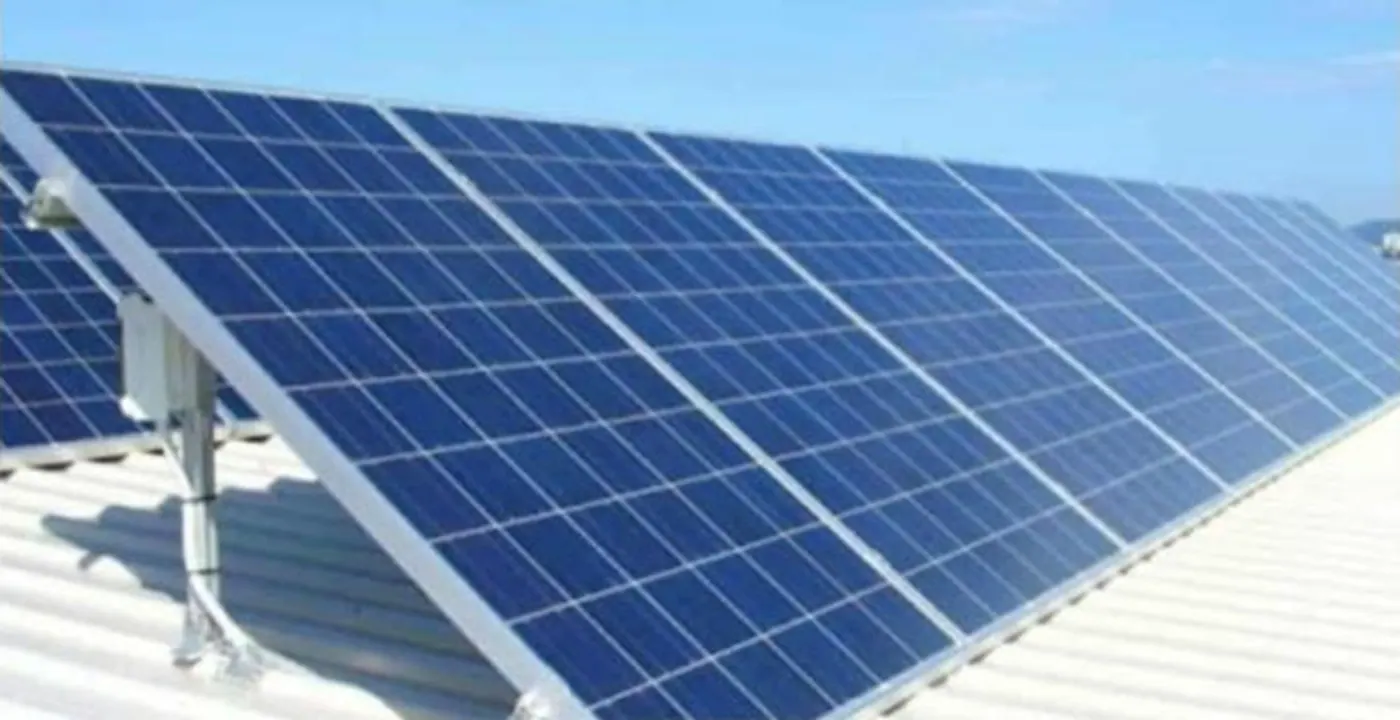
The Tunisian renewable energy sector has called on the country's parliament to remove tariffs on solar equipment and reduce the value-added tax (VAT) to 7%. The request was made in an open letter to the President of the Assembly of People's Representatives by the Tunisian Photovoltaic Syndicate and the Renewable Energy Group of the Confederation of Tunisian Enterprises. The letter requests the removal of customs duties on photovoltaic panels, batteries, and storage systems.
The professionals argue that reducing the cost of solar equipment will increase access to solar energy for households and businesses, stimulating investment in the sector. They also propose an urgent institutional dialogue between parliament, the government, and professionals to establish legislative and fiscal measures to accelerate the development of renewable energies. These measures aim to reduce the cost of solar installations and storage.
The request comes as the parliament prepares to examine the 2027 finance bill. The government must submit the bill to the Assembly by October 15, 2026, in accordance with constitutional deadlines. The preparatory work has already begun within the Assembly, where the Finance and Budget Committee has started examining the main orientations and assumptions for the next budget.
Tunisia faces a growing energy deficit, with an energy independence rate of 34% as of July 2026, down from 37% the previous year. The country's total installed power from renewable sources reached 1,163 MW as of July 2026. The Tunisian government aims to accelerate the development of renewable energies, with a plan to install 3,815 MW of additional renewable capacity by 2030.
The World Bank reports that Tunisia aims to achieve a 35% share of renewable energies in its electricity system capacity by 2030 and 50% by 2035. The development of renewable energies is seen as a way to reduce dependence on energy imports, improve energy security, and attract more private investment. A World Bank program worth $430 million over five years supports the modernization of the electricity sector.
The energy transition is a major component of Tunisia's climate commitments. The country has increased its climate ambitions, targeting a 62% reduction in carbon intensity by 2035 compared to 2010. The request from professionals aligns with these goals and the examination of the 2027 finance bill.
The Tunisian renewable energy sector is seeking support from parliament to accelerate the country's energy transition. The removal of tariffs on solar equipment and the reduction of VAT are seen as crucial steps towards achieving this goal. The sector hopes that the parliament will consider their request and provide the necessary support.
Key points
- Tunisian professionals request removal of tariffs on solar equipment.
- Goal of 35% renewable energy capacity by 2030.
- Energy independence rate at 34% as of July 2026.