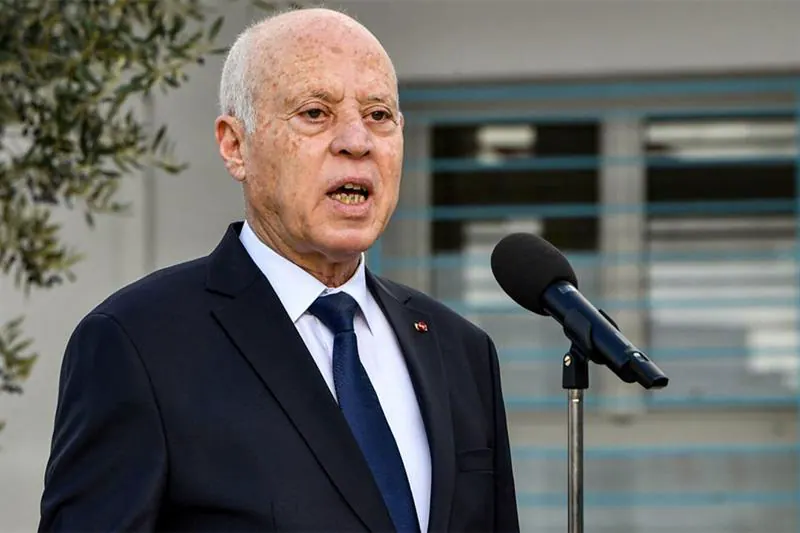
On Wednesday, September 30, 2026, Tunisian President Kais Saied issued an amendment to decree-law 54, which was initially introduced in 2022. The decree had been widely criticized by civil society and opposition groups, who argued that it was used to prosecute dissenting voices rather than combat cybercrime. The amendment, published in the Official Journal of the Tunisian Republic, removes the contentious clause.
The original decree had sparked concerns among human rights organizations, who claimed that it was used to stifle free speech and target critics of the government. By removing the maximum five-year prison sentence for spreading "fake news", President Saied's amendment appears to address some of these concerns. However, it remains to be seen how the revised decree will be implemented and whether it will lead to a significant shift in the government's approach to cybercrime.
The amendment to decree 54 is seen as a positive step by some, but others argue that it does not go far enough in addressing the concerns of civil society. The Tunisian government has faced criticism for its handling of free speech and human rights, and the revised decree will likely be closely watched by international observers. In recent years, Tunisia has struggled to balance security concerns with the need to protect individual freedoms.
President Saied's decision to amend the decree comes amid ongoing debates about the balance between security and individual freedoms in Tunisia. The country has a complex history of navigating these issues, particularly since the Arab Spring protests in 2011. The revised decree may help to ease tensions between the government and civil society, but it is unclear whether it will lead to significant changes in practice.
The removal of the maximum five-year prison sentence for spreading "fake news" is seen as a significant concession by the government. However, some critics argue that the decree still contains problematic provisions that could be used to target journalists, activists, and other critics of the government. The Tunisian government will need to demonstrate a commitment to upholding individual freedoms and protecting human rights in order to build trust with civil society.
The international community has been closely watching developments in Tunisia, particularly with regards to human rights and free speech. The revised decree may help to improve Tunisia's reputation on these issues, but it is unclear whether it will lead to significant improvements in practice. The government will need to demonstrate a commitment to transparency and accountability in order to build trust with international partners.
In conclusion, President Saied's amendment to decree 54 is a significant development in Tunisia's ongoing debates about cybercrime and free speech. While the revised decree appears to address some of the concerns of civil society, it remains to be seen how it will be implemented and whether it will lead to significant changes in practice. The government will need to demonstrate a commitment to upholding individual freedoms and protecting human rights in order to build trust with civil society and international partners.
Key points
- The Tunisian government has amended a decree-law on cybercrime, removing a maximum five-year prison sentence for spreading "fake news".