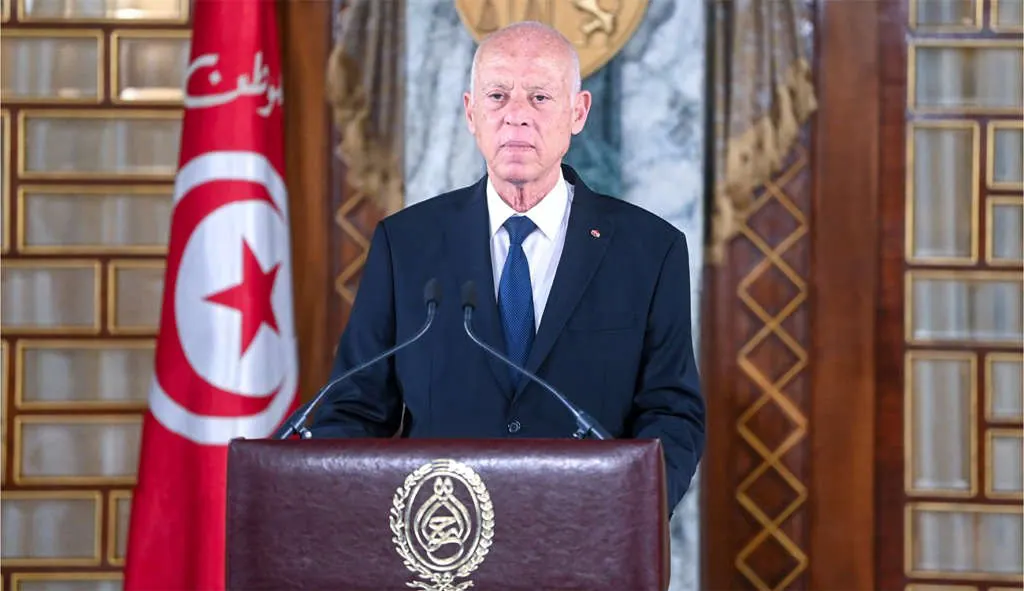
Tunisian President Kais Saied has reaffirmed his commitment to achieving social justice and economic development in the country. On September 23, 2026, he met with the Head of Government and the Governor of the Central Bank of Tunisia (BCT) to discuss the country's economic and social development. The President emphasized the importance of a development model based on homogeneity, social justice, and equitable progress for all citizens and regions.
The President highlighted the crucial role of the Central Bank in supporting the national economy and achieving financial equilibrium. He stressed that the bank must implement a plan to find solutions to achieve the desired financial balances. The President also emphasized the importance of public banks in promoting social justice and encouraging lending at favorable conditions, in line with BCT recommendations.
President Saied also discussed the coexistence of public and private sectors, which are expected to complement each other in achieving social and economic goals. He noted that public services such as education, healthcare, transportation, and social protection are the responsibility of the state. The President aims to make the social state a tangible reality in the daily lives of citizens across different regions of Tunisia.
The issue of rising prices was also addressed during the meeting. The President considered it a major concern, along with corruption, and emphasized the need to reduce imports and combat fraud. He also criticized the negative attitudes of some individuals who seek to undermine the revolutionary process that began on December 17, 2010.
According to the President, the country's banks have played a significant role in managing national resources and contributing to the repayment of external debt. In 2025, they successfully repaid over 40% of external debt services. The President also noted that the banks have helped reduce inflation rates and maintain the value of the Tunisian dinar against major international currencies.
The President's approach aims to establish a solid and social economy, highlighting the importance of the Central Bank and other banks in achieving this goal. He emphasized that the country's progress in social justice, equitable wealth distribution, and anti-corruption efforts is on track.
The meeting was seen as a reaffirmation of the President's commitment to his vision for Tunisia's economic and social development. The country's progress in these areas will depend on the effective implementation of the President's plans and the cooperation of various stakeholders.
Key points
- President Kais Saied emphasizes the role of banks in achieving social justice and economic development in Tunisia.
- The President aims to make the social state a tangible reality in the daily lives of citizens across different regions of Tunisia.
- Tunisia's banks have contributed significantly to the repayment of external debt and the reduction of inflation rates.