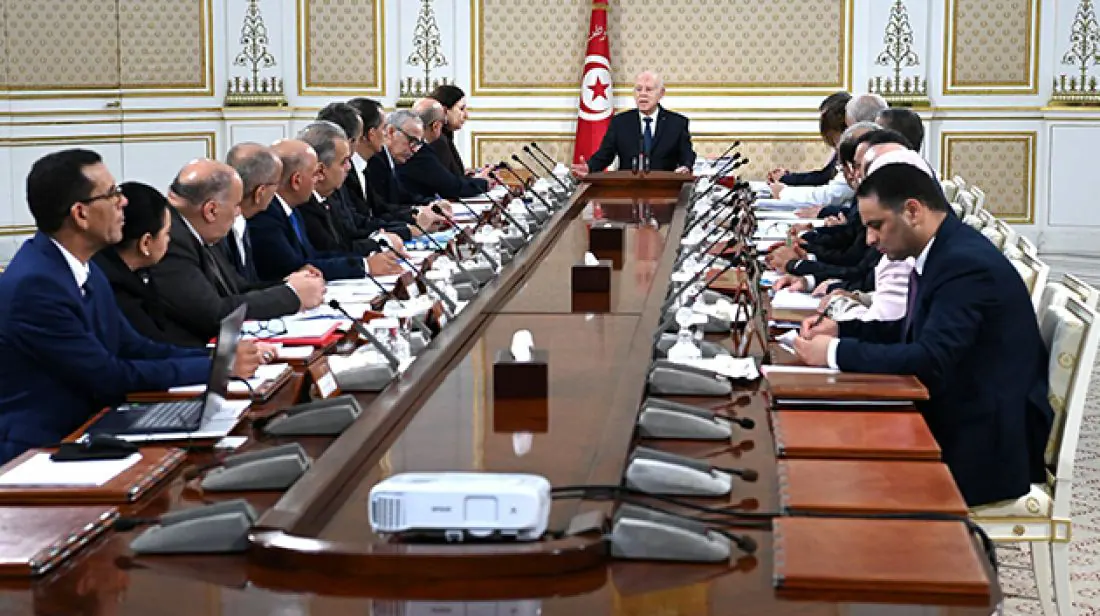
On September 29, Tunisian President Kais Saied supervised a cabinet meeting at the Carthage Palace. The meeting involved discussions on various draft decrees and matters related to the functioning of public services. According to a statement released by the Presidency on September 30, the meeting covered several key issues. The President emphasized his commitment to monitoring the situation across the country.
The cabinet meeting discussed a draft decree to amend Decree No. 54 of 2022. This decree, dated September 13, 2022, relates to combating crimes linked to information and communication systems. Another draft decree aims to amend Decree No. 13 of 2022, dated March 20, 2022. This decree concerns criminal reconciliation, the use of its proceeds, and its completion.
Further discussions centered on a draft decree to amend certain provisions of the Basic Law No. 23 of 2012. This law, dated December 20, 2012, pertains to the Independent High Authority for Elections. Additionally, a draft decree concerning municipal councils was on the agenda. These draft decrees reflect the government's efforts to address various legal and administrative matters.
During the meeting, President Saied reiterated his commitment to following developments across the country. He acknowledged that the Tunisian people are engaged in a liberation war on multiple fronts. The President expressed confidence that the people will achieve a clear victory despite challenges posed by remnants of opposition and colonialism.
The President's emphasis on national issues and the government's efforts to address them through various decrees underscores the complexities of Tunisia's current situation. The discussions in the cabinet meeting reflect a broader strategy to tackle pressing concerns. By focusing on legislative adjustments, the government aims to enhance its response to both domestic and international challenges.
Tunisia has been experiencing significant political and social changes. The cabinet's focus on electoral and municipal reforms indicates a push towards strengthening democratic institutions. These efforts are crucial for maintaining stability and promoting national development. The government's actions will likely have far-reaching implications for the country's future.
The meeting's outcomes and future implementations of the discussed decrees will be closely watched by various stakeholders. As Tunisia navigates its complex landscape, the role of President Saied and the cabinet will be pivotal in shaping the country's trajectory. The government's ability to effectively address pressing issues will be critical in determining the nation's progress.
Key points
- President Kais Saied chaired a cabinet meeting to discuss several draft decrees.
- The meeting covered draft decrees on combating cybercrimes and electoral reforms.
- President Saied emphasized his commitment to monitoring the situation across the country.