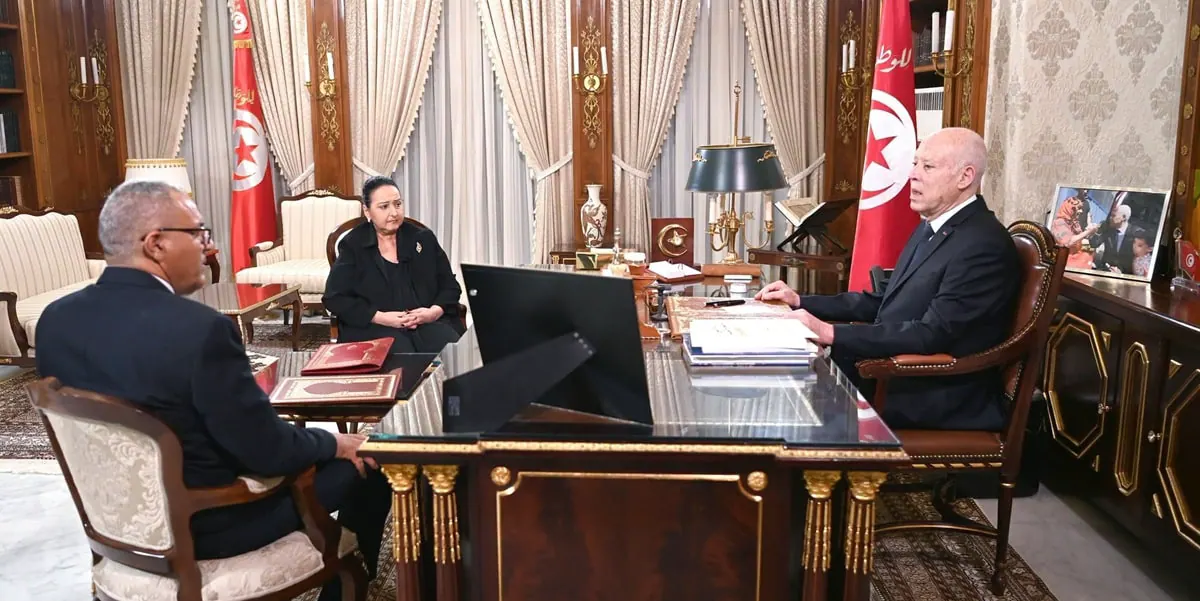
Tunisian President Kaïs Saïed has reaffirmed his commitment to establishing a national education system based on equal opportunities and universal access to education. During a meeting at the Carthage Palace on October 8, 2026, with Minister of Cultural Affairs Amina Srarfi and Secretary-General of the Higher Council of Education and Teaching Mohamed Ali Boughdiri, the President highlighted the strategic role of education in national security. He emphasized that education is not solely a sectoral policy but a crucial issue for the country's future.
The President recalled that the inclusion of the Higher Council of Education and Teaching in the Constitution reflects his conviction that education and teaching are essential for the nation's development. He noted that the council's creation was part of a broader approach, following national consultations that led to the adoption of the Constitution. This move aims to ensure that education is a national priority, rather than just a sectoral concern.
President Saïed stressed the need to guarantee equal access to education for all students, focusing on improving material conditions. He specifically mentioned transportation, meals, and accommodation in boarding schools, as well as providing school uniforms and supplies. These measures will be implemented in coordination with relevant parties to enhance schooling and learning conditions. The President's emphasis on these practical aspects underscores his commitment to addressing the tangible challenges faced by students.
In addition to these priorities, President Saïed called for the establishment of cultural clubs in schools and the integration of principles such as liberty, emancipation, and social justice into the curriculum from the first year of primary education. He also reviewed previous attempts to reform the Tunisian education system, noting that some had not led to meaningful changes. This reflection on past efforts informs his vision for a more effective and equitable education system.
The President's vision for the education system is centered on creating a national, democratic, and accessible system that prioritizes equality and fairness. He sees this as a way to translate constitutional principles into tangible realities for students and their families. By focusing on the social conditions of schooling, culture, and values to be transmitted to young generations, President Saïed has highlighted multiple dimensions of education policy.
To achieve these goals, the President's administration will need to develop operational measures, particularly regarding financing, school infrastructure, and support for students from disadvantaged regions and backgrounds. This will require coordination among various stakeholders and a commitment to addressing the systemic challenges facing the education sector. The success of these initiatives will depend on effective implementation and the allocation of necessary resources.
Ultimately, President Saïed's priorities for the education system reflect his broader vision for Tunisia's development. By emphasizing equal access, quality education, and the integration of essential values, he aims to create a more just and equitable society. As the government moves forward with these plans, it will be essential to monitor progress and address any challenges that arise.
Key points
- President Saïed emphasizes equal access to education and improved material conditions for students.
- The President calls for the integration of principles such as liberty, emancipation, and social justice into the curriculum.
- The government will need to develop operational measures to achieve the President's vision for the education system.