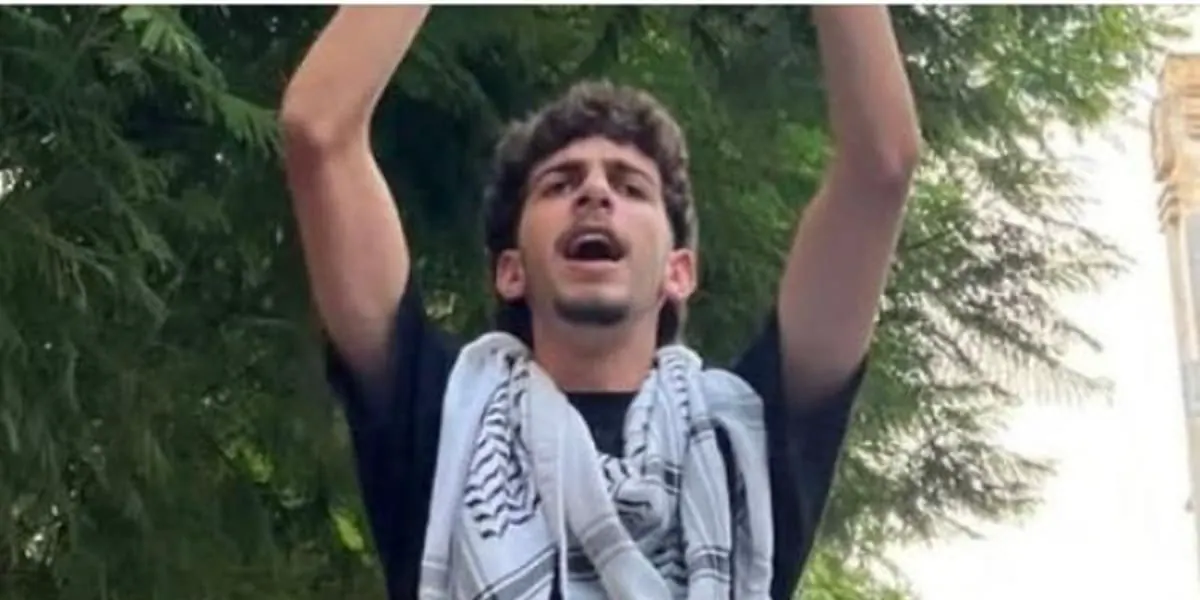
Tunisian President Kaïs Saïed has instructed the Minister of Education to allow teenager Adam Mbarek to resume his studies at his school immediately. This decision comes after a judge ordered Mbarek's release from detention. The 17-year-old had been held for approximately two weeks after participating in a protest in Tunis on September 19 in support of activists linked to the Soumoud flotilla.
Adam Mbarek was arrested and his case was treated separately due to his status as a minor. The judge had initially ordered his placement in a juvenile institution and set a hearing for October 6. Mbarek's lawyer, Samir Dilou, reported on September 25 that the charges against him included participating in a gathering that disturbed public order, imputing illegal acts to a public official, and making provocative cries or songs in public places.
The charges against Mbarek are based on several articles of the Tunisian Penal Code, including articles 79, 128, 220 bis, 245, and 247. These articles concern disturbing public order, making false accusations against public officials, and committing acts of defamation against public authorities. Mbarek's detention sparked reactions and mobilizations, particularly among associations, young people, and high school students, who called for his release.
On October 6, the juvenile judge decided to release Mbarek. Shortly after his release, President Saïed gave instructions to the Minister of Education to take necessary measures to allow Mbarek to return to his school and ensure that he could continue his studies under suitable conditions.
The President's instructions aim to minimize the disruption to Mbarek's education and allow him to catch up on any missed work. The case highlights the tension between the authorities and young people in Tunisia, particularly with regard to freedom of expression and assembly. Mbarek's release and return to school are seen as a positive step towards resolving the issue.
The Soumoud flotilla is a controversial issue in Tunisia, with many activists and organizations calling for support for the flotilla and its mission. The protest that Mbarek participated in was part of a larger movement of demonstrations and rallies in support of the flotilla and its activists. The issue remains a sensitive topic in Tunisia, with many stakeholders closely following developments.
The incident and subsequent developments have sparked a national conversation about the balance between public order and individual freedoms in Tunisia. As the country continues to navigate these complex issues, the case of Adam Mbarek serves as a notable example of the challenges and opportunities that lie ahead.
Key points
- President Kaïs Saïed ordered the immediate return of teenager Adam Mbarek to his school after his release from detention.
- Mbarek was arrested for participating in a protest in support of activists linked to the Soumoud flotilla and faced charges under several articles of the Tunisian Penal Code.
- The case highlights tensions between authorities and young people in Tunisia regarding freedom of expression and assembly.