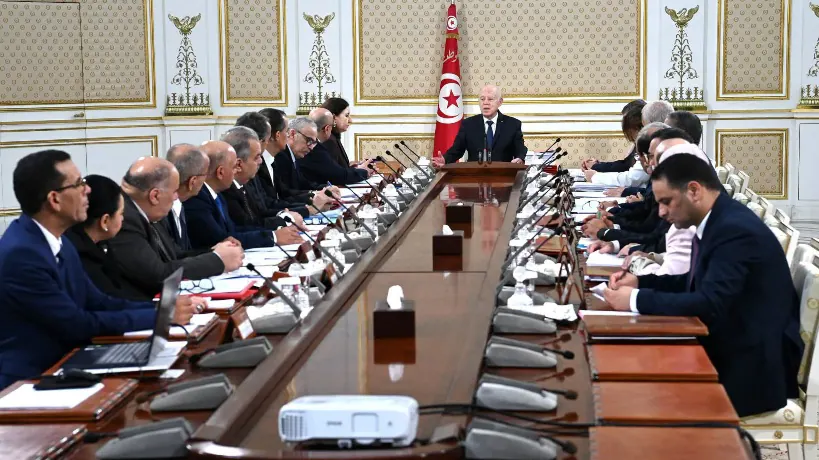
On September 29, Tunisian President Kais Saied presided over a cabinet meeting at the Carthage Palace to discuss several draft decrees and review various matters related to the functioning of public services. According to a statement from the Presidency, the meeting covered a range of topics, including revisions to key decrees. The meeting was attended by various government officials and advisors.
One of the main decrees discussed was the revision of Decree No. 54 of 2022, dated September 13, 2022, which relates to combating cybercrime. This decree has been a significant tool in Tunisia's efforts to regulate online activities and combat digital piracy. The proposed revisions aim to update and refine the existing framework to better address emerging challenges in the field of cybersecurity.
In addition to the cybercrime decree, the cabinet also reviewed revisions to Decree No. 13 of 2022, dated March 20, 2022, which concerns the judicial settlement and the use and completion of its proceeds. This decree is part of Tunisia's efforts to improve its judicial system and enhance the efficiency of its legal processes.
The cabinet also examined revisions to certain provisions of the Basic Law No. 23 of 2012, dated December 20, 2012, which established the Independent High Authority for Elections (ISIE). The ISIE plays a crucial role in organizing and overseeing elections in Tunisia, ensuring the integrity and transparency of the electoral process.
Another decree discussed during the meeting relates to municipal councils. This decree is expected to have significant implications for local governance and the functioning of municipal authorities in Tunisia. The proposed revisions aim to enhance the effectiveness and accountability of these councils.
During the meeting, President Saied emphasized his commitment to monitoring the situation across the country and reiterated his support for the Tunisian people, who he described as engaged in a "liberation war on all fronts." He expressed confidence that the people would ultimately prevail, despite challenges posed by various groups.
The cabinet meeting is part of ongoing efforts by the Tunisian government to review and update its legislative framework to address emerging challenges and improve governance. The decrees discussed during the meeting are expected to be implemented in the coming weeks, pending final approval from the relevant authorities.
Key points
- The Tunisian cabinet reviewed revisions to several key decrees, including those related to cybercrime and the Independent High Authority for Elections.
- President Kais Saied emphasized his commitment to supporting the Tunisian people and promoting good governance.
- The proposed revisions aim to enhance the effectiveness and accountability of various institutions and processes in Tunisia.