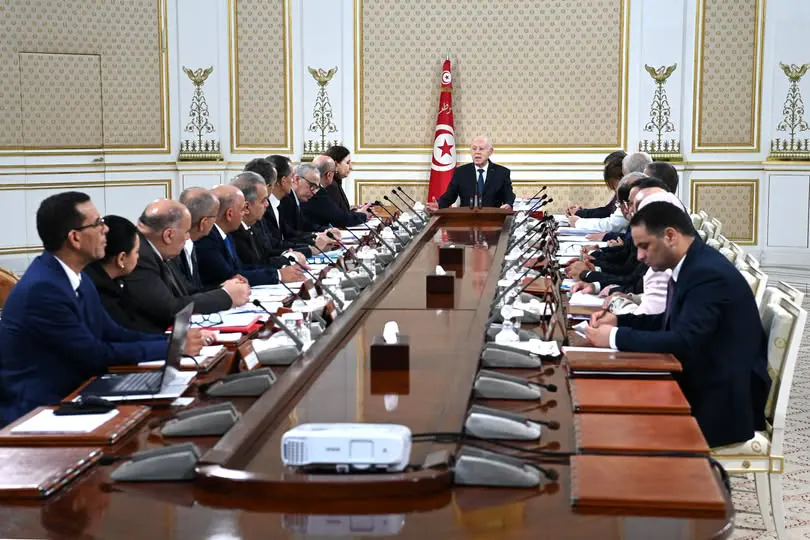
On September 29, Tunisian President Kais Saied presided over a cabinet meeting at the Carthage Palace to discuss several draft decrees and review various matters related to the functioning of public institutions. The meeting focused on key issues affecting the country, with a strong emphasis on enhancing legislation and governance. According to a statement released by the presidency, several crucial decrees were examined during the session.
One of the primary decrees discussed was the amendment to Decree No. 54 of 2022, which pertains to combating cybercrime. This decree, initially issued on September 13, 2022, aims to strengthen the country's legal framework for addressing crimes related to information and communication systems. The proposed amendments seek to update and refine the existing regulations to better tackle emerging challenges in the digital landscape.
In addition to the cybercrime decree, the cabinet also reviewed amendments to Decree No. 13 of 2022, which concerns the judicial settlement and the use of its proceeds. This decree, dated March 20, 2022, focuses on enhancing the country's judicial processes and ensuring the effective utilization of funds generated from judicial settlements. Furthermore, the meeting examined revisions to certain provisions of the Fundamental Law No. 23 of 2012, which established the Independent High Authority for Elections.
The cabinet also discussed a decree related to municipal councils, highlighting the government's ongoing efforts to reform and strengthen local governance structures. President Saied emphasized during the meeting that he is closely monitoring the situation across the country and reiterated that the Tunisian people, who are engaged in a multifaceted struggle for liberation, will only accept a clear victory.
The President's remarks underscore the significance of the current political and social climate in Tunisia, where various stakeholders are working towards achieving substantial reforms and improvements. By addressing key legislative and institutional challenges, the government aims to enhance stability and promote national development.
The cabinet meeting reflects the government's commitment to addressing pressing issues and advancing critical reforms. Through these efforts, the administration seeks to create a more favorable environment for economic growth, social progress, and democratic consolidation. As Tunisia continues to navigate complex domestic and international challenges, such high-level meetings play a crucial role in shaping the country's future trajectory.
Key aspects of the meeting included a focus on enhancing cybercrime legislation, reforming local governance, and strengthening electoral processes. These initiatives are part of a broader strategy to improve governance, promote transparency, and ensure the effective functioning of public institutions in Tunisia.
Key points
- The Tunisian cabinet discussed amendments to several key decrees, including those related to cybercrime and local governance.
- President Kais Saied emphasized the need for clear victory in the country's multifaceted struggle for liberation.
- The meeting reflects the government's efforts to address pressing issues and advance critical reforms in Tunisia.