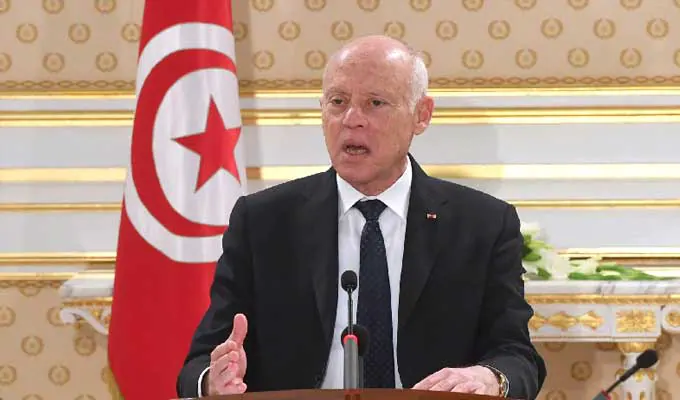
On October 6, 2026, Tunisian President Kaïs Saïed received Prime Minister Sarra Zaafrani Zenzri and Minister of Employment and Vocational Training Riadh Chaouad at the Carthage Palace. The meeting focused on implementing a 2025 law aimed at recruiting long-term unemployed university graduates into the public sector and civil service. This law is part of a broader effort to address unemployment in Tunisia.
President Saïed criticized past recruitment practices, citing the use of falsified diplomas and unqualified candidates. He argued that these practices have led to the waste of public funds and denied qualified individuals their rightful employment opportunities. The President emphasized that the only valid "diploma" for securing a job was affiliation with a particular party or group.
According to President Saïed, unemployment is not a choice but rather an injustice resulting from known practices and unjustified privileges. He stressed that those who deserved employment were denied opportunities in favor of unqualified individuals. The President vowed to address these issues and ensure that employment is based on merit.
President Saïed described the current period as one of hard work, sincerity, and loyalty, rather than false polemics. He praised the Tunisian people for their resilience and determination, highlighting their sacrifices for independence, employment, and national dignity. The President expressed confidence that the people will overcome challenges and achieve their aspirations.
The President reaffirmed his commitment to honoring promises made to the Tunisian people. He emphasized that his administration will work tirelessly to address unemployment and ensure that employment opportunities are fair and based on merit. This commitment is part of a broader effort to promote social justice and equality.
The meeting between President Saïed and government officials reflects the administration's focus on addressing unemployment and promoting economic development. The implementation of the 2025 law on recruiting long-term unemployed university graduates is a key aspect of this effort. The President's statements underscore the need for reform and accountability in addressing Tunisia's unemployment challenges.
The Tunisian government's efforts to address unemployment are crucial in addressing the country's economic and social challenges. President Saïed's emphasis on merit-based employment and accountability reflects a commitment to promoting fairness and transparency in the recruitment process. The success of these efforts will depend on effective implementation and a sustained commitment to reform.
Key points
- President Saïed emphasizes that unemployment is an injustice, not a choice, and vows to address the issue through merit-based employment and accountability.