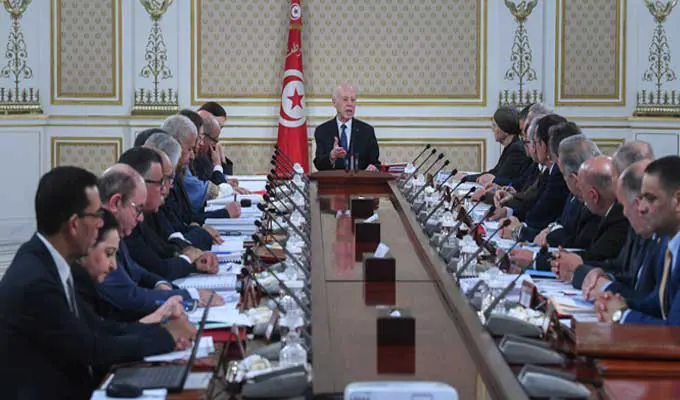
On September 30, 2026, Tunisian President Kaïs Saïed presided over a Council of Ministers meeting at the Carthage Palace. The meeting focused on examining several draft decrees and laws, as well as discussing public service operations. According to a communiqué released by the presidency on Wednesday, the Council reviewed various proposals aimed at modifying existing laws and regulations.
One of the key draft decrees examined was a modification to decree-law 54 of 2022, which relates to combating cybercrime and information and communication system offenses. Another draft decree reviewed was a modification to decree-law 13 of 2022, concerning penal reconciliation and the allocation of its proceeds. These draft decrees aim to update and refine Tunisia's legal framework in these areas.
The Council also examined a draft decree amending certain provisions of the 2012 organic law governing the Independent Higher Instance for Elections (ISIE). Additionally, a draft decree on municipal councils was discussed. These proposals reflect the government's efforts to reform and enhance the country's electoral and local governance systems.
During the meeting, President Saïed emphasized his attention to the situation in different regions of the country. He stated that the Tunisian people, who are engaged in a "war of liberation on all fronts," will only accept victory. He also denounced "pockets of counter-revolution and colonialism's supporters," highlighting the challenges facing the country.
The review of these draft decrees and laws demonstrates the government's ongoing efforts to address various aspects of public policy and governance in Tunisia. By examining and potentially implementing these proposals, the administration aims to improve the country's legislative and institutional frameworks.
President Saïed's statements underscore the complexities and difficulties Tunisia faces, both domestically and internationally. His comments on the need for vigilance and the pursuit of national goals reflect the country's current situation and the government's priorities.
The Council of Ministers meeting and the discussion of these draft decrees and laws mark a significant step in Tunisia's ongoing policy and legislative processes. The implementation of these proposals, if approved, will likely have implications for various sectors and aspects of Tunisian society and governance.
Key points
- President Kaïs Saïed chaired a Council of Ministers meeting to review several draft decrees and laws.
- The draft decrees examined included modifications to laws on cybercrime, penal reconciliation, and electoral governance.
- President Saïed emphasized the Tunisian people's determination to achieve victory and denounced opposition to the country's progress.