Tunisian President Kaïs Saïed has suggested a connection between the recent spate of incendies and water shortages in the country. While visiting the Siliana region on November 8 to celebrate the National Tree Day, Saïed stated that the simultaneous occurrence of these events is not coincidental. He accused remnants of the old regime of attempting to regain influence, leading to disruptions in water supply and rising prices. Saïed assured that the judiciary would investigate these incidents to determine responsibility.
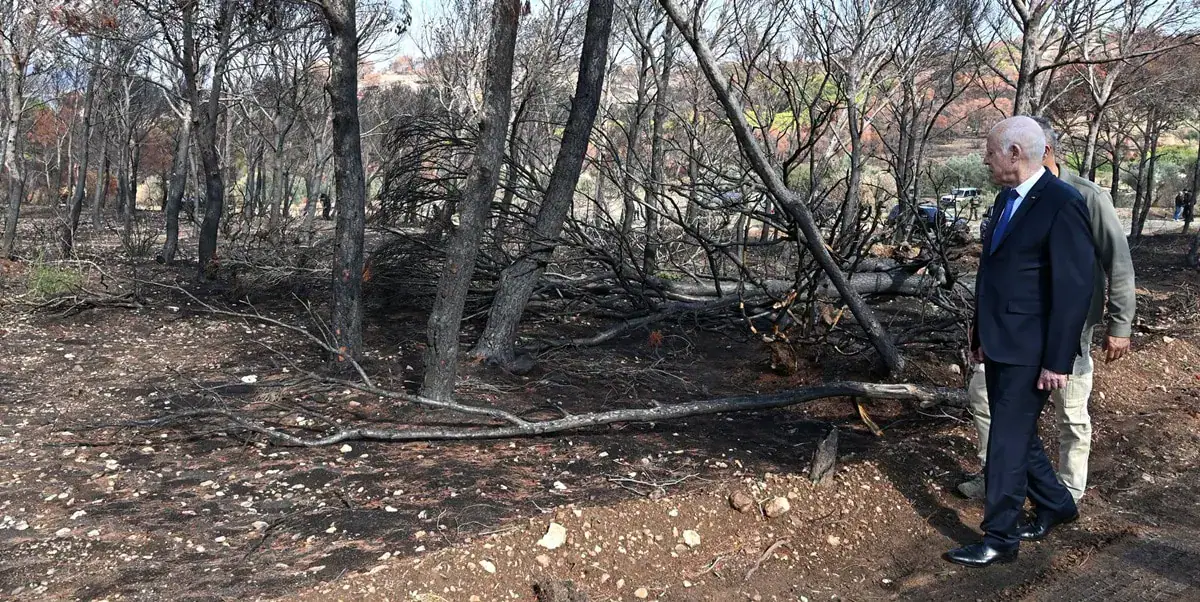
The president participated in a tree-planting event in the Bargou region, which was severely affected by the incendies that ravaged several forest areas in August and September 2026. According to data from the Siliana Regional Agricultural Development Commission, over 2000 hectares of vegetation, mainly Aleppo pine and olive groves, were destroyed in the fires. Fortunately, no casualties were reported. Saïed's visit aimed to show solidarity with the affected regions and highlight the government's efforts to address the challenges faced by the local population.
During his visit, Saïed also reflected on the historical significance of November 8, 1954, when Tunisians from various regions united against French colonial forces. He specifically mentioned the battles of Arabata, Ichkeul, Hdaj, and Malousi, which hold a special place in the nation's memory. The president framed these events as part of the ongoing "battle for national liberation," emphasizing that the Tunisian people will continue to pursue their legitimate aspirations and demands.
The president's remarks on the connection between incendies, water shortages, and suspect motives have sparked interest and debate across the country. Saïed's administration has been working to address the challenges facing Tunisia, including economic and environmental issues. The government's efforts to investigate the causes of the incendies and water shortages aim to provide answers and hold those responsible accountable.
The National Tree Day celebrations took on a special significance in Siliana, with Saïed's participation in the tree-planting event. The event aimed to promote environmental awareness and rehabilitation of areas affected by the incendies. The president's presence also underscored the government's commitment to supporting the local population and promoting sustainable development in the region.
According to local reports, the incendies and water shortages have had a significant impact on the local population, affecting agriculture and daily life. The government's response to these challenges will be crucial in determining the long-term effects on the region. Saïed's administration has vowed to prioritize the needs of the local population and work towards sustainable solutions.
The Sidi Amer school was distinguished at the Arab level, according to reports. No further information was available on the specific recognition or achievement. The president's visit highlighted the importance of education and community development in Tunisia.
Key points
- President Kaïs Saïed suggests a connection between recent incendies and water shortages in Tunisia, pointing to possible suspect motives.
- The president vowed to hold those responsible for the incendies and water shortages accountable through judicial investigations.
- Saïed's visit to Siliana aimed to show solidarity with the affected regions and promote environmental awareness.