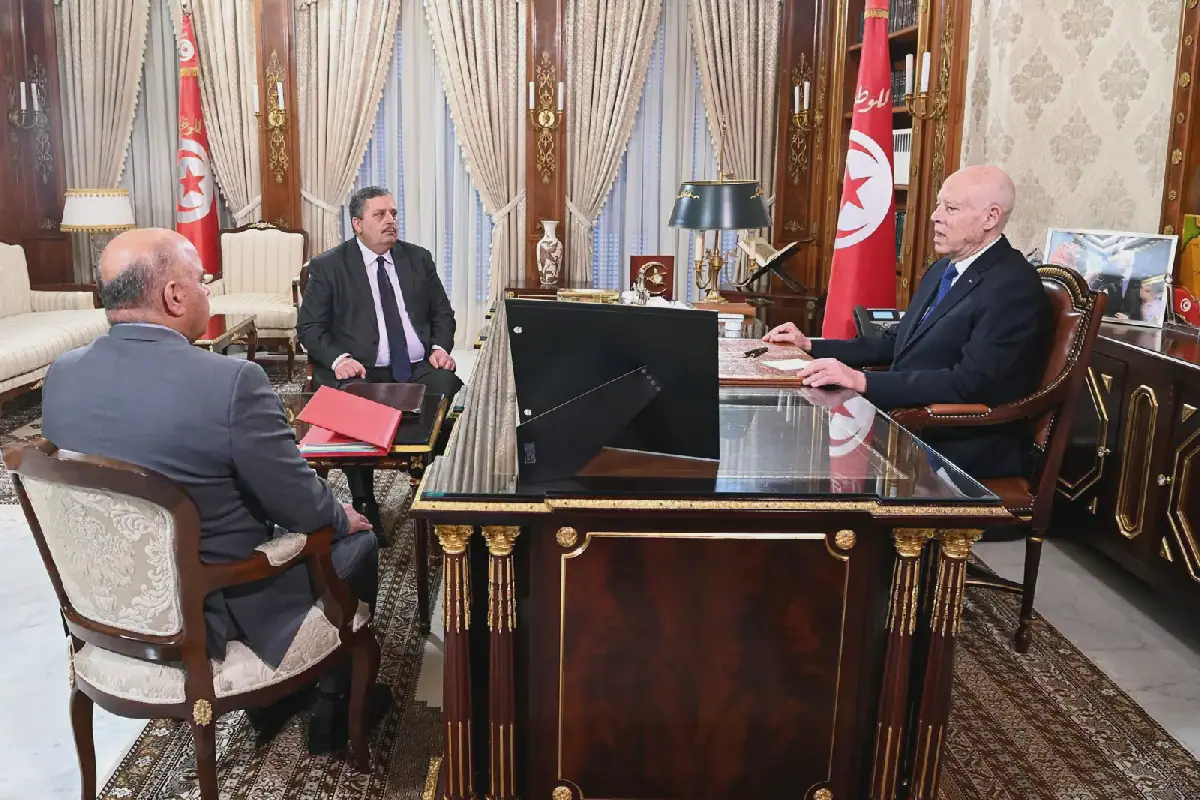
On November 27, 2026, Tunisian President Kais Saied held a meeting with Minister of Education Noureddine Nouri and Minister of Transport Rashid Al-Amri at the Carthage Palace. The discussion centered on providing fair transportation for students across the country. Many students face difficulties traveling long distances to educational institutions, exposing them to various risks. President Saied emphasized the need for coordination between state institutions to achieve the aspirations of the Tunisian people.
President Saied highlighted the importance of the Higher Council for Education in establishing a national education system based on equity and equal opportunities. This system aims to provide opportunities for success and excellence for all Tunisians. He stressed that achieving equal education opportunities requires combined efforts to implement comprehensive educational reform across the country. The reform seeks to eliminate illiteracy and attain high levels of scientific knowledge.
The meeting comes as part of the government's efforts to address the challenges faced by students, particularly those living in remote areas. The President's emphasis on fair transportation reflects the government's commitment to improving education and reducing inequality. By working together, the government aims to provide a more equitable education system for all students.
Tunisia has been investing in education and infrastructure development. Recent reports indicate that investment in agriculture has exceeded one billion dinars, with a 16.2% increase in the first ten months of 2026. Additionally, the country is preparing for the upcoming summer season by implementing projects to improve electricity production efficiency.
The Tunisian government has also been strengthening partnerships with international organizations. A new partnership with the United Nations, spanning from 2027 to 2031, focuses on economic and social development, as well as ecological transition. This partnership aims to support Tunisia's development goals and promote sustainable growth.
Furthermore, Tunisia has signed an agreement with Switzerland to develop its vocational training system. The agreement, known as the "Tawil" program, seeks to enhance vocational training and provide opportunities for young people to acquire new skills. This initiative is part of the government's efforts to improve education and employment prospects.
The government's focus on education and infrastructure development reflects its commitment to improving the lives of Tunisian citizens. By addressing the challenges faced by students and investing in education, the government aims to promote social mobility and reduce inequality. The President's meeting with ministers demonstrates the government's determination to provide fair transportation for students and improve the overall education system.
Key points
- The Tunisian government is working to provide fair transportation for students across the country.
Reporting sources
- Radio Monastir · Radio Monastir