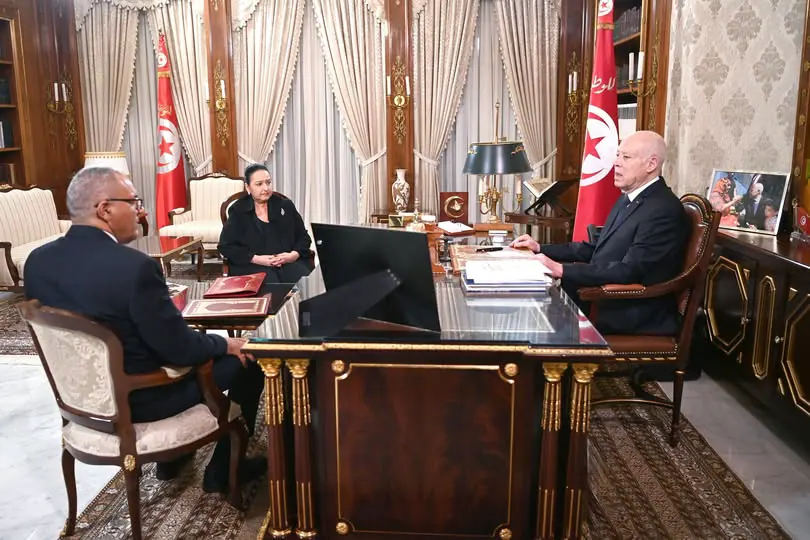
On October 8, 2026, Tunisian President Kais Saied met with Minister of Cultural Affairs Amira Al-Sarrafi and Secretary-General of the Supreme Council for Education Mohamed Ali Al-Boghdadi at the Carthage Palace. The meeting focused on the role of the Supreme Council for Education, which was established after a national consultation that led to the creation of the country's constitution. President Saied highlighted the significance of education as a national security issue.
President Saied emphasized the need for a national education system that provides equal opportunities for all citizens. He stressed that this system should be based on the principles of freedom, liberation, and social justice, which should be taught to students from the first year of primary school. The President's vision for education aims to promote social equality and provide a solid foundation for the country's future.
The President reviewed several historical attempts at education reform in Tunisia, which he described as often being superficial and lacking genuine intent. He expressed his determination to establish a robust and effective education system that addresses the needs of all Tunisian citizens. This system should provide students with a comprehensive education that prepares them for the challenges of the future.
President Saied also highlighted the importance of establishing cultural centers in educational institutions, providing students with access to transportation, meals, accommodation, and school supplies. He emphasized that this would ensure that all students have an equal opportunity to succeed and that education is a fundamental right. The President's plan involves coordination with various stakeholders to ensure the successful implementation of this vision.
Tunisia has a rich history of producing renowned scholars who have made significant contributions to the world. President Saied expressed his confidence that the country will continue to produce exceptional talent with the establishment of a national education system that promotes equality and equal opportunities. This system will translate constitutional principles into tangible reality.
The President's vision for education is aligned with the country's efforts to strengthen its education sector. Recently, the Higher Engineering School in Manouba organized a day to showcase and validate summer internship projects. Additionally, three Tunisian researchers were ranked among the top 40 globally in geological and geophysical studies. These developments demonstrate Tunisia's commitment to promoting education and research.
The implementation of President Saied's vision for education will require collaboration and coordination among various stakeholders, including government agencies, educational institutions, and civil society organizations. The President's emphasis on education as a national priority is expected to have a positive impact on the country's future. With a strong education system, Tunisia can unlock the potential of its citizens and drive sustainable development.
Key points
- President Saied emphasizes the need for a national education system that provides equal opportunities for all citizens.
- The President stresses the importance of teaching principles of freedom, liberation, and social justice to students from primary school.
- Tunisia aims to establish a national education system that promotes equality and equal opportunities for all citizens.